Key takeaways
- Air delivery: Check the spray gun’s required CFM at its working pressure, then choose a compressor with useful headroom. Tank size alone does not guarantee steady spraying.
- Duty cycle: A larger tank and dependable cooling reduce cycling during extended jobs. Avoid treating maximum PSI as a substitute for continuous airflow.
- Moisture control: Painting demands a drainable tank, a quality regulator, and an inline moisture separator. Condensation can ruin otherwise careful work.
- Noise and placement: Quieter oil-free models are easier to live with in a garage or attached workshop, while wheels and a balanced handle make repositioning safer.
- Durability: Look for accessible drains, protected controls, sturdy wheels, and construction that tolerates repeated starts, stops, and workshop dust.
What's inside
Car painting exposes weak air compressors quickly. A unit that seems adequate for inflation or occasional nailing may deliver uneven airflow, excessive moisture, or long recovery times once a spray gun is running. The result can be pulsing spray, inconsistent coverage, and a compressor that overheats before the job is finished.
This guide compares practical options for a home workshop, focusing on usable airflow, noise, mobility, tank design, maintenance, and long-term durability. The right choice depends on whether you are touching up panels, refinishing furniture, or attempting larger automotive paint projects.
As an Amazon Associate we earn from qualifying purchases.


How to Choose a/an Air Compressor For Car Painting (2026)
- Air delivery: Check the spray gun’s required CFM at its working pressure, then choose a compressor with useful headroom. Tank size alone does not guarantee steady spraying.
- Duty cycle: A larger tank and dependable cooling reduce cycling during extended jobs. Avoid treating maximum PSI as a substitute for continuous airflow.
- Moisture control: Painting demands a drainable tank, a quality regulator, and an inline moisture separator. Condensation can ruin otherwise careful work.
- Noise and placement: Quieter oil-free models are easier to live with in a garage or attached workshop, while wheels and a balanced handle make repositioning safer.
- Durability: Look for accessible drains, protected controls, sturdy wheels, and construction that tolerates repeated starts, stops, and workshop dust.
The Best Air Compressor For Car Painting (2026)s Reviewed
Klutch 29-Gallon Air Compressor
The Klutch 29-gallon vertical compressor is the strongest fit here for sustained home-garage painting, thanks to its 5.1 CFM at 90 PSI, 175 PSI maximum rating, and generous tank capacity. Its upright layout saves floor space, while large wheels and a maintenance-friendly drain make a heavy machine easier to live with; plan a permanent, well-ventilated location rather than frequent lifting.
California Air Tools CAT-4610AC
The CAT-4610AC is a compelling choice when noise matters as much as portability. Its ultra-quiet, oil-free design and twin aluminum tanks should appeal to furniture makers and DIY painters working near living areas, although its smaller capacity makes it better suited to controlled passes and intermittent spraying than large uninterrupted panels.
VEVOR 13-Gallon Air Compressor
VEVOR’s 13-gallon model offers a useful middle ground, combining a movable steel body with 4.6 SCFM at 90 PSI and a stated 66 dB operating level. That airflow is suitable for many touch-up and small-project applications, but painters should verify their gun’s actual consumption and use a separator, regulator, and appropriately sized hose.
MZB 6.4-Gallon Ultra Quiet Air Compressor
The MZB focuses on workshop comfort, with an oil-free system, wheels, steel tanks, and a stated 70 dB noise level. It is a sensible option for light spray painting, trim work, and occasional auto repair where compact storage matters, though the modest tank will require more frequent recovery pauses during broad coverage.
DEWALT 20V MAX Tire Inflator
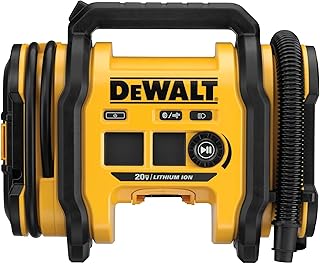
The DEWALT DCC020IB is exceptionally convenient for tire inflation and small pneumatic tasks, with automatic shutoff and an LED light adding practical value in a garage or driveway. It is not the right tool for a conventional spray gun: its portable, battery-powered format prioritizes convenience rather than the sustained airflow and moisture management car painting requires.
Frequently Asked Questions
What size air compressor is best for painting a car?
For limited touch-ups, a compressor delivering roughly 4 to 6 CFM at the spray gun’s working pressure may be workable. Full-car spraying usually benefits from substantially more reserve capacity, so always follow the gun manufacturer’s CFM recommendation and allow headroom.
Is a 6-gallon compressor enough for spray painting?
It can handle short passes, small parts, and light-duty touch-ups if its delivered airflow matches the gun. Expect frequent cycling and pauses, however; a larger tank does not fix an underpowered pump, but it can smooth brief demand spikes.
Do I need an oil-free compressor for car painting?
Not necessarily. Oil-free models simplify maintenance and avoid routine oil changes, while oil-lubricated compressors can offer durable, quieter operation. Either type needs clean air, proper filtration, and careful moisture control to protect the finish.
How do I prevent water from reaching the spray gun?
Drain the tank regularly, install a moisture separator near the compressor, and add a final filter or desiccant stage close to the gun. Keep the air line away from hot compressor surfaces and use a hose long enough to allow some cooling before the air reaches the filter.
Final Thoughts
For the most capable home-garage setup, the Klutch 29-gallon compressor is the leading choice, while the California Air Tools CAT-4610AC is better for quieter, smaller-scale work. The VEVOR 13-gallon model offers a practical compromise between airflow, mobility, and workshop footprint.