Key takeaways
- Airflow: Check the spray gun’s recommended CFM at its working pressure, then choose a compressor that exceeds that requirement with usable reserve. Advertised peak CFM is less important than delivered CFM at 40 or 90 PSI.
- Tank capacity: A larger tank provides a buffer during spraying and reduces motor cycling. For continuous panel work, 13 to 20 gallons is generally more comfortable than a small portable tank.
- Air quality: Oil-free designs simplify maintenance, but every painting setup still needs a quality regulator, water separator, and suitable inline filter to keep moisture and contaminants away from the finish.
- Ergonomics: Wheels, a stable handle, manageable controls, and reasonable noise levels affect whether the compressor is easy to position and tolerable to use. Heavy units should remain on a dedicated, level surface.
- Electrical demands: Confirm the voltage, outlet capacity, and circuit requirements before buying. Avoid undersized extension cords, which can cause voltage drop, hard starts, and premature motor wear.
What's inside
Painting a car at home is less about finding the highest advertised PSI and more about delivering steady, clean airflow for an extended period. A compressor that cycles too often can make a spray gun pulse, while an undersized tank may leave you waiting between panels. Noise, moisture, portability, and hose management also matter when the compressor shares space with a workshop or garage.
This guide compares practical options for automotive painting, from compact units suited to touch-ups and trim work to larger tanks better equipped for full panels. The emphasis is on usable airflow, duty-cycle demands, vibration, maintenance, and long-term workshop comfort—not just peak specifications.
As an Amazon Associate we earn from qualifying purchases.



How to Choose a/an Air Compressor For Painting Cars (2026)
- Airflow: Check the spray gun’s recommended CFM at its working pressure, then choose a compressor that exceeds that requirement with usable reserve. Advertised peak CFM is less important than delivered CFM at 40 or 90 PSI.
- Tank capacity: A larger tank provides a buffer during spraying and reduces motor cycling. For continuous panel work, 13 to 20 gallons is generally more comfortable than a small portable tank.
- Air quality: Oil-free designs simplify maintenance, but every painting setup still needs a quality regulator, water separator, and suitable inline filter to keep moisture and contaminants away from the finish.
- Ergonomics: Wheels, a stable handle, manageable controls, and reasonable noise levels affect whether the compressor is easy to position and tolerable to use. Heavy units should remain on a dedicated, level surface.
- Electrical demands: Confirm the voltage, outlet capacity, and circuit requirements before buying. Avoid undersized extension cords, which can cause voltage drop, hard starts, and premature motor wear.
The Best Air Compressor For Painting Cars (2026)s Reviewed
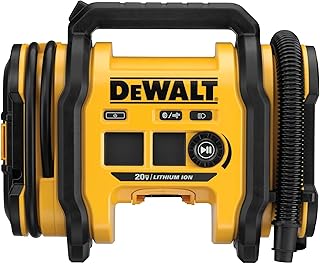
DEWALT 20V MAX Tire Inflator
The DEWALT DCC020IB is exceptionally portable and convenient for tire inflation, air beds, and quick shop tasks, but it is not a practical primary compressor for automotive paint spraying. Its cordless format and automatic shutoff are useful for prep work and mobile repairs, yet spray guns require a sustained airflow supply this compact inflator is not designed to provide.
California Air Tools CAT-4610AC
This quiet, oil-free twin-tank compressor is a strong choice for small finishing jobs, trim pieces, wheels, and occasional spot repairs. Its aluminum construction helps keep weight manageable, and the low-noise operation is friendlier in a home workshop. It remains a limited option for large panels or continuous HVLP spraying, so match it carefully to the gun’s CFM requirement.
VEVOR 13-Gallon Air Compressor
With a 13-gallon tank, oil-free design, wheels, and a stated 4.6 SCFM at 90 PSI, this VEVOR offers a useful balance for hobby automotive work. The larger reservoir gives a spray gun more breathing room than compact inflators, while the movable frame improves positioning. For dependable paint quality, add moisture control and verify the compressor’s actual delivered airflow against your gun before committing to a full-car project.
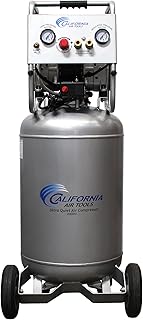
California Air Tools 20020AD
The 20-gallon 20020AD is the most workshop-oriented option in this group, especially for users who value a larger air reserve and reduced cycling during panel spraying. Its wheels help with repositioning, while the automatic drain valve addresses an otherwise commonly neglected maintenance task. It occupies more floor space and still needs proper filtration, but its capacity makes it the most comfortable fit here for extended automotive finishing.
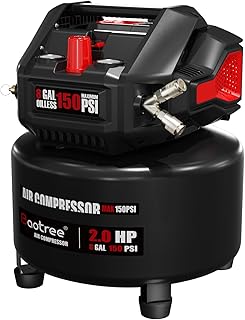
Baotree 8-Gallon Air Compressor
Baotree’s 8-gallon oil-free compressor is a reasonable middle-ground unit for smaller paint jobs, nailers, air tools, and general garage use. Its tank offers some buffer against pressure fluctuations, although the listed airflow is better suited to intermittent spraying than long, uninterrupted passes with an air-hungry gun. Treat the high maximum PSI as a storage figure, not a measure of painting performance.
Frequently Asked Questions
What size compressor is best for painting a car?
For occasional touch-ups, a smaller tank may work if the spray gun has modest airflow requirements. For full panels, a compressor with a 13- to 20-gallon tank and sufficient delivered CFM is more comfortable, though the gun’s specification should always determine the final choice.
Can an oil-free compressor be used for automotive paint?
Yes. Oil-free compressors avoid oil contamination and simplify maintenance, but they do not eliminate water in compressed air. Use a regulator, water separator, and paint-rated inline filter, and drain the tank according to the manufacturer’s instructions.
Is a quiet compressor better for a home garage?
A quieter compressor is easier on hearing and less disruptive around furniture, neighbors, or shared household space. Quiet operation does not automatically mean better painting performance, however; airflow, duty cycle, and moisture control remain the deciding factors.
Should I use HVLP or LVLP for car painting?
HVLP guns can provide efficient transfer but often demand substantial airflow. LVLP guns typically require less CFM and may suit smaller compressors, though they still need a compatible regulator, correct tip size, and careful adjustment for the paint system being used.
Final Thoughts
For the strongest combination of capacity and workshop usability, the California Air Tools 20020AD is the standout for extended automotive work. The VEVOR 13-Gallon is a sensible value-oriented compromise, while the CAT-4610AC is appealing for quieter, smaller-scale projects where portability and low maintenance matter most.