Key takeaways
- Usable airflow: Compare the spray gun’s required CFM with the compressor’s CFM rating at 90 PSI, not merely its peak horsepower or tank pressure. A comfortable reserve helps prevent pressure sag during long passes.
- Tank capacity: A larger receiver stores more air and reduces immediate cycling, which can smooth short painting sessions. It does not replace adequate pump output for continuous spraying.
- Moisture control: Compressing air creates condensation, especially during extended use. Plan for a regulator, water separator, quality hose, and a drain routine to protect paint quality and the tank.
- Noise and vibration: Quieter operation makes garage work less fatiguing and improves communication. Rubber feet, stable wheels, and a rigid frame are valuable when the unit runs on concrete.
- Serviceability: Oil-free pumps simplify ownership but may offer less rebuildability than traditional lubricated designs. Check access to the drain, filters, fittings, and electrical connection before buying.
What's inside
Auto painting exposes an air compressor’s weaknesses quickly: uneven airflow can create orange peel, pulsing, dry spray, and inconsistent atomization, while an undersized tank forces the motor to run continuously. Noise, vibration, awkward drains, and difficult mobility also matter when the compressor is used in a home garage rather than a professional shop.
This guide evaluates the listed compressors from an ergonomics-and-durability perspective. The emphasis is on usable airflow at spray-gun pressure, tank capacity, recovery behavior, noise, portability, maintenance demands, and the practical limitations of oil-free designs. Always match the compressor to your spray gun’s published CFM requirement and follow the manufacturer’s paint-system recommendations.
As an Amazon Associate we earn from qualifying purchases.


How to Choose a/an Air Compressor For Auto Painting (2026)
- Usable airflow: Compare the spray gun’s required CFM with the compressor’s CFM rating at 90 PSI, not merely its peak horsepower or tank pressure. A comfortable reserve helps prevent pressure sag during long passes.
- Tank capacity: A larger receiver stores more air and reduces immediate cycling, which can smooth short painting sessions. It does not replace adequate pump output for continuous spraying.
- Moisture control: Compressing air creates condensation, especially during extended use. Plan for a regulator, water separator, quality hose, and a drain routine to protect paint quality and the tank.
- Noise and vibration: Quieter operation makes garage work less fatiguing and improves communication. Rubber feet, stable wheels, and a rigid frame are valuable when the unit runs on concrete.
- Serviceability: Oil-free pumps simplify ownership but may offer less rebuildability than traditional lubricated designs. Check access to the drain, filters, fittings, and electrical connection before buying.
The Best Air Compressor For Auto Painting (2026)s Reviewed
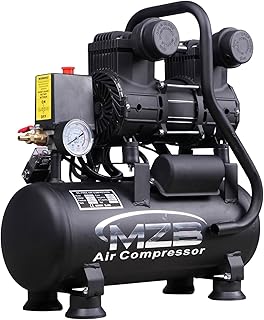
MZB 2.4-Gallon Ultra Quiet Air Compressor
The compact MZB is suited to touch-ups, trim work, spot repairs, and other short painting tasks where storage space is limited. Its 5.65 CFM rating and 115 PSI maximum are useful on paper, but the small tank means the pump will cycle more often during sustained spraying; its relatively quiet 70 dB operation is a practical advantage in a home workshop.
MAX 18.5-Gallon Upright Air Compressor
This MAX upright model offers a more substantial air reserve than compact portable units, making it a better ergonomic fit for a dedicated garage bay. The vertical layout preserves floor space, while the steel tank and oil-free configuration reduce routine lubrication work; buyers should still verify its actual delivered CFM against their spray gun before attempting full-panel work.
VEVOR 13-Gallon Quiet Air Compressor
The VEVOR combines a reasonably useful tank size with a 4.6 SCFM output at 90 PSI and a 125 PSI maximum. Its 66 dB claimed noise level should make it less intrusive than many conventional compressors, while wheels and a thickened steel body improve repositioning and perceived stability; the airflow is more appropriate for intermittent spray-gun use than high-demand continuous coating.
Klutch 29-Gallon Air Compressor
With a 29-gallon receiver, 5.1 CFM at 90 PSI, and 175 PSI maximum pressure, the Klutch is the strongest choice here for buyers who prioritize air storage and quick recovery in a fixed workspace. Its upright form saves floor area, and the large wheels help during initial placement, although the substantial tank is less convenient to move frequently and the oil-free pump remains better suited to moderate-duty painting than nonstop production.
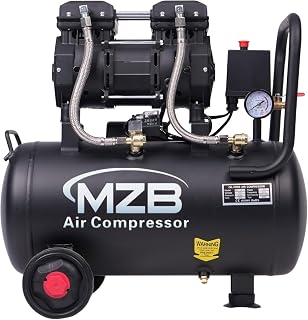
AAIN 6.3-Gallon Ultra Quiet Air Compressor
The AAIN occupies a useful middle ground: more reserve than a small touch-up compressor, but still reasonably portable for a home garage. Its listed 6 CFM output, wheels, oil-free pump, and 70 dB noise level make it attractive for occasional automotive refinishing, though users should allow recovery time and use proper filtration when spraying larger panels.
Frequently Asked Questions
What CFM should an air compressor have for auto painting?
Start with the spray gun’s stated CFM requirement at its working pressure, then choose a compressor that exceeds it by a meaningful margin. The rating at 90 PSI is more useful than free-air delivery or maximum tank pressure because it better reflects real spraying conditions.
Is a small tank suitable for automotive paint?
A small tank can work for spot repairs, motorcycle parts, trim, and short bursts, but it gives the pump little buffer during continuous spraying. For larger panels, a bigger receiver and adequate pump output reduce pressure fluctuations and excessive cycling.
Are oil-free compressors good for spray painting?
Oil-free models are convenient because they avoid oil changes and reduce the risk of oil contamination from the pump. They can be effective for occasional painting, but their heat management, duty cycle, and service life should be considered before demanding professional-level continuous use.
What accessories are essential for clean paint?
Use a regulator, moisture separator, appropriate air hose, and a final filter near the spray gun. Drain the tank regularly, keep the hose clean, and test the gun pattern on scrap material before applying paint to the vehicle.
Final Thoughts
For the largest air reserve, the Klutch 29-Gallon Air Compressor is the most compelling option for a garage-based setup, while the MAX 18.5-Gallon Upright offers a space-conscious compromise. For quieter, more portable occasional work, the VEVOR 13-Gallon and AAIN 6.3-Gallon models are practical starting points; the compact MZB 2.4-Gallon is best reserved for short touch-ups rather than full-vehicle spraying.