Key takeaways
- Photograph each drawer after organizing it; the image makes returning tools easier for everyone.
- Keep a small “in use” tray nearby so temporary work-in-progress items do not occupy permanent storage zones.
- Separate metric and SAE tools clearly, using different labels or drawer sections to prevent costly mix-ups.
- Recheck the layout after a month and move frequently used tools closer to your normal working position.
What's inside
A well-organized tool chest is more than a tidy storage unit: it is a safer, faster and less tiring way to work. When every wrench, bit and fastener has a predictable home, you spend less time searching, reduce awkward reaching and are less likely to damage tools by piling them together. Good organization also makes missing equipment obvious before a project begins.
This guide approaches tool-chest setup from an ergonomics-and-durability perspective. You will learn how to measure drawers, choose dividers that suit different tool sizes, position heavy equipment safely and build a layout that remains useful as your collection grows. The recommended products below are best viewed as components in a system, not as a substitute for planning.
As an Amazon Associate we earn from qualifying purchases.



Start With a Tool-Chest Audit
Empty each drawer before buying organizers. Group tools by function—driving, measuring, cutting, fastening, electrical and automotive work—then note which items are used together. This prevents a common mistake: arranging tools by appearance rather than workflow.
Measure the usable drawer length, width and depth, including the clearance beneath the drawer above. Record the smallest internal dimension, since drawer slides and corner reinforcements can reduce the practical footprint. Also check whether the drawer has a textured liner; some trays sit securely on rubberized surfaces but slide on smooth painted steel.
Keep a small reserve of space in each drawer. A layout filled edge to edge looks efficient on day one but becomes frustrating when you add a new driver or replace a bulky tool. Around 10 to 20 percent spare capacity is a useful target.
Use Dividers to Create Stable Zones
Modular trays are usually more adaptable than fixed foam cutouts. The A-LuGei 69-piece, five-size organizer is a practical choice when a drawer contains mixed hand tools and small parts. Its range of bin sizes lets you separate loose fasteners, pliers and compact accessories without forcing every item into a custom-shaped slot.
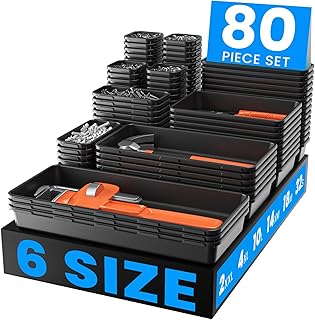
For a larger collection, the A-LUGEI six-size, 80-piece organizer is designed for broader coverage and can suit a chest with several shallow drawers. The A-LuGei 46-piece, five-size set is a more restrained option for a smaller cabinet or for one drawer that mainly holds hardware. Choose based on usable drawer area and the number of categories, rather than the advertised piece count alone.
Place dividers so tools cannot migrate when a drawer opens quickly. Bins should touch or lock together where possible, and heavier items should sit low enough that they cannot tip over. Extra-thick plastic trays, such as the A-LuGei six-size set, are worth considering when drawers are opened frequently or when the chest is used in a workshop rather than occasional household maintenance.
Arrange Tools Around Human Movement
Put the tools you use most often between knee and shoulder height. This reduces repeated bending, twisting and overhead reaching. In a rolling chest, reserve the top drawers for screwdrivers, pliers, tape measures and frequently used sockets. Less common specialty tools can occupy lower drawers.
Within a drawer, place the handle or gripping end where it can be grasped immediately. Avoid burying long tools beneath shorter ones, and leave enough clearance to lift an item without scraping your knuckles against neighboring equipment. Organize tools in the direction they are removed: horizontal rows often work well for drivers and wrenches, while bins are better for irregular objects and consumables.
Use labels sparingly but consistently. A label such as “hex keys—metric” is more useful than a broad label such as “miscellaneous.” If multiple people use the chest, labels preserve the system and reduce the tendency to create temporary piles.
Give Sockets and Small Parts Special Treatment
Sockets are easy to lose because their shapes are similar and their weight encourages them to roll. A dedicated holder keeps sizes visible and prevents a loose collection from becoming a noisy, inefficient drawer. The EACELIY magnetic socket organizer set covers 1/2-inch, 1/4-inch and 3/8-inch SAE and metric formats and attaches to a steel chest or cart. Confirm the required socket standards and available drawer or side-panel space before ordering; the set does not include sockets.
Magnetic holders are particularly useful when you want to lift an entire group to a nearby work surface. Still, magnets do not replace sensible loading: keep the heaviest sockets supported, check that the holder sits flat and avoid placing magnetic components near devices that could be affected. For screws, washers and anchors, use small lidded containers or divided bins so a tipped drawer does not mix every size together.
Plan for Mobility, Weight and Wear
A tool chest that moves around a garage needs a different layout from a stationary cabinet. Store the heaviest items low and keep drawers closed while rolling. This lowers the center of gravity and reduces the chance of tipping, especially across thresholds or uneven concrete.
For a portable setup, the Keter Stack N Rolling Tool Box Modular Storage System offers a three-piece format with all-terrain wheels and a telescoping handle. Its modular design can separate bulky equipment from small hand tools, but inspect the wheel path and handle clearance in your workspace. Weather-resistant construction is helpful in a garage, though tools should still be kept dry and lightly protected against rust.
Protect drawer surfaces with a replaceable liner, and periodically inspect trays for cracks, warped edges or loose sections. Clean oil and grit before they become abrasive. A durable system is one that can be repaired, reconfigured and cleaned—not merely one that feels sturdy when new.
Tips
- Photograph each drawer after organizing it; the image makes returning tools easier for everyone.
- Keep a small “in use” tray nearby so temporary work-in-progress items do not occupy permanent storage zones.
- Separate metric and SAE tools clearly, using different labels or drawer sections to prevent costly mix-ups.
- Recheck the layout after a month and move frequently used tools closer to your normal working position.
Frequently Asked Questions
Should tool drawers use foam or plastic organizers?
Foam provides excellent visual control and can stop tools from moving, but it is less flexible when your collection changes. Plastic trays and dividers are easier to reconfigure and clean. For a general home workshop, modular plastic is usually the more adaptable starting point; foam is valuable for high-precision or transport-heavy setups.
How much weight can I put in a tool-chest drawer?
Follow the chest manufacturer’s drawer rating rather than estimating from the drawer’s size. Load heavy tools evenly, avoid concentrating weight at the front and close the drawer gently. If the drawer binds, sags or requires unusual force, redistribute the contents immediately.
Where should power tools be stored?
Keep bulky power tools in deeper, lower drawers or a dedicated rolling module. Store batteries in a dry area away from excessive heat, and prevent cords and chargers from filling shallow hand-tool drawers. The goal is to preserve clear access to lighter tools used during setup and repair.
Do magnetic organizers work on every tool chest?
They work best on ferromagnetic steel surfaces. Aluminum, many plastics and some coated or composite panels will not hold them reliably. Test the mounting surface and check the organizer’s grip before storing valuable tools overhead or on a moving cart.
Conclusion
The best tool-chest organization follows your movements, protects equipment and leaves room for change. Begin with measurements and a tool audit, use modular dividers for mixed collections, dedicate holders to sockets and small parts, and keep heavy loads low. With that foundation, products such as A-LuGei trays, EACELIY magnetic socket holders and a Keter rolling system can make the chest faster to use and easier to maintain for years.