Key takeaways
- Tooth count: More teeth usually produce smoother crosscuts, but they also remove material more slowly and can generate extra heat. For furniture and trim, 60 to 120 teeth is a useful range.
- Tooth geometry: An alternating-top-bevel, or ATB, pattern is a reliable choice for crosscutting wood. Look for a grind suited to the cut rather than assuming every fine-finish blade performs identically.
- Kerf width: Thin-kerf blades reduce waste and require less effort from the saw, which can improve handling on compact or lower-powered machines. They may, however, be more sensitive to deflection.
- Carbide and plate quality: Dense, accurately ground carbide and a tensioned steel plate help a blade stay sharp, quiet, and stable. These details matter more for long-term value than an impressive tooth count alone.
- Compatibility: Confirm the diameter, arbor size, maximum saw speed, and intended material before installing a blade. A 5/8-inch arbor is common on 10-inch blades, while many 12-inch models use a 1-inch arbor.
What's inside
Choosing a miter saw blade is less straightforward than picking the highest tooth count. A blade that looks ideal on paper may cut slowly, burn hardwood, leave rough shoulders, or flex when the saw is pushed through wide stock. Tooth geometry, kerf width, carbide quality, arbor fit, and the material being cut all affect accuracy and service life.
This guide evaluates the best blades for miter saw work from an ergonomics-and-durability perspective. The emphasis is on clean control, predictable feeding, reduced vibration, edge quality, and how well each blade matches furniture parts, trim, framing lumber, and general workshop use.
As an Amazon Associate we earn from qualifying purchases.


How to Choose a/an Blades For Miter Saw (2026)
- Tooth count: More teeth usually produce smoother crosscuts, but they also remove material more slowly and can generate extra heat. For furniture and trim, 60 to 120 teeth is a useful range.
- Tooth geometry: An alternating-top-bevel, or ATB, pattern is a reliable choice for crosscutting wood. Look for a grind suited to the cut rather than assuming every fine-finish blade performs identically.
- Kerf width: Thin-kerf blades reduce waste and require less effort from the saw, which can improve handling on compact or lower-powered machines. They may, however, be more sensitive to deflection.
- Carbide and plate quality: Dense, accurately ground carbide and a tensioned steel plate help a blade stay sharp, quiet, and stable. These details matter more for long-term value than an impressive tooth count alone.
- Compatibility: Confirm the diameter, arbor size, maximum saw speed, and intended material before installing a blade. A 5/8-inch arbor is common on 10-inch blades, while many 12-inch models use a 1-inch arbor.
The Best Blades For Miter Saw (2026)s Reviewed
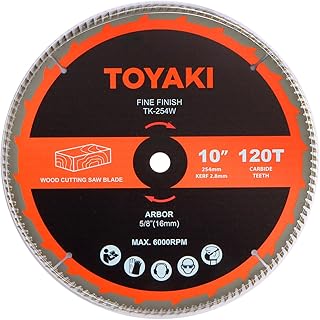
10-Inch 120-Tooth Fine-Finish Blade
This high-tooth-count blade is aimed at exceptionally clean cuts in trim, veneer-faced panels, and furniture components where minimizing breakout is the priority. Its 5/8-inch arbor suits many 10-inch miter saws, while the dense tooth pattern rewards a steady feed and a properly supported workpiece.
WEN BL1080 10-Inch 80-Tooth Blade
The WEN BL1080 is a practical ultra-fine-finish option for workshop owners who want smoother crosscuts without moving to an unusually specialized blade. Its carbide-tipped teeth should handle repeated work in common hardwoods and softwoods, though clearing dust regularly will help limit heat buildup around the tooth gullets.
DEWALT DWA112100 12-Inch 100-Tooth Blade
DEWALT’s 100-tooth blade is designed for clean, controlled cuts on larger 12-inch saws. It makes particular sense for installers, cabinet builders, and serious DIY users who value a refined edge and a robust carbide package over maximum cutting speed.
Freud LU91R012 12-Inch 72-Tooth Thin-Kerf Blade
The Freud LU91R012 takes a different approach: its 72-tooth configuration and thin kerf balance finish quality with easier feeding through stock. That lower cutting resistance can reduce strain on the operator and saw, while the blade’s crosscutting blend is well suited to repeated work on a sliding compound miter saw.
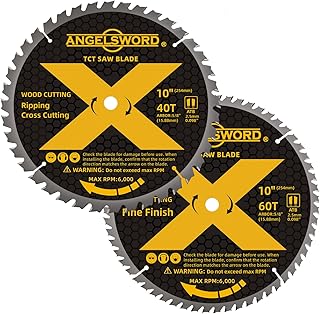
10-Inch 3-Pack: 32T, 60T, and 80T
This three-blade set offers useful flexibility rather than one narrowly defined specialty. The 32-tooth blade is appropriate for faster framing cuts, the 60-tooth blade covers general finish work, and the 80-tooth option is better for delicate crosscuts; swapping blades also prevents using a fine blade where a more open tooth pattern would be safer and faster.
Frequently Asked Questions
Is a higher tooth count always better for a miter saw?
No. Higher tooth counts generally improve crosscut smoothness, but they can cut more slowly and clog sooner in thick or resinous material. Match the blade to the finish required and the thickness of the stock.
Can these blades cut plywood and hardwood?
Most fine-finish wood blades can cut both, provided the diameter, arbor, and saw speed are compatible. Use a controlled feed rate and support panels fully to reduce vibration and chipping.
When should a miter saw blade be replaced?
Replace or professionally sharpen it when cuts become rough despite proper setup, the saw begins to wander, burning appears consistently, or the carbide teeth show damage. Forcing a dull blade increases hand pressure and reduces control.
Does a thin-kerf blade work on every miter saw?
Usually, but verify the manufacturer’s specifications first. Thin-kerf blades are efficient, yet their reduced plate thickness can be less forgiving if the workpiece shifts or the saw is pushed aggressively.
Final Thoughts
For the smoothest furniture-grade crosscuts, the 10-Inch 120-Tooth Fine-Finish Blade is the specialist choice, while the WEN BL1080 offers a sensible ultra-fine-finish balance. For larger saws, the DEWALT DWA112100 is a durable premium pick, and the Freud LU91R012 stands out when reduced cutting effort and thin-kerf efficiency matter.