Key takeaways
- Construction: Look for tightly braided, handwoven, or well-bound fibers with consistent tension. Dense construction generally handles foot traffic better and is less likely to develop loose loops.
- Size and layout: Choose a size that allows at least the front legs of major seating to rest on the rug. A larger footprint usually feels more stable and prevents furniture from appearing scattered around the room.
- Underfoot comfort: Jute is naturally textured. If the rug will be used for floor sitting, play, or barefoot lounging, consider a cotton blend or jute-and-wool design rather than a coarse, open braid.
- Edge and pile design: Low-profile rugs are easier to walk across and work better beneath doors and furniture. Finished borders, reinforced edges, and securely attached tassels help reduce fraying and trip hazards.
- Maintenance: Jute absorbs moisture and can retain stains, so it suits dry rooms best. Vacuum with care, blot spills promptly, and use a breathable rug pad to improve grip and protect the fibers from floor abrasion.
What's inside
Finding the best jute rug for a living room is less straightforward than choosing by color or weave alone. Natural-fiber rugs can vary substantially in density, edge stability, pile height, shedding, and resistance to chair movement. A rug that looks beautifully relaxed in a product photo may feel rough underfoot, curl at the corners, or shift on a smooth floor once daily traffic begins.
This guide evaluates the leading options from an ergonomics-and-durability perspective. We focus on how each rug supports comfortable movement, furniture placement, cleaning routines, and long-term wear, while also considering the visual character jute brings to modern, farmhouse, rustic, and bohemian living spaces.
As an Amazon Associate we earn from qualifying purchases.


How to Choose a/an Jute Rug For Living Room (2026)
- Construction: Look for tightly braided, handwoven, or well-bound fibers with consistent tension. Dense construction generally handles foot traffic better and is less likely to develop loose loops.
- Size and layout: Choose a size that allows at least the front legs of major seating to rest on the rug. A larger footprint usually feels more stable and prevents furniture from appearing scattered around the room.
- Underfoot comfort: Jute is naturally textured. If the rug will be used for floor sitting, play, or barefoot lounging, consider a cotton blend or jute-and-wool design rather than a coarse, open braid.
- Edge and pile design: Low-profile rugs are easier to walk across and work better beneath doors and furniture. Finished borders, reinforced edges, and securely attached tassels help reduce fraying and trip hazards.
- Maintenance: Jute absorbs moisture and can retain stains, so it suits dry rooms best. Vacuum with care, blot spills promptly, and use a breathable rug pad to improve grip and protect the fibers from floor abrasion.
The Best Jute Rug For Living Room (2026)s Reviewed
KEMA Braided Jute Area Rug
The KEMA Jute Braided Area Rug is a practical choice for shoppers who want a reversible 5-by-7-foot rug with a relaxed, rustic profile. Its braided construction gives the surface useful visual texture while helping distribute wear, although the relatively compact size is best for a small seating arrangement or apartment living room rather than a large sectional.
Natural Hand-Braided 8-by-10 Jute Area Rug
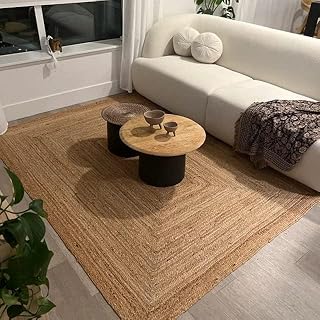
This Natural Hand Braided 8’x10′ Jute Area Rug provides the broad coverage needed to visually anchor a full living-room grouping. The generous dimensions can improve furniture stability and reduce awkward transitions between sofa, chairs, and coffee table, but its natural braid should be paired with a quality non-slip pad on polished flooring.
nuLOOM Ashli Natural Solid Handwoven Rug
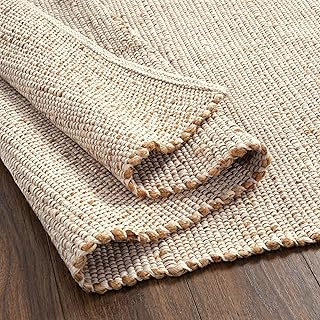
The nuLOOM Ashli Natural Solid Handwoven Area Rug offers a quieter, more uniform appearance than heavily patterned alternatives. Its 8-by-10-foot format is well suited to larger rooms, while the solid natural finish makes it easier to coordinate with upholstery and wood flooring; as with most jute rugs, avoid placing it where repeated wet cleaning will be necessary.
SAFAVIEH Natural Fiber Handmade Tassel Jute Rug
The SAFAVIEH Natural Fiber Collection rug stands out for its handmade tassel detailing and 6-by-9-foot proportions. It is a strong option for a medium-sized living room that needs warmth without an overpowering pattern, though tassels deserve attention during vacuuming so they do not catch or pull.
Natural Jute and Wool Mini Check Rug
This 8-by-10-foot Natural Jute & Wool Area Rug combines a mini-check pattern with a defined 4-inch border and a stated 0.6-inch pile. The wool component can make the surface feel more forgiving than plain jute, while the structured pattern helps disguise everyday dust and minor wear; its slightly fuller profile should be checked against door clearance.
Frequently Asked Questions
Is jute a good material for a living-room rug?
Yes, particularly in dry, moderately busy rooms. Jute offers a durable natural texture and works well beneath stationary furniture, but it is less tolerant of moisture, muddy footwear, and aggressive cleaning than many synthetic fibers.
Should a jute rug have a rug pad?
A rug pad is strongly recommended. It improves traction, reduces bunching, cushions the hard natural weave, and limits friction between the rug and floor. Select a pad designed for the specific flooring surface.
How do you clean a jute rug?
Vacuum gently and regularly using suction rather than a highly aggressive rotating brush. For spills, blot immediately with a dry or barely damp cloth; avoid soaking the rug, steam cleaning it, or applying large amounts of detergent unless the manufacturer specifically permits it.
Will a jute rug shed?
Some initial fiber release is normal, especially with loosely woven or newly manufactured rugs. Regular gentle vacuuming can reduce visible shedding over time, while persistent unraveling, severe fuzzing, or loose perimeter fibers may indicate excessive wear.
Final Thoughts
For broad living-room coverage, the Natural Hand-Braided 8-by-10 Jute Area Rug is a sensible furniture-anchoring choice, while the nuLOOM Ashli suits rooms that favor a restrained, solid look. If added softness and a more defined pattern are priorities, the Natural Jute and Wool Mini Check Rug is the strongest all-around alternative; shoppers furnishing smaller spaces may prefer the reversible KEMA braided design.