Key takeaways
- Frame strength: Look for aluminum poles, reinforced ribs, corrosion-resistant hardware, and joints that do not flex excessively when the canopy is opened. A sturdy frame improves both longevity and day-to-day stability.
- Canopy fabric: Solution-dyed or fade-resistant polyester and premium acrylic fabrics generally hold color better than inexpensive, surface-dyed material. Check for UV protection, stitched stress points, and a canopy weight appropriate to the frame.
- Wind control: Vents allow air to escape rather than ballooning beneath the canopy. Double tops and multiple vents can help, but they do not replace a correctly weighted base or permanent anchoring system.
- Operating comfort: A crank mechanism usually requires less reach and force than a push-up lift. Tilt controls should be easy to locate and use without standing on tiptoe or leaning across a table.
- Footprint and support: Match the umbrella to the base, table opening, and available clearance. Offset umbrellas need substantially more ballast than center-pole models because their load sits away from the support point.
What's inside
A patio umbrella that feels substantial in the box can still wobble, fade, or twist out of alignment after a season of sun and gusty weather. The weak points are rarely the canopy alone: undersized poles, loose rib joints, poor venting, and an unstable base can turn an otherwise attractive shade solution into a recurring maintenance job.
This guide evaluates heavy-duty patio umbrellas through an ergonomics-and-durability lens. We focus on operating effort, frame construction, canopy resilience, wind management, coverage, and how well each design suits a table, deck, pool area, or open seating zone. Remember that no patio umbrella should be left open in dangerous wind, and cantilever models require especially careful anchoring.
As an Amazon Associate we earn from qualifying purchases.



How to Choose a Heavy Duty Patio Umbrella (2026)
- Frame strength: Look for aluminum poles, reinforced ribs, corrosion-resistant hardware, and joints that do not flex excessively when the canopy is opened. A sturdy frame improves both longevity and day-to-day stability.
- Canopy fabric: Solution-dyed or fade-resistant polyester and premium acrylic fabrics generally hold color better than inexpensive, surface-dyed material. Check for UV protection, stitched stress points, and a canopy weight appropriate to the frame.
- Wind control: Vents allow air to escape rather than ballooning beneath the canopy. Double tops and multiple vents can help, but they do not replace a correctly weighted base or permanent anchoring system.
- Operating comfort: A crank mechanism usually requires less reach and force than a push-up lift. Tilt controls should be easy to locate and use without standing on tiptoe or leaning across a table.
- Footprint and support: Match the umbrella to the base, table opening, and available clearance. Offset umbrellas need substantially more ballast than center-pole models because their load sits away from the support point.
The Best Heavy Duty Patio Umbrella (2026)s Reviewed
Midtown Umbrellas 9-Foot Terylast Umbrella
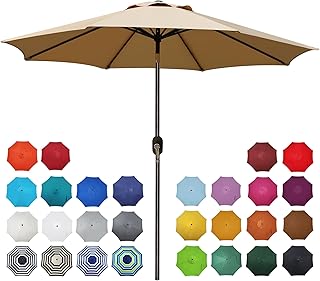
This Midtown model combines a 10-year no-fade Terylast canopy claim with an aluminum auto-tilt frame and eight reinforced ribs. The automatic tilt function is particularly practical beside a dining table, where changing the shade angle without moving chairs reduces awkward reaching. Its 9-foot footprint is versatile for everyday deck or pool seating, while the dark pole and cobalt canopy give it a more deliberate, finished look.
EliteShade USA 9-Foot 3-Tier Market Umbrella
EliteShade’s three-tier construction is designed around ventilation, making it a sensible choice for locations that experience regular breezes. The crank opening, UPF 50+ protection, and commercial-grade positioning add useful convenience, although the umbrella still depends on an appropriately heavy base. Its market profile works well through a table and keeps operation straightforward for frequent users.
Grand patio 12-Foot Sunbrella Cantilever
For broad, furniture-friendly coverage, the Grand patio cantilever stands out with a 12-foot Sunbrella canopy and offset aluminum frame. The side-post layout keeps the central area beneath the umbrella clear, which is valuable over loungers or a conversation set, while tilt adjustment helps track the sun. Its larger sail creates more leverage in wind, so careful base setup and conservative weather use are essential.
PURPLE LEAF 10-by-10-Foot Double-Top Cantilever
The square PURPLE LEAF model offers generous coverage and a double-top design intended to improve airflow. Its 35-mph wind-resistant frame specification, fade-resistant 240 GSM canopy, and advertised 30-minute setup make it appealing for a more permanent backyard shade station. The square canopy uses space efficiently, but its larger surface area demands disciplined anchoring and should not be treated as windproof.
9-Foot Outdoor Table Umbrella with Crank and Tilt
This conventional 9-foot umbrella focuses on the fundamentals: eight sturdy ribs, a crank lift, and push-button tilt. It is a practical fit for buyers who want a table-centered umbrella without the footprint or installation demands of a cantilever system. Before purchase, verify pole diameter and base compatibility, since these details have a direct effect on wobble and long-term usability.
Frequently Asked Questions
What makes a patio umbrella heavy duty?
Heavy-duty performance comes from the complete system rather than a single feature. A rigid frame, durable canopy, reinforced rib connections, useful venting, smooth hardware, and adequate ballast all matter. A thick fabric on a flexible pole is not a genuinely robust design.
How heavy should the base be?
The correct weight depends on canopy size, pole design, table support, and local wind exposure. Center-pole umbrellas generally need less ballast than cantilever models. Always follow the manufacturer’s base guidance, and use additional anchoring or a permanent mount where appropriate.
Is a cantilever umbrella better than a table umbrella?
Neither design is universally better. Cantilevers provide unobstructed shade over seating and loungers, while table umbrellas are usually simpler, more compact, and easier to stabilize. Choose a cantilever when clear floor space matters; choose a center pole for economical, table-based coverage.
Should I leave a heavy-duty umbrella open overnight?
No. Close the canopy whenever the area is unattended, especially before storms or strong gusts. A protective cover can reduce sun and moisture exposure during storage, but it cannot compensate for wind loading on an open umbrella.
Final Thoughts
The Midtown Umbrellas model is a strong all-purpose choice for comfortable daily operation and reinforced construction, while EliteShade USA is well suited to breezier settings where ventilation matters. For maximum open-area coverage, the Grand patio Sunbrella cantilever and PURPLE LEAF double-top design are compelling—provided their larger wind loads receive the serious anchoring they require.