Key takeaways
- Wind management: Look for vented or double-top canopies and reinforced ribs that let pressure escape rather than relying on fabric tension alone. A wind rating is meaningful only when the umbrella is installed with the recommended base and anchoring.
- Base compatibility: The base is part of the umbrella system, not an accessory to overlook. Match its weight and footprint to canopy size, pole diameter, and your surface; large cantilever and double-sided models need particularly careful anchoring.
- Frame durability: Powder-coated metal, thick poles, and well-braced joints generally tolerate repeated setup better than lightweight assemblies. Inspect hinge points and rib connections, where stress concentrates during gusts.
- Daily ergonomics: A crank lift usually demands less reaching and force than manually pushing a canopy upward. Tilt controls should be easy to identify and operate without standing under an unstable, partially opened umbrella.
- Canopy longevity: UV-resistant, solution-dyed, or acrylic fabrics are preferable for prolonged sun exposure. Colorfastness claims vary, so close the umbrella during severe weather and allow damp fabric to dry before storage.
What's inside
A patio umbrella can look substantial in a product photo yet behave like a sail when the first strong gust arrives. Thin poles, loosely tensioned fabric, undersized bases, and poorly ventilated canopies are common weak points—especially on large umbrellas that create considerable wind load.
This guide evaluates heavy-duty wind-resistant patio umbrellas through an ergonomics-and-durability lens. We focus on opening effort, tilt and rotation controls, frame construction, canopy ventilation, fabric longevity, usable shade, and the anchoring required for dependable outdoor performance. No umbrella should be treated as storm-proof; secure installation and sensible weather judgment remain essential.
As an Amazon Associate we earn from qualifying purchases.



How to Choose a Heavy-Duty Wind Resistant Patio Umbrella (2026)
- Wind management: Look for vented or double-top canopies and reinforced ribs that let pressure escape rather than relying on fabric tension alone. A wind rating is meaningful only when the umbrella is installed with the recommended base and anchoring.
- Base compatibility: The base is part of the umbrella system, not an accessory to overlook. Match its weight and footprint to canopy size, pole diameter, and your surface; large cantilever and double-sided models need particularly careful anchoring.
- Frame durability: Powder-coated metal, thick poles, and well-braced joints generally tolerate repeated setup better than lightweight assemblies. Inspect hinge points and rib connections, where stress concentrates during gusts.
- Daily ergonomics: A crank lift usually demands less reaching and force than manually pushing a canopy upward. Tilt controls should be easy to identify and operate without standing under an unstable, partially opened umbrella.
- Canopy longevity: UV-resistant, solution-dyed, or acrylic fabrics are preferable for prolonged sun exposure. Colorfastness claims vary, so close the umbrella during severe weather and allow damp fabric to dry before storage.
The Best Heavy-Duty Wind Resistant Patio Umbrellas (2026) Reviewed
Tempera Patio Market Umbrella
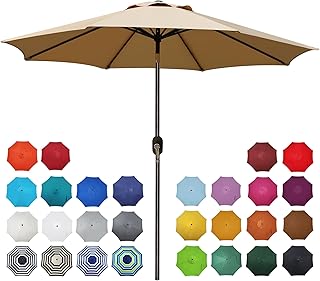
The Tempera is a practical choice for a dining table or compact seating area, combining a crank lift with push-button tilt. Its sturdy pole and fade-resistant canopy address everyday wear, while the relatively straightforward design keeps setup and operation approachable. Use a properly weighted base, since the tilt mechanism can shift the center of gravity when the canopy is angled.
PURPLE LEAF 10′ x 10′ Cantilever Umbrella
For broad, unobstructed shade, the PURPLE LEAF stands out with a square double-top canopy, a 35MPH wind-resistant frame claim, and a 240GSM fade-resistant canopy. Its cantilever layout keeps a central table area clear, but that convenience increases leverage at the base. The included setup guidance and 30-minute assembly claim are helpful; still, anchor the base on a stable, level surface and close the umbrella before severe weather.
EliteShade USA 9ft 3-Tier Market Umbrella
EliteShade USA takes a ventilation-first approach with a three-tier canopy, commercial-grade positioning, crank opening, and UPF 50+ protection. The 9-foot format is well suited to a standard patio table, while the airflow channels may reduce pressure buildup compared with a sealed canopy. Its 10-year non-fading claim is attractive for sunny locations, though actual lifespan depends on cleaning, storage, and exposure.
Midtown Umbrellas The Lean 9 Ft
The Lean pairs an auto-tilt mechanism with eight reinforced ribs and a 10-year no-fade Acrylast acrylic fabric claim. That combination makes it appealing where frequent angle adjustments and color retention matter, such as a deck, pool area, or hospitality-style setting. The black pole and Azure canopy offer a polished look, but the umbrella still needs a suitable base and should not be left open in escalating wind.
9′ Outdoor Patio Market Umbrella
This 9-foot market umbrella keeps the control layout familiar: push-button tilt, crank opening, and eight sturdy ribs. It is a sensible option for buyers who want adjustable shade without the reach and clearance demands of a cantilever model. Because the listing emphasizes structural ribs rather than a specific wind rating, treat it as a fair-weather umbrella and prioritize a correctly fitted, heavy base.
Frequently Asked Questions
What makes a patio umbrella wind resistant?
Wind resistance usually comes from a combination of vented canopy design, flexible but reinforced ribs, a strong pole, and adequate anchoring. No feature eliminates the risk of tipping or fabric damage in severe conditions, so close and secure the umbrella when gusts increase.
How heavy should the umbrella base be?
There is no universal number. Canopy size, pole height, table construction, wind exposure, and whether the umbrella is cantilevered all change the requirement. Follow the manufacturer’s base guidance and choose more secure anchoring for open, exposed patios.
Are cantilever umbrellas better than center-pole models?
They provide more flexible shade and leave the table unobstructed, but their offset canopy creates greater leverage on the base. A center-pole umbrella is often simpler and more forgiving for ordinary dining setups.
How can I extend an umbrella’s service life?
Close it during strong wind, brush off debris, clean according to the fabric instructions, and let it dry fully before storage. Check fasteners and rib joints periodically, and use a protective cover when the umbrella is not in service.
Final Thoughts
The PURPLE LEAF is the strongest fit for expansive, unobstructed shade when its base is properly secured, while the EliteShade USA is compelling for ventilation and a conventional 9-foot table setup. For easy everyday adjustment, the Tempera offers a practical balance of crank operation, tilt control, and manageable proportions.