Key takeaways
- Fit: Confirm the exact blade length, width, thickness, and wheel capacity specified by your saw. A nominally similar blade may not tension correctly or may interfere with the guides.
- Tooth pitch: Use finer teeth for thin-wall tubing and sheet, while thicker solid stock generally benefits from a coarser or variable-pitch blade. Aim to keep several teeth engaged in the material at once.
- Blade material: M42 bi-metal blades combine a flexible alloy-steel backing with a harder cobalt-alloy tooth edge. That construction is usually a sensible durability upgrade over basic carbon-steel blades.
- Blade width: Wider blades resist twisting and are better for straighter cuts in substantial stock. Narrower blades suit compact machines and can be easier to control on smaller workpieces.
- Cutting technique: Correct speed, moderate feed pressure, lubrication, and a proper break-in period help prevent premature tooth loss. Even a premium blade will suffer if it is forced into cold, unsupported material.
What's inside
Choosing the best band saw blade for metal is less about finding the most aggressive tooth count and more about matching the blade to your saw, stock thickness, and cutting habits. A blade that is too coarse can catch on thin tubing; one that is too fine can load with chips, heat up, and cut painfully slowly. Length, width, thickness, tooth pattern, and material all matter.
This guide focuses on practical performance for home workshops and furniture projects, where a bandsaw may move between tubing, brackets, flat bar, and occasional heavier sections. The recommendations emphasize tooth durability, tracking stability, clean cuts, and compatibility—factors that matter more over time than a tempting low price.
As an Amazon Associate we earn from qualifying purchases.


How to Choose a/an Band Saw Blade For Metal (2026)
- Fit: Confirm the exact blade length, width, thickness, and wheel capacity specified by your saw. A nominally similar blade may not tension correctly or may interfere with the guides.
- Tooth pitch: Use finer teeth for thin-wall tubing and sheet, while thicker solid stock generally benefits from a coarser or variable-pitch blade. Aim to keep several teeth engaged in the material at once.
- Blade material: M42 bi-metal blades combine a flexible alloy-steel backing with a harder cobalt-alloy tooth edge. That construction is usually a sensible durability upgrade over basic carbon-steel blades.
- Blade width: Wider blades resist twisting and are better for straighter cuts in substantial stock. Narrower blades suit compact machines and can be easier to control on smaller workpieces.
- Cutting technique: Correct speed, moderate feed pressure, lubrication, and a proper break-in period help prevent premature tooth loss. Even a premium blade will suffer if it is forced into cold, unsupported material.
The Best Band Saw Blade For Metal (2026)s Reviewed
Imachinist S933414 M42 10/14 TPI Blade
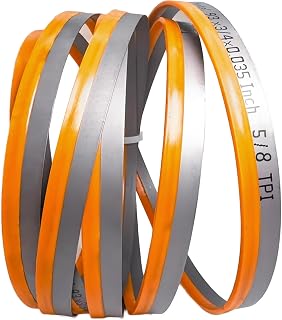
This 93-inch, 3/4-inch-wide M42 bi-metal blade is a versatile choice for general metalwork. Its 10/14 variable tooth pattern should be well suited to mixed workshop stock, helping balance cutting speed on thicker pieces with smoother engagement on tubing and smaller sections.
Imachinist S93121224 M42 24 TPI Blade
The 93-1/2-inch by 1/2-inch blade uses a fine 24 TPI pattern and a relatively slim 0.025-inch profile. It is the more specialized option here for thin-wall tube, light-gauge material, and work where reducing tooth shock matters more than rapid removal of heavy stock.
FOXBC 93-Inch M42 10/14 TPI Blade
FOXBC’s 3/4-inch-wide, 93-inch bi-metal blade takes the same practical variable-pitch approach many home metalworkers need. It is a strong all-rounder for a correctly sized saw, particularly when one blade must handle a changing mix of brackets, tube, angle, and flat bar.
Imachinist S9334812 M42 8/12 TPI Blade
With a coarser 8/12 variable tooth pattern, this 93-inch blade is aimed at faster cutting in thicker metal and larger cross-sections. Its wider format and tooth spacing favor productivity and chip clearance, though users cutting very thin material should choose a finer pitch instead.
FOXBC 64-1/2-Inch 24 TPI Blade, 2-Pack
This two-pack is designed for several compact metal-cutting saws, including Harbor Freight, Wen 3970, and Jet models, but compatibility should still be checked against the machine’s manual. The 1/2-inch width, 0.02-inch thickness, and 24 TPI pattern make it a sensible fine-tooth option for smaller saws and lighter stock.
Frequently Asked Questions
What TPI is best for cutting metal?
There is no single ideal TPI. Fine pitches such as 24 TPI are generally better for thin tubing and sheet, while 8/12 or 10/14 variable pitches are more useful for thicker sections. The goal is consistent tooth engagement without packing the gullets with chips.
Are bi-metal bandsaw blades worth buying?
For regular metal cutting, usually yes. M42 bi-metal construction offers a tougher tooth edge than basic carbon steel while retaining a flexible backing, which can improve service life when the blade is properly tensioned and used at an appropriate speed.
How do I know whether a blade fits my bandsaw?
Match all four key dimensions: blade length, width, thickness, and tooth configuration. Also check whether your saw is intended for metal cutting and whether its wheel size, guide system, and speed range suit the replacement blade.
Should I lubricate a metal-cutting bandsaw blade?
For many metals, light cutting fluid or a compatible blade lubricant reduces heat, friction, and chip welding. Apply it appropriately rather than flooding the machine, and keep the workpiece firmly supported so lubricant does not replace good cutting technique.
Final Thoughts
For broad home-workshop use, the Imachinist S933414 10/14 TPI and FOXBC 93-inch 10/14 TPI blades are the most balanced choices. Choose the Imachinist 8/12 TPI for heavier stock, or the fine-tooth Imachinist 24 TPI and FOXBC compact-saw blade when thin material and controlled cutting are the priority.