Key takeaways
- Clean high-contact areas every few weeks and give the whole sofa a careful clean about two to four times a year, depending on use.
- Blot spills immediately with a dry cloth. Do not rub, chase the liquid across the surface or use a hair dryer.
- Keep the sofa away from strong sunlight, radiators and heating vents to reduce fading, drying and uneven aging.
- Test every new product on a hidden area, and wait until it dries before checking for color or texture changes.
What's inside
A leather sofa is built to age well, but it is not maintenance-free. Body oils, dust, spilled drinks and repeated friction gradually dull the finish and can leave high-contact areas dry or tacky. Cleaning it correctly protects both the surface and the sofa’s comfort; using too much water, aggressive scrubbing or an unsuitable product can do the opposite.
This guide explains how to clean a leather sofa safely, with an ergonomics-and-durability focus. You’ll learn how to identify the finish, remove everyday grime without overworking the material, apply conditioner evenly, and choose tools that make the job easier on your hands, wrists and back.
As an Amazon Associate we earn from qualifying purchases.





1. Identify the leather before cleaning
Start with the sofa’s care label, manufacturer’s instructions or original purchase information. Most household sofas use finished or protected leather, which has a sealed surface and tolerates careful cleaning. Aniline, nubuck and suede are more absorbent and usually require specialist products and methods.
Check the material in an inconspicuous place, such as behind the sofa or under a cushion. Put a tiny amount of cleaner on a white cloth and dab rather than rub. If color transfers, the finish becomes sticky, or the area darkens substantially, stop and seek product-specific advice. Never assume that a product described as “for leather” is appropriate for every leather type.
2. Prepare the sofa and your working position
Remove cushions where possible and vacuum loose grit from the seat creases, seams and underside of removable cushions. Use a soft upholstery attachment; a bare vacuum nozzle can scratch or pull at the finish. A narrow, long-handled crevice tool is useful because it lets you reach between cushions without bending deeply or twisting your wrist.
Set up your supplies before starting: two or three clean microfiber cloths, a soft-bristled brush for seams, a bowl of clean water and your chosen leather cleaner. Work in sections of roughly one cushion at a time. This prevents you from leaning across the sofa, a common cause of back strain and uneven application.
3. Clean with controlled moisture
Apply cleaner to the cloth rather than soaking the sofa. A cloth should be lightly damp, never wet enough to drip. Wipe with gentle overlapping strokes, changing to a clean portion of the cloth as dirt lifts. Avoid circular scrubbing, which can concentrate friction in one spot and create a visible change in sheen.
For routine cleaning of finished leather, Weiman Leather Cleaner & Conditioner is a convenient option, particularly when you want cleaning and light protection in one step. The single-pack version suits occasional household use; the larger two-pack format is practical for multiple sofas or regular maintenance. Follow the label directions, and allow the surface to dry naturally before deciding whether another pass is needed.
Do not use household degreasers, bleach, disinfectant wipes, saddle soap, furniture polish or alcohol-based sprays unless the sofa manufacturer specifically approves them. Avoid soaking seams and perforations, where moisture can migrate into padding and framing.
4. Condition for flexibility and wear resistance
Once the sofa is clean and completely dry, apply conditioner sparingly. Conditioning is intended to support suppleness and reduce the dry, tight feel that can develop in heavily used areas; it is not a substitute for cleaning. Spread a thin, even film with a soft cloth, then buff away residue. Excess product can leave a greasy surface that attracts dust and transfers to clothing.
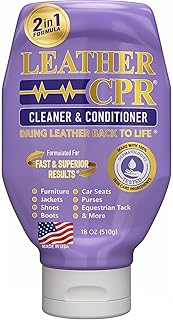
Leather Honey Leather Conditioner is a useful choice when the goal is longer-term conditioning rather than a quick clean. Leather Honey Complete Leather Care Kit is more suitable if you also want a dedicated cleaner and cloths in one package. Leather CPR Cleaner and Conditioner combines the two stages, but it should still be tested first and applied lightly.
Keep conditioner away from remote controls, wood trim, non-leather panels and fabric piping unless the manufacturer says it is safe. Give the sofa several hours to settle before placing throws or cushions back in position.
5. Choose gear that protects the finish—and your body
The best cleaning tool is not the most abrasive one. Use low-lint microfiber cloths that glide with minimal pressure, and replace them when they become visibly dirty. A soft detailing brush helps lift dust from stitching without forcing your fingers into narrow gaps. Nitrile gloves can improve grip and keep repeated exposure to cleaning products off your skin.
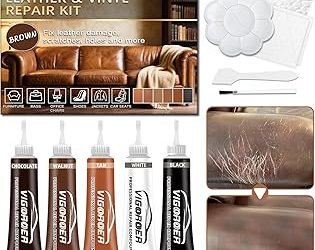
For an occasional deep clean, a Leather Cleaner and Conditioner Kit with cloths and a soft brush can simplify the setup. Use only the supplied brush if it is genuinely soft; stiff bristles are more appropriate for textured footwear than smooth upholstery. Kneel on a padded mat or sit on a low, stable stool rather than crouching for long periods. Keep your shoulders level, alternate hands, and move around the sofa instead of reaching beyond a comfortable distance.
Tips
- Clean high-contact areas every few weeks and give the whole sofa a careful clean about two to four times a year, depending on use.
- Blot spills immediately with a dry cloth. Do not rub, chase the liquid across the surface or use a hair dryer.
- Keep the sofa away from strong sunlight, radiators and heating vents to reduce fading, drying and uneven aging.
- Test every new product on a hidden area, and wait until it dries before checking for color or texture changes.
Frequently Asked Questions
Can I clean a leather sofa with water?
Use only a small amount of clean, lukewarm water on a well-wrung cloth, and only when the leather’s care instructions permit it. Water alone may remove light dust but will not address oily buildup effectively. Never saturate the leather or leave dampness trapped in seams.
How often should I condition a leather sofa?
For most finished-leather sofas, conditioning once or twice a year is enough. More frequent application can create buildup, especially in humid rooms or on sofas that receive little use. Let the leather’s feel and the manufacturer’s instructions guide you rather than applying conditioner on a fixed weekly schedule.
What should I do about a dark grease mark?
Blot fresh grease gently and avoid adding water, which can spread the mark. Do not use kitchen degreaser or powder unless the leather manufacturer recommends it. Persistent stains, dye transfer or large dark patches are best assessed by a professional upholstery cleaner.
Why does my sofa feel sticky after cleaning?
Sticky leather usually indicates product residue, an incompatible cleaner or deterioration of the finish. Wipe gently with a clean, barely damp microfiber cloth if the care instructions allow, then dry naturally. If tackiness remains, stop applying products and contact the sofa maker or a leather specialist.
Conclusion
The safest way to clean a leather sofa is gradual and restrained: identify the leather, remove dry debris first, use minimal moisture, test products, and condition only after the surface is clean and dry. Good technique matters more than force. With soft tools, sensible working positions and a maintenance routine matched to how heavily the sofa is used, you can preserve its finish, comfort and structural life for years.