Key takeaways
- Structure: Look for appropriately sized posts, rigid connections, and a frame that resists sway. Thicker components are useful, but only when paired with sound anchoring and well-designed joints.
- Roof design: Adjustable louvers offer control over sunlight and ventilation, while fixed hardtops provide more consistent shelter. Check how easily the roof operates and where rainwater is directed.
- Weather handling: Aluminum resists rot and usually requires less upkeep; cedar offers warmth and repairability but needs regular sealing. Galvanized steel roofing should have protected edges and secure fastening.
- Ergonomics: Allow comfortable clearance for chairs, umbrellas, grills, and walking routes. A pergola should not force people to duck, squeeze past furniture, or operate controls from an awkward position.
- Installation: Confirm the required foundation, tools, crew size, and assembly time. A durable pergola can still perform poorly if it is not level, square, and firmly attached to a suitable surface.
What's inside
Choosing an outdoor pergola is less straightforward than comparing dimensions and roof styles. A structure that looks substantial in a product photo may have undersized posts, awkward assembly points, poor water management, or a roof that is difficult to operate safely. Wind exposure, drainage, anchoring, maintenance, and the way people actually use the space all matter.
This guide evaluates the leading options from an ergonomics-and-durability perspective. The focus is on usable shade, structural proportions, roof control, weather resistance, circulation around furniture, and the practical details that determine whether a pergola remains comfortable and dependable after repeated seasonal use.
As an Amazon Associate we earn from qualifying purchases.


How to Choose a/an Outdoor Pergola (2026)
- Structure: Look for appropriately sized posts, rigid connections, and a frame that resists sway. Thicker components are useful, but only when paired with sound anchoring and well-designed joints.
- Roof design: Adjustable louvers offer control over sunlight and ventilation, while fixed hardtops provide more consistent shelter. Check how easily the roof operates and where rainwater is directed.
- Weather handling: Aluminum resists rot and usually requires less upkeep; cedar offers warmth and repairability but needs regular sealing. Galvanized steel roofing should have protected edges and secure fastening.
- Ergonomics: Allow comfortable clearance for chairs, umbrellas, grills, and walking routes. A pergola should not force people to duck, squeeze past furniture, or operate controls from an awkward position.
- Installation: Confirm the required foundation, tools, crew size, and assembly time. A durable pergola can still perform poorly if it is not level, square, and firmly attached to a suitable surface.
The Best Outdoor Pergola (2026)s Reviewed
10 x 13 Louvered Aluminum Pergola
This gray louvered pergola combines an aluminum frame with a reinforced steel roof, making it a strong choice for buyers who want hardtop protection without the maintenance demands of timber. Its 10-by-13-foot footprint suits a dining set or compact lounge arrangement, although careful anchoring is essential in exposed locations.
Jocisland 20 x 20 Cedar Gazebo
The Jocisland cedar gazebo is the most spacious option here and is better suited to large gatherings, outdoor kitchens, or several seating zones. Rot-resistant cedar brings a more residential, furniture-like appearance, while the sloped galvanized steel roof should improve runoff; however, its scale demands a level, permanent installation and adequate clearance from surrounding structures.
Aoxun 10 x 16 Louvered Pergola
Aoxun’s 10-by-16-foot pergola emphasizes usability with adjustable roofs, thickened 3.8-inch posts, and a built-in drainage system. The longer footprint gives furniture more breathing room than a square layout, and the drainage design is especially valuable where runoff near doorways or walkways could create a nuisance.
12 x 16 Adjustable-Louver Pergola
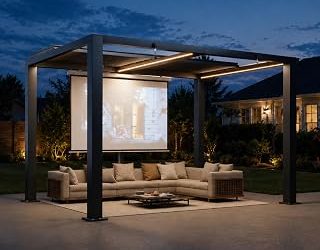
This dark-gray pergola pairs an aluminum frame with adjustable louvers, curtains, netting, and an integrated gutter system. It is a versatile choice for households that want both open-air ventilation and a more enclosed evening setup, though the added accessories create more fabric, hardware, and cleaning points to maintain.
10 x 12 Brown Hardtop Gazebo
With a double galvanized steel roof, curtains, and netting, this 10-by-12-foot model offers a compact, sheltered arrangement for patios and lawns. Its fixed roof favors dependable overhead coverage rather than adjustable sun control, making it a sensible fit for buyers who prioritize simplicity and a defined outdoor room.
Frequently Asked Questions
Are louvered pergolas better than fixed-roof models?
They are more adaptable, allowing occupants to manage sunlight and airflow throughout the day. Fixed roofs generally provide more consistent shelter and have fewer moving parts, so the better choice depends on whether flexibility or mechanical simplicity matters more.
Can an outdoor pergola stay up all year?
Many are designed for permanent installation, but year-round suitability depends on anchoring, local wind and snow conditions, and manufacturer guidance. Remove or secure curtains and netting before severe weather, and do not treat a pergola as a substitute for a fully engineered building.
What surface is best for installation?
A reinforced concrete slab is typically the most stable base. Pavers, decks, and other surfaces can work when the anchoring method is appropriate, but the frame must be level and the fasteners must connect to structural material rather than thin surface boards alone.
How much maintenance does a pergola require?
Aluminum usually needs periodic washing and inspection of fasteners, louvers, and drainage channels. Cedar requires more attention: clean it regularly, inspect for moisture damage, and re-seal it according to the finish and climate.
Final Thoughts
The Aoxun 10 x 16 is a well-balanced choice for adjustable shade, useful proportions, and integrated drainage. Choose the 12 x 16 louvered model when curtains and netting are priorities, or the Jocisland 20 x 20 cedar gazebo when generous entertaining space and a natural architectural presence matter most.