Key takeaways
- 1,000–1,500 PSI: suitable for delicate furniture, painted surfaces, screens, outdoor cushions, and light rinsing. Use a wide spray pattern and keep the nozzle moving.
- 1,500–2,000 PSI: a practical range for vehicles, patio furniture, composite decking, fences, and general household grime when used carefully.
- 2,000–3,000 PSI: useful for concrete, masonry, durable siding, heavily soiled decks, and larger outdoor jobs. Maintain a safe distance from edges and finishes.
- 3,000 PSI and above: primarily for demanding hard-surface work. It can be unnecessarily aggressive for furniture and requires disciplined technique.
What's inside
Choosing the best PSI for a pressure washer is less about finding the biggest number and more about matching cleaning force to the surface, soil, and time available. Excessive pressure can strip paint, scar softwood, damage furniture finishes, and drive water into joints, while too little pressure turns a simple job into tiring, inefficient work.
This guide explains how PSI and GPM work together, which pressure ranges suit household materials, and how to select a machine or accessory that remains comfortable and dependable over repeated use. The goal is controlled cleaning: enough force to remove grime without sacrificing the life of your furniture, siding, deck, vehicle, or pressure washer itself.
As an Amazon Associate we earn from qualifying purchases.


What Is The Best Psi For A Pressure Washer (2026)
PSI Is Only Half the Cleaning Equation
PSI, or pounds per square inch, describes water pressure at the nozzle. GPM, or gallons per minute, describes water volume. PSI helps break the bond between dirt and a surface; GPM carries loosened dirt away and often determines how quickly a broad area can be rinsed.
For comparing machines, consider both figures rather than treating maximum PSI as a performance ranking. A useful shorthand is cleaning power, sometimes expressed as PSI multiplied by GPM. However, manufacturers may advertise maximum or “peak” PSI measured under particular conditions, so real-world output can be lower. Nozzle choice, hose length, water supply, and trigger use also affect performance.
Choose PSI by Surface, Not by Stubbornness
For most household cleaning, moderate pressure is safer and more versatile than maximum pressure:
- 1,000–1,500 PSI: suitable for delicate furniture, painted surfaces, screens, outdoor cushions, and light rinsing. Use a wide spray pattern and keep the nozzle moving.
- 1,500–2,000 PSI: a practical range for vehicles, patio furniture, composite decking, fences, and general household grime when used carefully.
- 2,000–3,000 PSI: useful for concrete, masonry, durable siding, heavily soiled decks, and larger outdoor jobs. Maintain a safe distance from edges and finishes.
- 3,000 PSI and above: primarily for demanding hard-surface work. It can be unnecessarily aggressive for furniture and requires disciplined technique.
Wood deserves special caution. Softwood, weathered timber, and painted wood can show raised grain or visible “wand marks” even at moderate settings. Begin with the widest nozzle, test an inconspicuous area, and increase cleaning power only when the surface clearly tolerates it.
Electric or Gas: Which Type Holds Up Better?
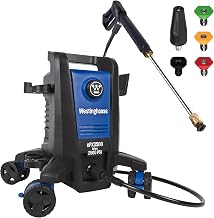
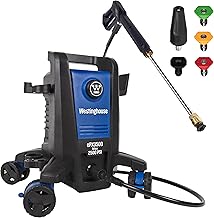
Electric models are generally the better fit for routine home maintenance. They are quieter, lighter, easier to start, and simpler to store. The Westinghouse ePX3500 Electric Pressure Washer is a sensible example for homeowners who want a compact machine with anti-tipping stability, an onboard soap tank, and a useful set of nozzles. Its advertised 2,500 PSI maximum is ample for many cars, fences, patios, and hard surfaces, provided the operator uses an appropriate nozzle.
Gas machines make more sense when you regularly clean large driveways, long fences, extensive decking, or masonry. They typically provide greater flow and avoid dependence on an extension cord, but they add fuel, noise, vibration, maintenance, and starting effort. The Westinghouse WPX3400 Gas Pressure Washer and DeWalt DXPW3300-S are examples of homeowner-oriented machines in the roughly 3,300–3,400 PSI class. Their power is valuable on durable surfaces, but it should not be treated as a reason to use maximum output on furniture.
From an ergonomics standpoint, inspect the handle height, wheel design, wand balance, hose storage, and trigger resistance. A machine that is technically powerful but awkward to move can encourage poor posture, rushed passes, and accidental surface damage.
Nozzles and Accessories Control the Result
The nozzle often matters more than a modest difference in advertised PSI. Wide-angle nozzles spread force over a larger area and are the safest starting point. Narrower tips concentrate energy for stubborn deposits but increase the risk of gouging, streaking, or finish removal. Use the lowest effective setting, hold the wand at a consistent distance, and never pause the spray over one spot.
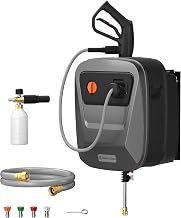
Foam is useful because detergent can soften greasy or organic dirt before rinsing. A short-wand attachment such as the Pressure Washer Accessory Short Wand Foam Cannon can improve control around vehicles and outdoor furnishings, especially where a long wand feels unwieldy. Apply detergent with the correct low-pressure setting, allow appropriate dwell time, and rinse before the solution dries.
Replacement guns can help when a trigger becomes uncomfortable or an original assembly wears out. The Sooprinse High Pressure Washer Gun is rated up to 3,000 PSI and includes quick-connect nozzles, while the GDHXW High Power Washer Gun is marketed with a higher maximum rating and adapters. Confirm hose-thread compatibility, pressure rating, and trigger ergonomics before buying; a high-rated accessory is not automatically suitable for every washer or task.
How to Protect Furniture and Finishes
Pressure washing outdoor furniture is mainly a water-management task. Remove cushions, loose hardware, and delicate accessories first. Keep spray away from bearings, electrical components, wicker openings, seams, and unfinished edges. Start several feet away with a wide fan pattern, then gradually move closer only if necessary.
For painted, stained, or sealed furniture, a mild detergent and soft brush often do more good than additional PSI. Rinse thoroughly, avoid forcing water beneath coatings, and let the piece dry completely before applying oil, sealant, or storing cushions. If a finish is already peeling, pressure washing may accelerate failure; gentle hand cleaning is the safer choice.
Tips
- Test every new surface in a hidden area before cleaning the visible section.
- Keep the wand moving in steady, overlapping passes rather than scrubbing with a concentrated jet.
- Use chemical-resistant gloves, eye protection, and footwear with secure traction.
- Unplug electric machines before inspecting connections, and never spray electrical outlets or fixtures.
Frequently Asked Questions
Is higher PSI always better?
No. Higher PSI can shorten cleaning time on durable concrete or masonry, but it also raises the likelihood of surface damage. The best pressure is the lowest level that removes the soil effectively.
What PSI is safe for patio furniture?
Begin around 1,000–1,500 PSI with a wide-angle nozzle and generous working distance. For painted wood, wicker, plastic, or older finishes, hand washing may be safer than pressure washing.
Is 2,500 PSI enough for a driveway?
It can be enough for routine residential cleaning, particularly when the washer provides good GPM and the surface is pretreated. Deep oil stains, old moss, and large driveways may benefit from the greater flow of a gas model.
Can I use any spray gun or foam cannon?
No. Check the connector style, thread size, maximum PSI and GPM, and whether the accessory is approved for your washer. A mismatch can cause leaks, poor spray performance, or premature component failure.
Conclusion
For most homeowners, the best PSI is a controlled range rather than a maximum specification. A well-designed electric washer around 2,000–2,500 PSI is versatile for regular home care, while a 3,300–3,400 PSI gas machine is better suited to frequent, heavy-duty hard-surface work. Match pressure and flow to the material, choose the widest effective spray, and prioritize balanced equipment that you can operate accurately for the entire job.