Key takeaways
- Compatibility: Confirm the blade’s exact length, width, thickness, and tooth direction against your saw’s specifications. A nominally similar blade may still be unsuitable if it exceeds the machine’s wheel or guide capacity.
- Tooth count: More teeth per inch generally produces a smoother cut in thinner material, while fewer teeth clear sawdust more effectively in thick stock. Aim for at least three teeth engaged in the work whenever possible.
- Tooth pattern: Regular, raker, wavy, and variable-pitch patterns balance finish, chip clearance, and resistance to vibration differently. Variable-pitch blades are often the safest general-purpose choice for mixed work.
- Blade width: Wider blades are more stable for straight cuts and resawing; narrower blades turn tighter curves. Do not choose a wide blade if your saw cannot tension it properly.
- Construction: Bimetal blades combine a flexible alloy backing with harder cutting teeth, making them a sensible durability upgrade for demanding shops. Carbon-steel blades can be economical for lighter, occasional use.
What's inside
Choosing a band saw blade is less straightforward than matching a length and tooth count. A blade that cuts cleanly in one machine may track poorly, heat up, or strip teeth in another because width, thickness, tooth geometry, tension, and wheel diameter all affect performance. For furniture projects, the wrong blade can turn accurate joinery into rough, wandering cuts.
This guide focuses on the practical details that matter at the workbench: durability, vibration control, cut quality, material compatibility, and the realities of home-shop maintenance. The recommendations cover full-size band saws and portable models, with notes to help you match each blade to resawing, curves, general stock preparation, or metal-cutting work.
As an Amazon Associate we earn from qualifying purchases.


How to Choose a/an Band Saw Blades (2026)
- Compatibility: Confirm the blade’s exact length, width, thickness, and tooth direction against your saw’s specifications. A nominally similar blade may still be unsuitable if it exceeds the machine’s wheel or guide capacity.
- Tooth count: More teeth per inch generally produces a smoother cut in thinner material, while fewer teeth clear sawdust more effectively in thick stock. Aim for at least three teeth engaged in the work whenever possible.
- Tooth pattern: Regular, raker, wavy, and variable-pitch patterns balance finish, chip clearance, and resistance to vibration differently. Variable-pitch blades are often the safest general-purpose choice for mixed work.
- Blade width: Wider blades are more stable for straight cuts and resawing; narrower blades turn tighter curves. Do not choose a wide blade if your saw cannot tension it properly.
- Construction: Bimetal blades combine a flexible alloy backing with harder cutting teeth, making them a sensible durability upgrade for demanding shops. Carbon-steel blades can be economical for lighter, occasional use.
The Best Band Saw Blades (2026)s Reviewed
Lenox Classic Tuff Tooth 93-Inch Blade
The Lenox Classic Tuff Tooth is a durable bimetal option for compatible full-size saws, pairing an 18 TPI regular tooth pattern with a wavy set and positive rake. Its 3/4-inch width favors controlled straight cuts and general stock preparation, though it is not the natural choice for tight curves or aggressive thick-stock resawing.
FOXBC 44-7/8-Inch Portable Bandsaw Blades
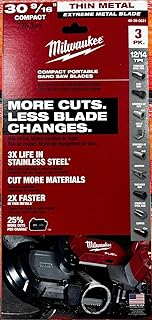
This five-pack is a practical replenishment option for compatible portable band saws, including models using the Milwaukee 48-39-0511 and DeWalt DW3982 blade size. The 14 TPI configuration is a useful middle ground for portable work, while the pack format makes sense for tradespeople and home users who value fewer interruptions.
Lenox Classic Pro Vari-Raker 111.25-Inch Blade
Designed for larger saws that accept a 111.25-inch blade, the Classic Pro Vari-Raker uses a 5–8 TPI variable pitch and a one-inch width for stable, productive cutting. That geometry is better suited to thicker material and demanding straight work than delicate curves; accurate tensioning and wheel tracking are essential to get its full benefit.
Lenox Diemaster 2 93-Inch Blade
The Diemaster 2 combines a relatively narrow 3/8-inch profile with a 14–18 TPI variable tooth arrangement, making it a versatile choice where maneuverability and finish matter. Its bimetal construction should tolerate regular workshop use, but the narrow body still calls for careful setup rather than excessive feed pressure.
LENOX Tools Portable Band Saw Blades, 44-7/8-Inch
This 14 TPI five-pack shares the common 44-7/8 by 1/2-inch portable format and is aimed at users who need straightforward replacement blades for compatible machines. It is a sensible everyday option for general cutting, provided the blade length and tooth orientation match the saw exactly.
Frequently Asked Questions
What band saw blade is best for furniture making?
For general furniture work, a durable bimetal blade with a moderate or variable tooth count is usually the most forgiving choice. Select a wider blade for straight resawing and a narrower one for curved components.
How many teeth per inch should a band saw blade have?
Use a higher TPI blade for thin stock and smoother edges, and a lower TPI blade for thick stock where gullets need room to remove chips. The work should normally contact several teeth at once, rather than sitting on only one or two.
Can a portable band saw blade be used on a stationary saw?
Only if every specification matches, including length, width, thickness, wheel compatibility, and tooth direction. Portable blades are typically too short for full-size machines, so never substitute based on TPI alone.
How can I make a band saw blade last longer?
Install it without twisting, set tension according to the manufacturer’s guidance, keep guides close to the work, and let the teeth—not excessive force—do the cutting. Clean pitch and resin from the blade and replace it when teeth are dull, damaged, or missing.
Final Thoughts
For a robust full-size option, the Lenox Classic Tuff Tooth is a strong all-around candidate, while the Lenox Classic Pro Vari-Raker is better suited to larger machines and thicker stock. Portable-saw owners should look first at the FOXBC pack or LENOX Tools 44-7/8-inch blades, choosing between them only after confirming exact machine compatibility.