Key takeaways
- Post and base support: Look for a stable connection between the posts and the ground or deck. Brackets, anchors, and properly sized lumber matter more than decorative trim when resisting racking and wind.
- Roof design: Slatted and trellis roofs provide filtered shade and airflow, while a slanted layout can help direct rain away from seating. Neither should be treated as a fully waterproof roof without an added covering.
- Material durability: Cedar naturally resists decay, but it still benefits from sensible drainage, periodic inspection, and a finish suited to your climate. Keep end grain and post bases from sitting in standing water.
- Assembly ergonomics: A kit that includes pre-cut components, clear hardware, and sensible access for fastening reduces awkward overhead work. Plan for at least two people when lifting and aligning long beams.
- Site and climate fit: Check the footprint against your usable space and verify local requirements for anchoring. Wind and snow claims are not a substitute for installation on a suitable foundation or for following the manufacturer’s instructions.
What's inside
Choosing a pergola kit is less about appearance than about how well the structure handles real outdoor stress. Wind uplift, seasonal moisture, uneven paving, snow load, fastener quality, and the practical work of keeping posts aligned can separate a dependable shade structure from a frustrating weekend project.
This guide compares wood pergola kits and bracket-based systems from an ergonomics-and-durability perspective. The focus is on assembly demands, structural support, usable shade, maintenance, and the details that affect long-term comfort in a patio, deck, garden, or entertaining area.
As an Amazon Associate we earn from qualifying purchases.


How to Choose a/an Pergola Kit (2026)
- Post and base support: Look for a stable connection between the posts and the ground or deck. Brackets, anchors, and properly sized lumber matter more than decorative trim when resisting racking and wind.
- Roof design: Slatted and trellis roofs provide filtered shade and airflow, while a slanted layout can help direct rain away from seating. Neither should be treated as a fully waterproof roof without an added covering.
- Material durability: Cedar naturally resists decay, but it still benefits from sensible drainage, periodic inspection, and a finish suited to your climate. Keep end grain and post bases from sitting in standing water.
- Assembly ergonomics: A kit that includes pre-cut components, clear hardware, and sensible access for fastening reduces awkward overhead work. Plan for at least two people when lifting and aligning long beams.
- Site and climate fit: Check the footprint against your usable space and verify local requirements for anchoring. Wind and snow claims are not a substitute for installation on a suitable foundation or for following the manufacturer’s instructions.
The Best Pergola Kit (2026)s Reviewed
Backyard Discovery Beaumont Cedar Pergola
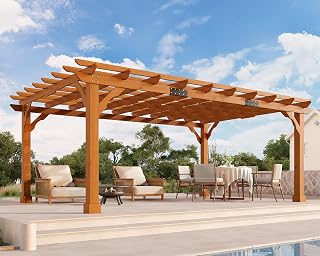
The Beaumont is a strong all-rounder for homeowners who want a finished cedar structure rather than a collection of generic framing parts. Its 12-by-10-foot footprint, trellis roof, high-wind positioning, and integrated PowerPort make it especially practical for outdoor dining, charging devices, or hosting guests. The substantial assembly is easier with a crew, but the design is geared toward a more polished result than a purely improvised build.
Slanted Roof 3-Way Bracket Kit
This bracket system suits experienced DIY builders who want to create a slanted-roof pergola around nominal 4-by-4 lumber, which is typically 3.5 by 3.5 inches actual. It offers design flexibility and can simplify consistent corner geometry, but it places responsibility for lumber selection, anchoring, cutting, and weather protection on the installer.
MUPATER 10-by-12 Cedar Wooden Pergola
MUPATER’s cedar pergola occupies a useful middle ground: a conventional 10-by-12-foot layout with a framed structure and included stakes for a cohesive backyard installation. Its supported snow and wind positioning is appealing, though long-term performance will depend heavily on how securely the posts are anchored and how well the site drains.
Heavy-Duty 3-Way and 4-Way Bracket Kit
This rust-resistant hardware kit is a good choice for builders who want to customize the size or create more complex corner and intersection layouts. The 3-way and 4-way pieces can make framing more repeatable, but brackets do not compensate for undersized lumber or weak foundations; measure carefully and use exterior-rated fasteners appropriate to the environment.
Jocisland 12-by-16 Cedar Pergola
The Jocisland is the space-maker of this group, with a 12-by-16-foot footprint suited to larger patios, garden events, and multiple seating zones. Its trellis roof and reddish-brown cedar appearance create a welcoming outdoor room, while the larger beams and wider span make careful leveling, anchoring, and periodic joint inspection particularly important.
Frequently Asked Questions
Is a pergola kit difficult to assemble?
Most full-size kits are manageable for a confident DIY team, but they are rarely one-person projects. Long beams are awkward to lift, and accurate post alignment is essential, so expect to use temporary bracing, a level, ladders, and at least one additional helper.
Does a pergola provide rain protection?
A slatted or trellis roof primarily provides filtered shade, not waterproof shelter. For reliable rain protection, you may need a compatible canopy, polycarbonate panels, retractable cover, or another engineered roof solution, while checking that the added load is acceptable for the structure.
How should cedar pergola wood be maintained?
Inspect the post bases, fasteners, beam connections, and roof slats at least seasonally. Clean away debris, improve drainage around the supports, and apply a suitable exterior sealer or stain if you want to slow graying and reduce moisture cycling.
Can a pergola be installed on a deck?
Yes, but the pergola must connect to the deck’s structural framing rather than merely to deck boards. A freestanding installation on properly prepared footings may be safer for heavier designs; local building rules can also affect permits, setbacks, and anchoring.
Final Thoughts
The Backyard Discovery Beaumont is the best balanced choice for a polished, feature-rich installation, while the MUPATER offers a practical cedar option at a more approachable scale. For maximum flexibility, the heavy-duty bracket kit is the strongest pick for capable DIY builders who are prepared to engineer the foundation and framing themselves.