Key takeaways
- Turn off power at the breaker and confirm de-energization with a suitable tester before touching wiring.
- Keep your belt buckle between the rails; climb down and reposition instead of leaning.
- Maintain three points of contact whenever possible, using a tool belt or hoist line for small equipment.
- Have another adult stabilize the ladder during setup and keep people clear of the work area.
What's inside
Choosing a ladder for electrical work is less about reaching the highest point and more about controlling risk while you work. A stable base, non-conductive rails, comfortable footing, and enough capacity for both you and your tools can prevent the small slips and awkward reaches that turn routine furniture or home-maintenance tasks into injuries.
This guide explains which ladder styles suit common electrical jobs, how fiberglass construction differs from aluminum, and which specifications deserve close attention. It also reviews several useful options, from compact step ladders to extension and multi-position designs, without treating any ladder as a substitute for shutting off and verifying the power.
As an Amazon Associate we earn from qualifying purchases.


Our Recommended Picks
Choose Fiberglass for Electrical Work
For work near electrical wiring, fiberglass is generally the sensible choice because it does not conduct electricity as readily as aluminum. “Non-conductive” does not mean electrically safe under every condition: wet, dirty, damaged, or contaminated fiberglass can still create hazards, and electricity can travel through nearby hardware or equipment. De-energize the circuit at the breaker, lock or label it when appropriate, and verify that it is dead with a properly rated tester before starting.
For a straightforward indoor job, the Louisville Ladder FS1508, 8-Foot is a practical step-ladder format. If you want particularly generous capacity, an 8-FT Fiberglass Step Ladder, 500 lb Capacity or the Fiberglass 500 lbs Heavy-Duty Step Ladder, 5-Foot provides a broad working platform and wide steps. Their extra capacity is useful when carrying tools, but it never permits climbing above the marked standing level.
Match the Ladder Style to the Task
An A-frame step ladder is usually the best choice for light switches, ceiling fixtures, junction boxes, and other tasks where you can position the ladder directly beneath the work. It opens into a self-supporting structure and should never be leaned against a wall unless the manufacturer specifically allows that configuration.
For stairwells, tall walls, exterior fixtures, or work requiring greater reach, consider a multi-position or extension ladder. The Little Giant Dark Horse 2.0 M17 converts between several configurations and has a 300-pound Type IA rating. The Louisville Ladder FE3216, 16-Foot Fiberglass Extension Ladder is more specialized, offering substantial reach for outdoor work. A compact alternative is the Soctone 14-Ft A-Frame Extension Ladder, which combines multiple positions with a stabilizer bar. Multi-position ladders are versatile, but their hinges, locks, and setup instructions demand careful attention.
Read Capacity and Reach Correctly
The duty rating includes your body weight, clothing, tools, materials, and anything else placed on the ladder. A 300-pound Type IA ladder is not a 300-pound “user plus equipment” allowance. Select a rating comfortably above your combined load, especially if you work in winter clothing or carry a tool bag.
Reach is also frequently misunderstood. A ladder’s advertised length is not the safe standing height, and an extension ladder must extend above a landing enough to provide a secure handhold. Never stand on the top cap or the upper prohibited steps. Follow the label’s highest permitted standing level rather than estimating from the ladder’s overall length.
Prioritize Stability and Ergonomics
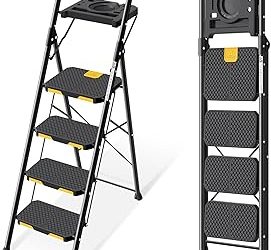
Wide, slip-resistant steps reduce foot fatigue and make it easier to maintain three points of contact. Look for feet that sit flat, remain intact, and grip the actual floor surface. A top platform or tool tray can keep screwdrivers and testers within reach, reducing the temptation to twist or lean sideways.
Before climbing, place the ladder on a firm, level, unobstructed surface. Do not use folded cardboard, loose boards, or improvised shims to correct an uneven floor. A taller ladder is not automatically better: the safest model is usually the shortest one that lets you work with your belt near the task and your shoulders relaxed.
Inspect Before Every Use
Check fiberglass rails for cracks, splinters, deep scratches, swelling, or chemical damage. Test that spreaders, rung locks, hinges, and extension latches engage completely. Clean oily or muddy steps, and replace worn feet rather than trying to restore grip with tape. Store the ladder away from heat, moisture, direct sun, and corrosive chemicals. If it has contacted an energized circuit or sustained a hard fall, remove it from service until a qualified person evaluates it.
Tips
- Turn off power at the breaker and confirm de-energization with a suitable tester before touching wiring.
- Keep your belt buckle between the rails; climb down and reposition instead of leaning.
- Maintain three points of contact whenever possible, using a tool belt or hoist line for small equipment.
- Have another adult stabilize the ladder during setup and keep people clear of the work area.
Frequently Asked Questions
Is fiberglass or aluminum better for electrical work?
Fiberglass is the preferred material near potential electrical exposure because it is non-conductive when clean and undamaged. It still requires normal electrical precautions, and no ladder should be placed where it could contact energized conductors.
What ladder height do I need for ceiling lights?
Many indoor ceiling-light jobs are well served by a 6- or 8-foot step ladder, depending on ceiling height and your own reach. Choose the shortest ladder that allows you to work without standing above the permitted level or stretching.
Can I use a step ladder as a straight ladder?
Only if the manufacturer explicitly approves that configuration. A standard A-frame ladder is designed to be opened and supported by its spreaders. Using it closed against a wall can make the base slide or the frame collapse.
How often should a fiberglass ladder be replaced?
There is no universal replacement interval. Replace it when rails, rungs, feet, locks, or spreaders show damage, excessive wear, or unreliable operation. Heavy commercial use may justify more frequent inspections and earlier replacement.
Conclusion
For most household electrical tasks, a properly sized fiberglass A-frame ladder offers the best balance of insulation from accidental contact, stability, and ergonomic control. Choose a reputable, adequately rated model; inspect it every time; keep your body centered; and treat electrical isolation as a separate, essential safety step. The right ladder makes the job more manageable, but disciplined setup is what makes it safer.