Key takeaways
- Leather type: Match the product to the upholstery. Finished and protected leather is generally more forgiving, while aniline, nubuck, and suede need specialist care rather than a standard conditioner.
- Cleaner versus conditioner: Cleaner removes soil; conditioner replenishes feel and flexibility. They are different maintenance steps, and heavy conditioning cannot compensate for a dirty surface.
- Residue control: A sofa should not feel oily or tacky after treatment. Prefer formulas that can be spread thinly and buffed or allowed to absorb without creating a dust-catching film.
- Coverage and ergonomics: Larger bottles reduce interruptions on sectionals, but a manageable applicator, cloth, or sponge helps prevent hand fatigue and uneven pressure during a full-room furniture treatment.
- Color confidence: “Safe for all colors” is useful guidance, not a substitute for a patch test. Darkening can result from both the formula and moisture temporarily changing the leather’s appearance.
What's inside
A sofa can look tired long before its frame or suspension has genuinely worn out. Dry, stiff leather develops a less comfortable hand feel, while the wrong cleaner can leave glossy patches, darkened areas, or residue that attracts grit. Upholstery also faces unusually demanding conditions: body oils, denim dye, pet contact, food spills, and repeated flexing across the same seating zones.
This guide focuses on leather-care products that make sense for furniture, not merely for shoes or vehicle interiors. The recommendations emphasize predictable application, surface compatibility, conditioning without excessive slickness, and practical bottle sizes for treating an entire sofa. Always test an inconspicuous area first, and confirm whether your upholstery is finished leather, aniline, nubuck, suede, faux leather, or vinyl before applying any product.
As an Amazon Associate we earn from qualifying purchases.



How to Choose a/an Leather Care For Sofa (2026)
- Leather type: Match the product to the upholstery. Finished and protected leather is generally more forgiving, while aniline, nubuck, and suede need specialist care rather than a standard conditioner.
- Cleaner versus conditioner: Cleaner removes soil; conditioner replenishes feel and flexibility. They are different maintenance steps, and heavy conditioning cannot compensate for a dirty surface.
- Residue control: A sofa should not feel oily or tacky after treatment. Prefer formulas that can be spread thinly and buffed or allowed to absorb without creating a dust-catching film.
- Coverage and ergonomics: Larger bottles reduce interruptions on sectionals, but a manageable applicator, cloth, or sponge helps prevent hand fatigue and uneven pressure during a full-room furniture treatment.
- Color confidence: “Safe for all colors” is useful guidance, not a substitute for a patch test. Darkening can result from both the formula and moisture temporarily changing the leather’s appearance.
The Best Leather Care For Sofa (2026)s Reviewed
Leather Honey Leather Conditioner
Leather Honey’s conditioner is a strong choice for sofas that feel dry or slightly rigid, particularly when the goal is restoring a supple hand rather than producing a shiny finish. Its broad furniture positioning and suitability for all colors, including white, make it a practical general-purpose option; apply a very thin coat and give it adequate time to absorb.
Leather Honey Leather Cleaner
This cleaner is the logical first step for upholstery carrying body oils, everyday dust, or light household grime. It is designed for leather, faux leather, and vinyl, which gives it useful versatility, although users should still verify the sofa’s material and avoid saturating seams, perforations, or cushions with exposed edges.
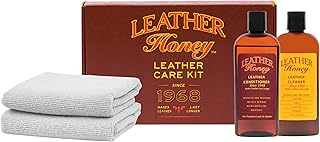
Leather Honey Complete Leather Care Kit
The cleaner-and-conditioner combination is convenient when a sofa needs a complete maintenance cycle rather than a single touch-up. Having both products in one package encourages the correct sequence—clean, allow the surface to dry appropriately, then condition—and is a sensible choice for owners who want one coordinated system for furniture and accessories.
Bick 4 Leather Conditioner & Cleaner
Bick 4 is appealing when preserving the existing color is a priority, with the manufacturer positioning it as a conditioner that will not darken leather. Its compact 8-ounce format is easy to handle on a smaller sofa or for spot maintenance, though treating a large sectional may require more planning and careful product rationing.
Leather Honey Complete Leather Care Kit with Cloths
This version adds cloths to the cleaner-and-conditioner pairing, reducing the need to improvise with household textiles that may shed lint or have detergent residue. It is particularly useful for methodical sofa care: one cloth can handle initial application while another is reserved for final wiping, helping keep pressure and coverage consistent.
Frequently Asked Questions
How often should I condition a leather sofa?
For a normally used sofa, conditioning once or twice a year is a reasonable starting point. High-use seating, dry indoor air, direct sunlight, or visibly stiff leather may justify more frequent inspection, but over-conditioning can leave buildup and does not replace cleaning.
Should I clean or condition the sofa first?
Clean first, then let the surface become suitably dry before conditioning. Applying conditioner over dust, skin oils, or spills can trap soil against the finish and make the result uneven. Use modest amounts and work in small sections.
Can leather conditioner be used on faux leather or vinyl?
Not automatically. Some products are explicitly formulated for faux leather and vinyl, while others are intended for genuine leather only. Check the label and test an unseen area; synthetic upholstery can react differently, especially if its protective coating is worn.
Why did my sofa look darker after treatment?
Moisture and conditioner can temporarily deepen the appearance of leather, particularly on lighter or absorbent surfaces. Darkening can also indicate excess product or incompatibility. Stop, remove any surface residue gently, allow the area to settle, and compare it with an untreated section.
Final Thoughts
For dry, frequently used upholstery, Leather Honey Leather Conditioner is the most focused pick, while the Leather Honey Cleaner is the better starting point for soiled surfaces. Buyers wanting a coordinated routine should consider the Leather Honey Complete Leather Care Kit with Cloths; for a smaller maintenance job with color preservation in mind, Bick 4 is a well-balanced alternative.