Key takeaways
- Measure the full footprint: Record the chair’s width, depth, and height, then add room for footrest deployment and comfortable access to side pockets or controls.
- Check wall clearance: A conventional recliner may need substantial space behind it, while a wall-hugging or compact mechanism can preserve valuable walking room.
- Prioritize stable support: Look for a broad base, firm frame, and a seat that lets your feet rest naturally rather than leaving your knees elevated.
- Match motion to the room: Swivel and rocker functions are useful in nurseries and conversation areas, but they require clearance and may be less suitable beside delicate furniture.
- Choose practical upholstery: Chenille and fabric can feel warm and inviting, while darker colors and removable or easy-clean surfaces are often more forgiving in busy homes.
What's inside
Finding a genuinely compact recliner is harder than finding a small chair. Many models save floor space but sacrifice leg support, tipping stability, or usable clearance behind the backrest. Others feel comfortable in a showroom yet become awkward in a narrow apartment, nursery, RV, or bedroom.
This guide evaluates small-space recliners through an ergonomics-and-durability lens: overall footprint, reclining clearance, seat support, movement, upholstery practicality, and the daily demands placed on hinges and frames. The goal is not simply to identify the smallest chair, but to match each design with the spaces and users it can serve well.
As an Amazon Associate we earn from qualifying purchases.


How to Choose a Recliner For Small Spaces (2026)
- Measure the full footprint: Record the chair’s width, depth, and height, then add room for footrest deployment and comfortable access to side pockets or controls.
- Check wall clearance: A conventional recliner may need substantial space behind it, while a wall-hugging or compact mechanism can preserve valuable walking room.
- Prioritize stable support: Look for a broad base, firm frame, and a seat that lets your feet rest naturally rather than leaving your knees elevated.
- Match motion to the room: Swivel and rocker functions are useful in nurseries and conversation areas, but they require clearance and may be less suitable beside delicate furniture.
- Choose practical upholstery: Chenille and fabric can feel warm and inviting, while darker colors and removable or easy-clean surfaces are often more forgiving in busy homes.
The Best Recliner For Small Spaces (2026)s Reviewed
Korser Swivel Rocker Recliner in Chenille Beige
This Korser combines a compact recliner format with swivel and rocking movement, making it particularly useful in a nursery, reading corner, or apartment living room. The side pockets improve everyday usability, while the upholstered surface should feel more welcoming than bare faux leather; just allow enough surrounding clearance for the rotating base.
Korser Compact Manual Recliner
The second Korser model takes a more straightforward lounge-chair approach, with thick upholstery and side storage in a relatively space-conscious design. Its simpler manual mechanism can be a sensible choice for bedrooms, apartments, or RVs where fewer moving parts and easy operation matter more than powered adjustment.
Small Swivel Rocker Recliner in Dark Grey
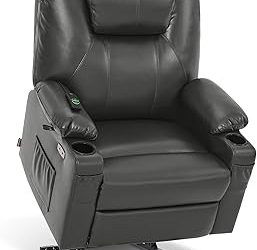
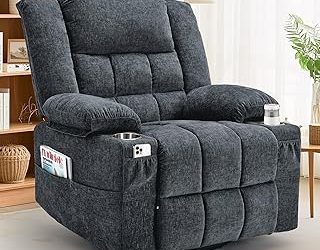
This dark-grey swivel rocker is aimed at buyers who want motion without committing to a large traditional recliner. The neutral upholstery is practical for high-use rooms, while the rocking base can help the chair function as both a relaxation seat and a flexible conversation chair; verify the assembled dimensions carefully before placing it in a tight passage.
Furnimart Small Manual Recliner
Furnimart emphasizes a chunky, overstuffed cushion profile, which may suit users who prefer a softer, more enveloping seat. That extra padding can improve perceived comfort, but it also makes accurate measurements especially important: thick cushioning and a generous footrest may occupy more usable space than the compact label suggests.
Velvet Upholstered Glider Recliner
This velvet-upholstered chair adds 360-degree swiveling and gliding movement to a small recliner footprint, giving it strong appeal for nurseries and multipurpose living spaces. Its soft fabric and side pockets favor relaxed, frequent use, though the moving base should sit on a stable, level surface and away from rugs that can bunch beneath it.
Frequently Asked Questions
What makes a recliner suitable for a small room?
A suitable model has a narrow overall width, controlled depth, and a reclining mechanism that does not demand excessive space behind the chair. The important measurement is the operating footprint, not just the folded dimensions shown in a listing.
Are swivel rocker recliners a good choice for apartments?
They can be, especially when one chair needs to serve several seating directions. However, the rotating and rocking action needs open space around the base, so avoid placing one where it can strike a wall, table, cabinet, or nearby person.
Is manual reclining better for durability?
Not automatically, but a manual mechanism is usually simpler than a powered system and does not depend on a motor, cable, or electrical connection. Durability still depends on frame construction, hinge quality, sensible weight distribution, and avoiding forceful operation.
How much clearance should I leave around a compact recliner?
Leave enough room for the footrest to extend fully, for a person to enter and exit without twisting, and for the back or base to move safely. Because mechanisms vary, use the manufacturer’s clearance guidance and test the intended position before final assembly if possible.
Final Thoughts
For a flexible nursery or living-room seat, the Korser Swivel Rocker Recliner is a well-rounded starting point. The Furnimart Small Manual Recliner is better suited to shoppers prioritizing thick cushioning, while the Velvet Upholstered Glider Recliner stands out when smooth movement and a softer decorative finish are equally important.