Key takeaways
- Ergonomic Handle Design: Look for a pistol grip that distributes trigger pull force across your palm rather than concentrating it on two fingers. A fatigued grip hand slows you down and invites sloppy work around vehicle panels.
- Vibration Dampening: Units with brushless motors and rubber-isolated mounts transmit noticeably less vibration to the wand. Over a full workday, reduced vibration means sharper wrist control and less joint strain.
- Hose and Fitting Build: Steel-braided or kink-resistant hoses with brass quick-connect fittings outlast plastic alternatives by a wide margin. Check the hose length—25 feet is the minimum for reaching around most vehicles without repositioning the base unit constantly.
- Motor Longevity: Brushless electric motors run cooler and have fewer wearing parts than brushed designs. For gas units, a commercial-grade OHV engine signals better long-term durability under sustained use.
- Weight and Portability: A mobile setup needs to load in and out of a van repeatedly. Units under 40 pounds with integrated wheels and a compact frame save your lower back over months of daily transport.
What's inside
Mobile detailing lives and dies by equipment that won’t quit halfway through a job. A pressure washer that sputters, overheats, or shakes itself apart after a few weeks of driveway work costs you time, money, and client trust. Most buyers get overwhelmed by spec sheets, chasing raw PSI numbers while overlooking the traits that actually determine how long a unit lasts and how comfortable it is to operate over an eight-hour day.
This guide cuts through that noise with a focus on build quality, vibration control, hose durability, and real-world handling—the details that separate a one-season tool from a years-long workhorse. We evaluated six popular pressure washers across the mobile detailing spectrum and ranked the five most值得 recommending for professional and serious hobbyist use.
As an Amazon Associate we earn from qualifying purchases.


How to Choose a Pressure Washer For Mobile Detailing (2026)
- Ergonomic Handle Design: Look for a pistol grip that distributes trigger pull force across your palm rather than concentrating it on two fingers. A fatigued grip hand slows you down and invites sloppy work around vehicle panels.
- Vibration Dampening: Units with brushless motors and rubber-isolated mounts transmit noticeably less vibration to the wand. Over a full workday, reduced vibration means sharper wrist control and less joint strain.
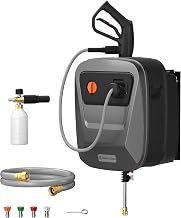
- Hose and Fitting Build: Steel-braided or kink-resistant hoses with brass quick-connect fittings outlast plastic alternatives by a wide margin. Check the hose length—25 feet is the minimum for reaching around most vehicles without repositioning the base unit constantly.
- Motor Longevity: Brushless electric motors run cooler and have fewer wearing parts than brushed designs. For gas units, a commercial-grade OHV engine signals better long-term durability under sustained use.
- Weight and Portability: A mobile setup needs to load in and out of a van repeatedly. Units under 40 pounds with integrated wheels and a compact frame save your lower back over months of daily transport.
The Best Pressure Washer For Mobile Detailing (2026)s Reviewed
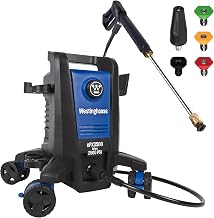
Westinghouse WPX3400e Electric Pressure Washer
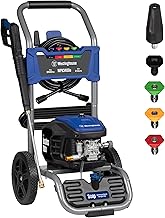
The WPX3400e stands out for its brushless motor, which runs cooler and lasts longer under the kind of sustained use that mobile detailers demand. At 3,400 PSI with 2.0 GPM, it delivers strong cleaning force without the vibration penalty of a gas engine, and the onboard soap tank reduces setup time between vehicles. Its weight and footprint make it one of the more practical units to shuttle in and out of a work vehicle day after day.
Westinghouse WPX3400 Gas Pressure Washer
For detailers working far from power outlets, the gas-powered WPX3400 steps up with 2.6 GPM flow that rinses soap and grime faster than any electric unit on this list. The tradeoff is added weight and vibration, but Westinghouse’s frame construction holds up well to repeated transport. This is the choice when raw throughput matters more than portability convenience.
Sun Joe SPX3000 Pressure Washer
Sun Joe’s SPX3000 remains a popular entry point, but its 2,030 PSI rated output (2,500 max) and higher-vibration motor mean it suits occasional or light-duty detailing rather than daily professional use. The dual detergent tanks are a nice touch, though the plastic hose fittings are the first components likely to need attention after a season of use.
Active 2.0 Electric Pressure Washer
At 1,800 peak PSI and 2.0 GPM, the Active 2.0 is purpose-built for the detailing workflow rather than blasting grime off driveways. Its lower pressure is gentler on paint and trim, and the unit’s compact design makes it easy to stow. Where it falls short is durability under heavy, all-day operation—the motor housing and internal seals may not withstand the demands of a full-time operation.
CRAFTSMAN CMEPW1700 Electric Pressure Washer
Craftsman’s 1,700 PSI unit is the lightest option here, making it genuinely easy to carry with one hand. For a side hustle or weekend detailing gig, the simplicity is appealing. Durability-wise, the brushed motor and compact design work best with lighter loads and shorter run times; pushing it hard for hours will shorten its service life noticeably.
Frequently Asked Questions
Is 2,000 PSI enough for mobile detailing?
Yes, and in many cases it is preferable. Most paint-safe detailing work happens between 1,200 and 2,200 PSI. Higher PSI numbers are useful for pre-rinsing wheels and undercarriages, but excessive pressure risks paint damage on delicate surfaces.
Should I choose electric or gas for mobile detailing?
Electric units are lighter, quieter, and more practical for residential neighborhoods where noise matters. Gas gives you more GPM for rinsing speed and independence from power sources, but adds weight, exhaust, and maintenance needs. Most mobile detailers default to electric unless they work in locations without reliable outlets.
How often should I replace the hose on a pressure washer?
With daily professional use, inspect your hose every three months and plan to replace it annually or at the first sign of bulging, cracking, or leaking fittings. A braided stainless-steel hose extends that timeline significantly compared to standard rubber.
What nozzle tip is safest for detailing a car?
The 40-degree (white) nozzle is the standard for body panels and glass. The 25-degree tip works on wheel wells and tires. Avoid anything narrower than 25 degrees on painted surfaces—the concentrated stream can etch clear coat almost instantly.
Final Thoughts
For mobile detailers who need a reliable daily workhorse, the Westinghouse WPX3400e delivers the best balance of power, brushless-motor longevity, and ergonomic handling. The gas-powered WPX3400 takes the crown when outlet access is limited and rinse speed is critical. Budget-conscious operators starting out will find the Sun Joe SPX3000 a serviceable stepping stone, though investing in the WPX3400e upfront pays dividends in durability and reduced fatigue over the long run.