Key takeaways
- Weight and balance at the handle: A unit under fifteen pounds with a center of gravity near the grip point will spare your forearm during a full-vehicle wash. Anything top-heavy forces compensatory grip tension that compounds fast.
- Nozzle interchange system: Quick-connect fittings with detent clicks outlast twist-lock couplings by a wide margin. Look for metal spring-loaded connectors rather than plastic collars that crack under thermal cycling.
- Hose length and material: A twenty-foot hose is the minimum for walking around most sedans without dragging the base unit. Thermoplastic hoses resist kinking better than PVC, especially in sub-40-degree garage environments.
- Motor housing and seal quality: Corded electric units with a brass water pump connection and sealed motor enclosure resist corrosion from splashback far better than plastic pump housings, which are the first failure point on budget machines.
- Foam cannon construction: A detachable cannon with an adjustable dial lets you dial in the soap-to-water ratio your paintwork actually needs. Fixed-mix dispensers waste product and leave streaks.
What's inside
Most shoppers browsing pressure washers for car detailing walk into the same trap: they chase the highest PSI number on the box, get the unit home, and discover it either blasts away clear coat or feels like holding a vibrating cinder block for twenty straight minutes. What actually matters for car work is a careful balance between enough cleaning force and a design that will not wreck your wrists or fall apart after one summer of weekend use.
This roundup, written from an ergonomics and long-term durability standpoint, breaks down six models you will encounter everywhere from Amazon to big-box shelves. We evaluated each one on weight distribution, grip comfort, hose flexibility in cold weather, motor housing construction, and how the included accessories hold up after repeated storage and transport. Below you will find our curated picks, followed by a buyer’s framework you can apply to any model on the market.
As an Amazon Associate we earn from qualifying purchases.


How to Choose a Car Detail Pressure Washer (2026)
- Weight and balance at the handle: A unit under fifteen pounds with a center of gravity near the grip point will spare your forearm during a full-vehicle wash. Anything top-heavy forces compensatory grip tension that compounds fast.
- Nozzle interchange system: Quick-connect fittings with detent clicks outlast twist-lock couplings by a wide margin. Look for metal spring-loaded connectors rather than plastic collars that crack under thermal cycling.
- Hose length and material: A twenty-foot hose is the minimum for walking around most sedans without dragging the base unit. Thermoplastic hoses resist kinking better than PVC, especially in sub-40-degree garage environments.
- Motor housing and seal quality: Corded electric units with a brass water pump connection and sealed motor enclosure resist corrosion from splashback far better than plastic pump housings, which are the first failure point on budget machines.
- Foam cannon construction: A detachable cannon with an adjustable dial lets you dial in the soap-to-water ratio your paintwork actually needs. Fixed-mix dispensers waste product and leave streaks.
The Best Car Detail Pressure Washers (2026) Reviewed
Sun Joe SPX3000
The SPX3000 pushes a genuine 2030 PSI through a dual-detergent tank system that keeps your wash and rinse soaps separate and instantly deployable. Its weight sits low on the chassis, making it one of the more stable wheeled units you will maneuver across a driveway. The lance handle could use a rubber overmold for long sessions, but the steel wand itself is built to last multiple seasons without complaint.
Westinghouse ePX3100v
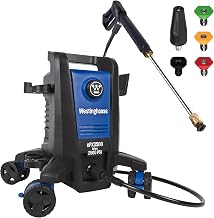
Westinghouse got the carry handle right — a sculpted grip that distributes load across the palm rather than concentrating it at a single pressure point. The pro-style steel wand and detachable foam cannon feel like accessories borrowed from a pricier tier, and the three-nozzle set covers the full range from fan-rinse to pinpoint-degunking. This is the unit to grab if you move it between storage and work area frequently.
Hiclean 2100 PSI
Compact without feeling flimsy, the Hiclean’s housing conceals a motor that delivers consistent pressure without the surging that plagues cheaper 2100-class units. The included turbo and fan nozzles click in and out smoothly, and the foam cannon seats firmly with zero wobble. At its weight class it strikes the strongest balance between portability and genuine cleaning output.
CRAFTSMAN CMEPW1700
At 1700 PSI and 1.2 GPM, this is the lightest unit in the lineup, clearly designed for the person who wants to pull it out, clean a car, and put it away in under ten minutes. The compact footprint stores easily on a shelf, and the overall build quality punches above its price class — the trigger lock and hose fittings feel genuinely durable rather than like afterthoughts.
Cordless 6-in-1 Portable Pressure Washer
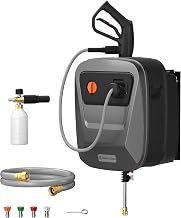
The cordless format eliminates trip-hazard cables entirely, which is an underrated ergonomic win when you are working around vehicles on wet pavement. Dual 4.0 Ah batteries deliver enough runtime for a single-vehicle detail, and at 1300 PSI it handles road film and wheel grime without threatening delicate trim. The telescoping handle and six spray patterns make this surprisingly versatile for a handheld.
Frequently Asked Questions
Is 1700 PSI enough for car detailing?
For paint-safe washing, absolutely — 1700 to 2000 PSI sits in the sweet spot where road grime lifts cleanly without risking clear coat damage. Higher PSI matters more for concrete and masonry, so do not pay a premium for power you will never apply to a vehicle panel.
What nozzle tip should I use on car paint?
Start with the 25-degree green tip for general washing and switch to the 40-degree white tip near plastic trim or rubber seals. A foam cannon between the wand and nozzle tip pre-softens dirt so you can maintain distance and still get thorough coverage.
How important is hose flexibility?
Very. A stiff hose fights you around every corner of the vehicle, tangles during storage, and develops stress cracks at fittings after repeated coiling. Thermoplastic and rubber-blend hoses stay pliable in cold weather and resist kinking, saving real time during every wash session.
Should I choose corded or cordless for car detailing?
Corded models deliver higher, more consistent pressure and never run out of charge mid-wash. Cordless units win on convenience, safety around wet surfaces, and storage simplicity. If you detail one car per week at home, cordless is perfectly adequate; if you handle multiple vehicles or heavy decontamination work, corded is the more reliable investment.
Final Thoughts
From an ergonomics and durability standpoint, the Westinghouse ePX3100v leads this field thanks to its thoughtful carry handle design, steel wand, and balanced weight distribution. The Sun Joe SPX3000 remains the most proven workhorse for buyers who want maximum PSI in a wheeled platform, and the CRAFTSMAN CMEPW1700 is the strongest lightweight pick for quick, frequent sessions where pulling out a full-size unit feels like overkill. Any of these three will serve you well through years of regular weekend detailing.