Key takeaways
- Motor Type: Brushless motors run cooler, quieter, and last significantly longer than brushed alternatives. For a tool you’ll use repeatedly in enclosed garages, the reduced vibration and noise from a brushless design make a noticeable difference in operator comfort.
- PSI vs. GPM Balance: Car paint responds best to moderate pressure paired with adequate water flow. Look for units in the 1,800–2,500 PSI range with at least 1.4 GPM — this combination lifts grime without risking paint damage and keeps rinse cycles efficient.
- Weight and Handle Design: You’ll be repositioning constantly around the vehicle. A unit under 25 pounds with a well-placed carry handle reduces fatigue during 30- to 45-minute sessions, and wheeled carts aren’t always practical in tight garage spaces.
- Nozzle Variety and Foam Compatibility: Quick-connect nozzle sets with 15°, 25°, and 40° tips give you the range needed for wheels, panels, and trim. A dedicated foam cannon attachment — or a built-in soap tank — is essential for pre-wash stages that protect your paint.
- Cord and Hose Length: Measure your vehicle plus the distance to your outlet. At least 20 feet of hose and a 35-foot power cord ensure you can walk a full-size SUV without unplugging mid-rinse, which is a constant frustration with shorter setups.
What's inside
Shopping for a pressure washer to detail your car can feel like navigating a minefield of misleading specs and one-size-fits-all marketing. Buyers repeatedly run into the same trap: they chase the highest PSI number on the box, only to discover that raw pressure without controlled flow actually strips wax, damages clear coat, and tires out the operator within minutes. Meanwhile, the wrong weight distribution or a stiff trigger mechanism turns what should be a satisfying weekend task into a forearm workout nobody signed up for.
This guide cuts through the noise with a focus on what actually matters when you’re standing next to your vehicle with a wand in hand: manageable weight, intuitive ergonomics, a motor built to outlast more than a single season, and spray output tuned for automotive surfaces rather than concrete slabs. We’ve narrowed the field to five electric pressure washers that balance cleaning power with the finesse car detailing demands.
As an Amazon Associate we earn from qualifying purchases.



How to Choose a Pressure Washer For Detailing Cars (2026)
- Motor Type: Brushless motors run cooler, quieter, and last significantly longer than brushed alternatives. For a tool you’ll use repeatedly in enclosed garages, the reduced vibration and noise from a brushless design make a noticeable difference in operator comfort.
- PSI vs. GPM Balance: Car paint responds best to moderate pressure paired with adequate water flow. Look for units in the 1,800–2,500 PSI range with at least 1.4 GPM — this combination lifts grime without risking paint damage and keeps rinse cycles efficient.
- Weight and Handle Design: You’ll be repositioning constantly around the vehicle. A unit under 25 pounds with a well-placed carry handle reduces fatigue during 30- to 45-minute sessions, and wheeled carts aren’t always practical in tight garage spaces.
- Nozzle Variety and Foam Compatibility: Quick-connect nozzle sets with 15°, 25°, and 40° tips give you the range needed for wheels, panels, and trim. A dedicated foam cannon attachment — or a built-in soap tank — is essential for pre-wash stages that protect your paint.
- Cord and Hose Length: Measure your vehicle plus the distance to your outlet. At least 20 feet of hose and a 35-foot power cord ensure you can walk a full-size SUV without unplugging mid-rinse, which is a constant frustration with shorter setups.
The Best Pressure Washer For Detailing Cars (2026) Reviewed
Sun Joe SPX3000
The SPX3000 remains a benchmark in the under-$150 electric pressure washer category, and for good reason. Its dual detergent tank system lets you switch between a pre-wash citrus cleaner and a pH-neutral soap without stopping, while the 2030 PSI PWMA-rated output sits right in the sweet spot for automotive clear coat. The frame is surprisingly rigid for its price point, and the 34-foot power cord eliminates the extension-cord hassle that plagues competitors in this tier.
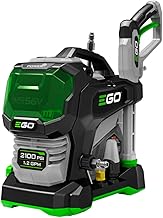
EGO Power+ HPW2100
EGO’s entry into the pressure washer market brings the same battery ecosystem philosophy that made their lawn equipment dominant, though you’ll need to purchase the battery and charger separately. The 2100 PSI output is precisely calibrated for vehicle work — aggressive enough to cut through road film yet gentle enough for ceramic-coated finishes. At roughly 18 pounds without the battery, this is the lightest option here, and the IPX4 water-resistance rating on the body means you won’t baby it around puddles.
Hiclean Electric Pressure Washer
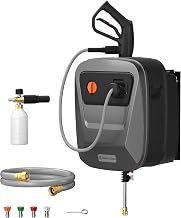
Hiclean has carved out a niche by packaging a foam cannon and turbo nozzle into a compact unit that weighs under 15 pounds. The 2100 PSI rating matches well with the included fan and turbo nozzles, giving you two distinct spray patterns for different detailing stages. Its shorter hose means you’ll need to reposition the base unit on larger vehicles, but for sedans and compacts parked in a driveway, the footprint is genuinely convenient. Build quality feels one tier above its price class, with a steel wand that doesn’t flex under pressure.
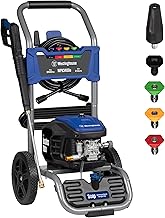
Westinghouse WPX3400e
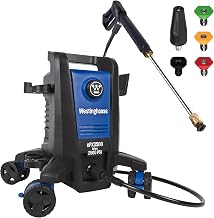
With 3400 Max PSI and a brushless motor, the WPX3400e is the most powerful unit on this list — and it earns that headroom. The onboard soap tank holds enough solution for a full vehicle, and the five-nozzle set covers every angle from a focused 0° pinpoint to a wide 40° rinse. The brushless motor’s longevity is a genuine durability advantage; it runs cooler under sustained use, meaning the internal seals and pump components aren’t subjected to the heat cycling that kills cheaper motors. This is the pick if you detail more than your own vehicles.
Westinghouse ePX3100v
The ePX3100v strikes a thoughtful middle ground: 2100 Max PSI with 1.76 GPM flow, a detachable foam cannon, and a built-in carry handle that sits at the ergonomic center of gravity when lifted. The pro-style steel wand resists the flex that plastic alternatives develop after a few seasons. It’s heavier than the EGO and Hiclean but lighter than the WPX3400e, making it a practical choice for someone who wants real cleaning authority without committing to the largest unit in the category.
Frequently Asked Questions
What PSI is safe for washing a car at home?
Anything between 1,200 and 2,200 PSI is considered safe for automotive paint when used with the correct nozzle at an appropriate distance. The danger isn’t the number on the pump — it’s standing six inches away with a 0° tip. Use a 25° or 40° nozzle and maintain 12 to 18 inches of distance from the panel, and even 2500 PSI units will clean without damage.
Should I get an electric or gas pressure washer for car detailing?
Electric is almost always the better choice for vehicle work. Gas units generate noise levels exceeding 85 decibels, produce exhaust fumes you don’t want near your paint, and typically deliver more pressure than car surfaces need. Electric models run quiet enough to use in an attached garage and power down instantly, which matters when you’re alternating between spraying and hand-wiping.
How often should I use a pressure washer during a detail?
Most professional detailers use a pressure washer twice per session: once for a pre-wash with foam to loosen embedded dirt, and again for a final rinse after hand-washing with a mitt. Overuse during a single detail adds unnecessary water exposure to door seals, mirror housings, and electrical connectors. Efficient technique means fewer passes, not more.
Does a foam cannon really make a difference?
Absolutely. A foam cannon coats the vehicle in a thick layer of surfactant that dwells on the surface and encapsulates grit particles before they contact the paint. Skipping the foam stage and going straight to a wash mitt means you’re dragging those particles across the clear coat under hand pressure — the leading cause of swirl marks in home detailing.
Final Thoughts
For most car owners detailing at home, the Sun Joe SPX3000 delivers the best balance of price, performance, and durability in a package that won’t overwhelm your garage space. If you prioritize lightweight portability and own a battery-compatible EGO ecosystem, the HPW2100 is the specialist tool that makes every session faster. And for anyone running a side business or managing multiple vehicles, the Westinghouse WPX3400e’s brushless motor and superior flow rate represent an investment that pays for itself in longevity alone.