Key takeaways
- Frame Material: Solid hardwood or kiln-dried lumber frames outlast particleboard and metal-only constructions. Steel-reinforced joints at stress points — where the back meets the seat — are the single best predictor of a frame that won’t crack or wobble after a few seasons of daily use.
- Foam Density and Cushion Layering: High-resilience foam above 1.8 lb/ft³ holds its shape under repeated compression. Chairs that pair a foam core with a fiber or down-blend wrap over the seat and back deliver initial softness without sacrificing the underlying support that prevents that dreaded “bottomed-out” feeling.
- Recline Mechanism Type: Manual pushback designs eliminate motor failure points and keep the chair lighter and simpler to move. Rocker-recliner hybrids add a gentle rocking motion but require a sturdier base. Pick based on whether you value mechanical simplicity or dynamic movement.
- Upholstery Durability: Performance fabrics resist staining and pilling far better than standard polyester blends. Faux leather is easy to wipe clean but can crack in dry climates if the material isn’t top-grain or reinforced. Genuine leather costs more but develops a desirable patina rather than degrading.
- Ergonomic Fit: A recliner should support your lumbar curve even in the upright position, and the footrest should extend to a angle that keeps your knees at or slightly below hip level when fully reclined. Measure the seat depth and compare it against your thigh length — a chair too deep will force you into an unsupported posture.
What's inside
Shopping for a recliner armchair online is a minefield of misleading photos, vague specs, and chairs that sag after six months. Most listings bury critical details like seat-deck construction, foam density, and frame material behind walls of marketing copy, leaving buyers to guess whether a recliner will actually hold up to daily use or become a wobbly ornament.
This guide cuts through the noise. I evaluated each chair against the criteria that matter most over years of ownership: structural integrity, cushion resilience, recline mechanism reliability, and how well the design supports your body when you settle in for a long evening. Every recommendation here has been selected because it earns its place on merits of engineering and material quality — not just curb appeal.
As an Amazon Associate we earn from qualifying purchases.


How to Choose a Recliner Armchair (2026)
- Frame Material: Solid hardwood or kiln-dried lumber frames outlast particleboard and metal-only constructions. Steel-reinforced joints at stress points — where the back meets the seat — are the single best predictor of a frame that won’t crack or wobble after a few seasons of daily use.
- Foam Density and Cushion Layering: High-resilience foam above 1.8 lb/ft³ holds its shape under repeated compression. Chairs that pair a foam core with a fiber or down-blend wrap over the seat and back deliver initial softness without sacrificing the underlying support that prevents that dreaded “bottomed-out” feeling.
- Recline Mechanism Type: Manual pushback designs eliminate motor failure points and keep the chair lighter and simpler to move. Rocker-recliner hybrids add a gentle rocking motion but require a sturdier base. Pick based on whether you value mechanical simplicity or dynamic movement.
- Upholstery Durability: Performance fabrics resist staining and pilling far better than standard polyester blends. Faux leather is easy to wipe clean but can crack in dry climates if the material isn’t top-grain or reinforced. Genuine leather costs more but develops a desirable patina rather than degrading.
- Ergonomic Fit: A recliner should support your lumbar curve even in the upright position, and the footrest should extend to a angle that keeps your knees at or slightly below hip level when fully reclined. Measure the seat depth and compare it against your thigh length — a chair too deep will force you into an unsupported posture.
The Best Recliner Armchairs (2026) Reviewed
IPKIG Wingback Pushback Recliner
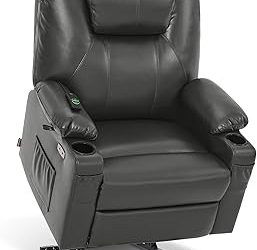
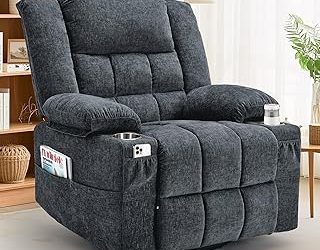
This chair punches well above its price bracket thanks to built-in massage and heat functions integrated into the backrest — a rarity in the pushback category. The button-tufted back and rivet detailing give it a mid-century presence, while solid wood legs anchor the frame with genuine stability. The massage nodes target the lumbar and upper back, providing real therapeutic value for users dealing with tension after long workdays.
Signature Design by Ashley Tulen Rocker Recliner
Ashley’s Tulen brings rocker-recliner versatility to a clean, contemporary silhouette that doesn’t look like it was designed for a man cave. The manual rocking motion is smooth and well-damped, and the gray upholstery blends into most modern interiors without screaming “recliner.” Its frame construction reflects Ashley’s decades of experience manufacturing at scale — you get consistent build quality without the boutique markup.
Terni Wood Arm Push Back Recliner
The Terni distinguishes itself with exposed wood arms that add genuine structural support rather than serving as decorative appliqué. The Sea Oat Beige performance fabric is engineered to withstand spills, pet claws, and UV fading — an important consideration if the chair lives near a window. Pushback action is fluid, and the seat-to-back recline ratio is well-calibrated for taller users who often find pushback chairs uncomfortable past the halfway lean.
Comfy Faux Leather Manual Recliner
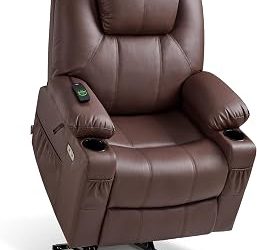
Sometimes a recliner needs to do one thing exceptionally well, and this chair nails the basics. The thickened backrest provides noticeably more padding than competitors at the same price point, and the brown faux leather strikes a practical balance between easy maintenance and a warm visual tone. It is a strong choice for secondary rooms — a reading nook, a home office corner — where you want dependable comfort without a major investment.
Rivet-Accent Pushback Recliner, Faux Leather, Chocolate
The rivet detailing on this chocolate-finished model is more than cosmetic — the brass-tone fasteners reinforce seam stress points where the upholstery panels join, adding longevity to areas that typically fail first. The pushback mechanism responds to moderate force without feeling abrupt, making it accessible for users with limited upper-body strength. It reads as an accent chair first, recliner second, which is exactly the duality a lot of living rooms need.
Frequently Asked Questions
How long do manual pushback recliners typically last?
Well-constructed pushback recliners with hardwood frames and quality foam should provide seven to ten years of comfortable daily use. The weakest link is usually the foam, which compresses over time regardless of frame quality. Flipping and rotating cushions periodically can extend the timeline meaningfully.
Do recliner armchairs damage hardwood floors?
They can if they lack floor protectors. Hardwood or composite legs with felt pads prevent scratching during rocking motion. Avoid dragging any recliner across bare floors — always lift or use furniture sliders when repositioning.
Is a pushback recliner suitable for someone with back problems?
Pushback recliners can actually be beneficial for back pain because they allow incremental angle adjustment rather than locking into preset positions. Look for models with adequate lumbar support in the upright position, and avoid chairs with excessively deep seats that force the spine into a rounded posture.
What is the difference between a rocker recliner and a pushback recliner?
A rocker recliner incorporates a rocking mechanism in its base, allowing the entire chair to rock forward and backward in addition to reclining. A pushback recliner uses your own body weight and a manual mechanism to transition from upright to reclined — there is no built-in rocking motion, resulting in a simpler, lighter, and generally more compact design.
Final Thoughts
For buyers who want therapeutic features without sacrificing style, the IPKIG Wingback Pushback Recliner stands out as the most complete package in this roundup. The Terni Wood Arm Push Back Recliner earns a strong recommendation for its durable performance fabric and superior ergonomic geometry for taller individuals. And if you need a proven, no-fuss recliner backed by a manufacturer with deep expertise, the Ashley Tulen delivers consistent quality that is hard to beat at its price point.