Key takeaways
- Useful pressure: For routine vehicle washing, adjustable control matters more than maximum PSI. A broad fan nozzle and moderate setting are safer for paint, glass, badges, and rubber seals.
- Flow rate: GPM determines how quickly loosened dirt is rinsed away. Higher flow can shorten cleaning time, but it also increases water use and may require a stronger outdoor water supply.
- Handling: Look for a balanced frame, large wheels, a comfortable spray gun, and a wand that does not feel front-heavy. Anti-tip features are particularly useful when pulling the hose around a parked vehicle.
- Durability: Induction or brushless motors, quality pumps, reinforced hose connections, and metal spray wands generally withstand repeated use better than lightweight components that flex or feel loose.
- Vehicle accessories: A foam cannon, onboard detergent tank, and several quick-connect nozzles make pre-rinsing and contact washing more efficient. Never use a narrow, high-impact nozzle close to painted surfaces.
What's inside
Washing a vehicle at home is deceptively easy to get wrong. Excessive pressure can lift trim, force water past weather seals, strip wax, or drive grit across paintwork; an awkward machine can also make a simple rinse unnecessarily tiring. The best pressure washer for vehicles balances usable cleaning power with a forgiving spray pattern, stable handling, and enough hose reach to work around a car without repeatedly repositioning the unit.
This guide evaluates vehicle-friendly pressure washers from an ergonomics-and-durability perspective. It considers pressure control, water flow, wand comfort, stability, hose management, pump construction, and the practical difference between electric and gas power. The goal is not the biggest specification on the box, but a machine that cleans effectively while reducing the chance of paint damage and user fatigue.
As an Amazon Associate we earn from qualifying purchases.


How to Choose a Pressure Washer For Vehicles (2026)
- Useful pressure: For routine vehicle washing, adjustable control matters more than maximum PSI. A broad fan nozzle and moderate setting are safer for paint, glass, badges, and rubber seals.
- Flow rate: GPM determines how quickly loosened dirt is rinsed away. Higher flow can shorten cleaning time, but it also increases water use and may require a stronger outdoor water supply.
- Handling: Look for a balanced frame, large wheels, a comfortable spray gun, and a wand that does not feel front-heavy. Anti-tip features are particularly useful when pulling the hose around a parked vehicle.
- Durability: Induction or brushless motors, quality pumps, reinforced hose connections, and metal spray wands generally withstand repeated use better than lightweight components that flex or feel loose.
- Vehicle accessories: A foam cannon, onboard detergent tank, and several quick-connect nozzles make pre-rinsing and contact washing more efficient. Never use a narrow, high-impact nozzle close to painted surfaces.
The Best Pressure Washer For Vehicles (2026)s Reviewed
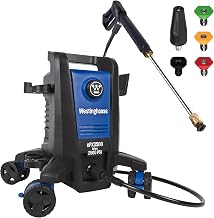
Westinghouse ePX3500 Electric Pressure Washer
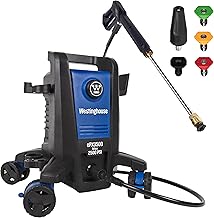
The ePX3500 is a well-rounded choice for homeowners who want compact storage and reassuring stability. Its anti-tipping design, onboard soap tank, steel wand, and 2500-PSI maximum output create a practical setup for cars, SUVs, patios, and occasional household cleaning. The 1.76-GPM maximum flow is ample for rinsing loosened road film, while electric operation avoids fuel handling and engine vibration.
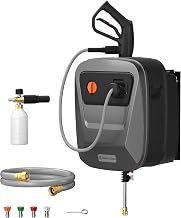
Bright Green Pressure Washer with Foam Cannon
This compact power washer is appealing for buyers who want a straightforward vehicle-cleaning kit with four quick-connect nozzles and a foam cannon. Its versatility is useful for light-duty car washing and general outdoor chores, although the lighter construction and less established platform make it better suited to occasional use than demanding, frequent cleaning. Keep the nozzle moving and begin with the widest spray pattern.
DeWalt 3300 PSI Gas Pressure Washer
The DeWalt DXPW3300-S brings substantial capability in a residential gas model, with 3300 PSI, 2.4 GPM, a 25-foot hose, five nozzles, and an ergonomic spray gun. Its AAA axial cam pump and sturdy layout suit large vehicles, trailers, and driveways, but the output is more than most cars need at close range. Buyers should value its reach and durable build while using conservative pressure around paint, trim, and wheel finishes.
Simpson Aluminum Series ALH3425
For demanding users, the Simpson ALH3425 combines a Honda GX200 engine with a professional-grade AAA triplex pump, 3600 PSI, and 2.5 GPM. Its aluminum frame reduces the burden of moving a gas machine, while the 35-foot hose improves access around larger vehicles. This is a powerful, durable investment rather than a casual car-wash appliance, so careful nozzle selection and generous working distance are essential.
Greenworks 3000 PSI Brushless Electric Pressure Washer
The Greenworks 3000-PSI brushless model is a strong middle ground for homeowners who want electric convenience without giving up useful cleaning performance. Its 2.0-GPM maximum flow supports fast rinsing, and the brushless motor should offer quieter, lower-maintenance operation than a basic brushed design. It has enough reserve for larger vehicles and household surfaces, provided the operator resists using maximum output on delicate areas.
Frequently Asked Questions
What PSI is safe for washing a car?
A moderate setting, commonly around 1200 to 2000 PSI at the wand, is a sensible starting point for vehicle exteriors. Use a wide fan nozzle, keep the spray moving, and maintain distance; the washer’s maximum rating is not the pressure you must use.
Is an electric or gas pressure washer better for vehicles?
Electric models are usually preferable for routine car washing because they are quieter, easier to start, lighter, and simpler to store. Gas units make more sense when you also clean trailers, equipment, large driveways, or several vehicles where extra flow and hose reach save time.
Can a pressure washer remove stuck-on brake dust?
It can loosen surface contamination, but pressure alone is not a substitute for an appropriate wheel cleaner and soft agitation. Pre-rinse thoroughly, apply a vehicle-safe product, and avoid forcing high-pressure water into bearings, electrical connectors, or damaged wheel finishes.
Should I use a foam cannon on painted surfaces?
Yes, when paired with a vehicle-safe shampoo and a properly diluted solution. Foam is most useful for softening grit before contact washing; it should be rinsed away without allowing the detergent to dry on the paint.
Final Thoughts
The Westinghouse ePX3500 is the most balanced everyday pick for many households, while the Greenworks 3000 PSI brushless model offers a capable electric upgrade. For heavy-duty users, the Simpson ALH3425 delivers the strongest durability and reach, but its power demands disciplined technique around vehicle paint.