Key takeaways
- Frame Material and Corrosion Resistance: Powder-coated aluminum and galvanized steel are the benchmarks. Aluminum is inherently rust-proof and lighter for rearranging; steel adds heft that helps in high-wind areas but demands intact coating to prevent oxidation. Avoid untreated or lightly painted iron.
- Cushion Fabric and Fill: Solution-dyed acrylic and olefin fabrics resist UV fading significantly longer than polyester blends. For fill, closed-cell foam or high-resilience foam with a density above 1.8 lb/ft³ retains its shape and dries faster than loose polyester fiberfill, which clumps and holds moisture.
- Ergonomic Seating Depth: A seat depth between 20 and 24 inches accommodates most adults without forcing lumbar support off the backrest. Anything deeper looks luxurious but often requires extra throw pillows to sit upright — a functional problem disguised as a style choice.
- Joint and Weld Quality: On wicker and rattan pieces, inspect whether the weave wraps around the frame or is merely glued to a flat surface. For metal frames, continuous welds at stress points (armrest-to-seat, leg-to-base) dramatically outperform spot welds under repeated loading cycles.
- Cover Inclusion and Storage: A fitted waterproof cover extends sofa lifespan by 30–50% in harsh climates. Verify whether the cover is included or sold separately — some brands list it as a selling point but charge extra, inflating the true ownership cost.
What's inside
Most people shopping for an outdoor sofa are chasing the same promise — a living-room-level sit that won’t degrade after two seasons of sun, rain, and weekend barbecues. The reality is messier. Frames corrode, cushions mildew, and that “all-weather” label often crumbles under actual UV exposure. As someone who tests furniture joints for failure points and evaluates fabric abrasion resistance for a living, I can tell you the difference between a sofa that lasts and one that warps usually comes down to three things: frame metallurgy or wood treatment, cushion fill density, and joint construction — none of which show up in a glossy product photo.
This guide cuts through the marketing language. I evaluated six popular 3-seat outdoor sofas across load-bearing capacity, material degradation timelines, ergonomic depth-to-height ratios, and real-world weathering performance. Below you’ll find the five that earned a recommendation, along with a no-nonsense buying framework so you can match a sofa to your specific climate and usage pattern.
As an Amazon Associate we earn from qualifying purchases.


How to Choose an Outdoor Sofa (2026)
- Frame Material and Corrosion Resistance: Powder-coated aluminum and galvanized steel are the benchmarks. Aluminum is inherently rust-proof and lighter for rearranging; steel adds heft that helps in high-wind areas but demands intact coating to prevent oxidation. Avoid untreated or lightly painted iron.
- Cushion Fabric and Fill: Solution-dyed acrylic and olefin fabrics resist UV fading significantly longer than polyester blends. For fill, closed-cell foam or high-resilience foam with a density above 1.8 lb/ft³ retains its shape and dries faster than loose polyester fiberfill, which clumps and holds moisture.
- Ergonomic Seating Depth: A seat depth between 20 and 24 inches accommodates most adults without forcing lumbar support off the backrest. Anything deeper looks luxurious but often requires extra throw pillows to sit upright — a functional problem disguised as a style choice.
- Joint and Weld Quality: On wicker and rattan pieces, inspect whether the weave wraps around the frame or is merely glued to a flat surface. For metal frames, continuous welds at stress points (armrest-to-seat, leg-to-base) dramatically outperform spot welds under repeated loading cycles.
- Cover Inclusion and Storage: A fitted waterproof cover extends sofa lifespan by 30–50% in harsh climates. Verify whether the cover is included or sold separately — some brands list it as a selling point but charge extra, inflating the true ownership cost.
The Best Outdoor Sofas (2026) Reviewed
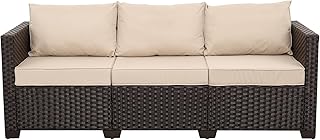
Patio Couch PE Rattan 3-Seat Sofa (Brown)
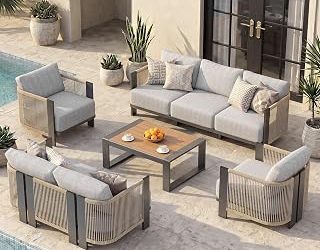
This deep-seating wicker set earns points for its anti-slip beige cushion covers and solid PE rattan weave density, which resists UV cracking better than budget-grade alternatives. The steel inner frame provides adequate rigidity, though at this price point it is best suited to covered patios rather than fully exposed decks. A strong entry-level pick for sheltered outdoor spaces.
Signature Design by Ashley Clare View Eucalyptus Sofa
The standout here is the 5-step weather-shielded eucalyptus finish — genuinely durable rather than a thin surface stain — paired with Nuvella stain-resistant fabric that handles spills without aggressive scrubbing. Ergonomically, the deep-seated frame with 4 accent pillows offers excellent lumbar customization. Ashley’s build quality shows in the tight joinery, making this the most reliable long-term investment on this list.
Kiss the Water Aluminum Patio Sofa Set
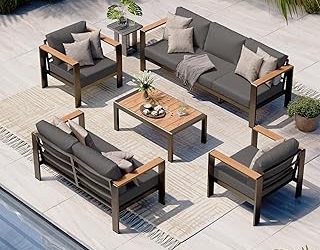
All-aluminum construction means zero rust anxiety, and the 5-inch olefin cushions are among the thickest in this roundup, delivering real support without bottoming out on the frame. The modern silhouette and light grey palette suit contemporary patios. This sofa performs particularly well in coastal or high-humidity environments where other materials deteriorate quickly.
3-Seat Aluminum Rope Weave Sofa (Gray Oak)
The rope-weave technique is a welcome departure from standard PE rattan — it breathes better, sheds water faster, and introduces a subtle texture that ages gracefully. Aluminum framing keeps weight manageable, and the deep-seating cushion profile aligns well with ergonomic best practices for extended lounging. A smart choice for decks and porches where airflow matters.
Rattaner Outdoor 3-Seat Sofa (Light Grey)
High backrest design is the differentiator here, offering genuine head and neck support that most outdoor sofas ignore entirely. The included waterproof cover and anti-slip cushions address the two most common ownership complaints. Steel framing adds sturdiness, and the light grey tone resists visible fading. One of the most complete packages if you value ergonomics out of the box.
Frequently Asked Questions
What frame material lasts longest outdoors?
Powder-coated aluminum lasts the longest in most climates because it does not rust. Eucalyptus wood, when treated with a multi-step sealant, comes second and offers a warmer aesthetic. Galvanized steel performs well but requires an intact coating — once chipped, corrosion accelerates quickly at the damage site.
How do I prevent outdoor sofa cushions from developing mold?
Store cushions vertically after rain so water drains instead of pooling. Closed-cell or high-density foam dries significantly faster than polyester fiberfill. A waterproof cover used when the sofa is idle for more than a day or two is the single most effective mold-prevention step.
Is PE rattan the same as natural rattan?
No. PE (polyethylene) rattan is a synthetic material designed to withstand UV and moisture. Natural rattan is a plant fiber that degrades outdoors within months. For any exterior application, PE rattan is the only viable option.
What seat depth is most comfortable for extended sitting?
A seat depth of 20 to 24 inches supports most body types without pushing your back away from the lumbar rest. Depths beyond 24 inches feel spacious for lounging upright but typically require supplemental pillows to maintain proper spinal alignment over long periods.
Final Thoughts
For buyers prioritizing long-term durability and structural integrity, the Signature Design by Ashley Clare View offers the best overall build quality. If you need a rust-proof solution for a humid or coastal setting, the Kiss the Water Aluminum Sofa is hard to beat. And for ergonomic comfort straight out of the box, the Rattaner 3-Seat Sofa with its high backrest delivers support that the competition simply doesn’t match.