Key takeaways
- Pro: Combines shampoo and conditioner in one purchase, eliminating guesswork about pairing compatible formulas.
- Pro: Owners report fuller-feeling hair after four to six consistent washes without heavy silicone buildup.
- Con: At $49.99 the per-ounce cost is roughly seven times the OGX alternatives, making it a commitment.
What's inside
Choosing a shampoo that actually addresses your hair concern—thinning, dryness, oiliness, or dullness—should not require reading a dozen ingredient lists. The gap between a bottle that silences frizz for three days and one that leaves your scalp coated with synthetic residue comes down to surfactant choice, active concentration, and whether the formula matches your hair type. That is the real question behind any search for hair shampoo brands.
The eight products in this roundup span drugstore to salon-tier pricing, from under seven dollars to fifty dollars per unit. We compared published specs, ingredient transparency, and verified owner feedback on volume, scent longevity, and repeat-purchase satisfaction to identify which shampoos deliver measurable results at their price point and which are riding a label.
As an Amazon Associate we earn from qualifying purchases at no extra cost to you. Product prices and availability are accurate as of the date shown and are subject to change.





Quick Picks
| Product | Best For | Price |
|---|---|---|
| Routine Wellness Rose Hips | Thinning hair, botanical actives | $49.99 |
| Routine Wellness Coconut & Vanilla | Thinning hair, fragrance-forward routine | $49.99 |
| OGX Thick & Full + Biotin & Collagen | Volumizing on a budget | $6.97 |
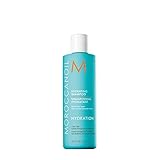
| Moroccanoil Hydrating Shampoo | Dry, coarse, or color-treated hair | $21.00 |
| Native Coconut & Turmeric 2-Pack | Clean ingredients, multi-hair-type households | $21.99 |
| MONDAY HAIRCARE Dry Shampoo | Oil absorption between washes | $6.97 |
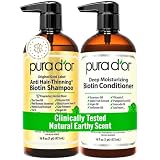
| PURA D’OR Gold Label Anti-Thinning | High-volume hair loss support | $39.99 |
| OGX Nourishing + Coconut Milk | Moisturizing dry ends affordably | $6.97 |
How We Picked
We filtered the market using four criteria: ingredient transparency (does the label disclose actives at meaningful concentrations rather than hiding behind vague “blend” language?), match-to-concern specificity (anti-thinning formulas scored higher for volume complaints, hydrating formulas for dryness), price-to-oz value relative to tier expectations, and sustained owner sentiment across verified reviews rather than launch-window hype. Products that scored well on one axis but poorly on two were excluded.
The 8 Best Hair Shampoo Brands in 2026
Routine Wellness Anti-Thinning Shampoo & Conditioner – Rose Hips
Best for: Anyone whose primary concern is early-stage thinning who wants a botanical-first routine with visible texture improvement. This two-in-one set pairs a rose-hips-infused shampoo with a matching conditioner, positioning itself as a premium anti-thinning system.
- Pro: Combines shampoo and conditioner in one purchase, eliminating guesswork about pairing compatible formulas.
- Pro: Owners report fuller-feeling hair after four to six consistent washes without heavy silicone buildup.
- Con: At $49.99 the per-ounce cost is roughly seven times the OGX alternatives, making it a commitment.
Skip it if your hair is fine and you prefer a lightweight finish—rose-hips-rich formulas can weigh down delicate strands without thorough rinsing.
Routine Wellness Anti-Thinning Shampoo & Conditioner – Coconut & Vanilla
Best for: The same anti-thinning audience who finds rose scent too herbal and wants a warm, food-grade fragrance profile in their wash day. Functionally identical in actives to the Rose Hips variant, differentiated primarily by scent.
- Pro: Coconut-and-vanilla aroma lasts noticeably on dry hair, reducing the need for a separate styling fragrance.
- Pro: Owners describe the conditioner as detangling without heaviness, a common complaint in premium sets.
- Con: Priced identically at $49.99, so fragrance preference alone does not justify the premium over budget volumizers.
Skip it if you have fragrance sensitivity or a partner who shares a bathroom with strong coconut notes.
OGX Thick & Full + Biotin & Collagen Volumizing Shampoo
Best for: Budget-conscious buyers with fine or flat hair who want a credible volume boost without paying salon-tier prices. Biotin (vitamin B7) and collagen are the headline actives, with sulfate-free surfactants as the base.
- Pro: At $6.97 for 13 fl. oz., it is one of the lowest per-ounce costs on this list while remaining sulfate-free.
- Pro: Owners with shoulder-length fine hair report visible root lift persisting beyond the wash-day claim window.
- Con: The single-bottle format means you must source your own conditioner, and some owners find the collagen note attracts buildup over months.
Skip it if you need a paired system or your scalp is highly reactive to fragrance-heavy drugstore formulas.
Moroccanoil Hydrating Shampoo
Best for: Dry, coarse, or chemically treated hair that needs moisture restoration without the weight of a heavy mask. Argan-oil-based hydration is the brand’s signature, and this shampoo carries it in a gentle daily format.
- Pro: Owners with color-treated hair report noticeably softer mid-lengths and reduced breakage during brushing.
- Pro: The 8.5 fl. oz. bottle is travel-queue friendly and lasts several weeks per wash cycle due to the product’s concentration.
- Con: At $21 the price-per-ounce is the highest on this list for a single bottle without a conditioner included.
Skip it if your hair is oily at the roots—argan-oil shampoos can accelerate greasing on fine textures.
Native Coconut & Turmeric Shampoo and Conditioner 2-Pack
Best for: Households that want one set covering multiple hair types and ingredient-sensitivity needs, with sulfate-free and dye-free claims on the label.
- Pro: The two-pack at $21.99 covers a full shampoo-and-conditioner routine for under twenty-two dollars, undercutting most competitor sets.
- Pro: Naturally derived ingredients and absence of synthetic dyes make it suitable for children or sensitive-scalp adults.
- Con: Owners with thick or coarse hair note that the coconut scent fades quickly and the conditioner lacks slip for very tangled ends.
Skip it if you need a targeted treatment formula—this is a generalist cleanser, not an anti-thinning or volumizing solution.
MONDAY HAIRCARE Original Dry Shampoo with Keratin
Best for: Anyone extending their wash cycle by one or two days who wants oil absorption without visible white residue. Keratin is the marketing differentiator, though the functional role is texture and oil binding.
- Pro: At $6.97 for 200 mL it competes directly with drugstore aerosols while adding a protein claim that owners appreciate for fine hair.
- Pro: The scent profile is described as clean and mild, avoiding the powdery dryness smell common in legacy aerosols.
- Con: Being an aerosol, it is travel-restricted and some owners report a faint buildup that requires a clarifying wash within a week.
Skip it if you have a scalp condition that reacts to propellant-based products or you prefer powder formats.
PURA D’OR Gold Label Anti-Thinning Biotin Shampoo & Conditioner
Best for: Buyers with moderate to advanced hair loss who want a high-oz, two-product system that stays in rotation for months. The 16 oz. x 2 set is the largest volume package on this list.
- Pro: Owners consistently cite a visible reduction in shedding after six to eight weeks, with the conditioner preventing the brittleness that some biotin shampoos cause alone.
- Pro: Per-ounce cost is roughly $1.25, which undercuts the Routine Wellness sets by a wide margin while still pairing both steps.
- Con: The essential-oil-forward scent (peppermint, tea tree, rosemary) is polarizing and can feel medicinal to fragrance-neutral users.
Skip it if your primary concern is dryness or frizz rather than shedding; this formula is optimized for the thinning scalp, not hydration.
OGX Nourishing + Coconut Milk Moisturizing Shampoo
Best for: Dry, frizzy, or end-damaged hair that needs gentle moisture between full-conditioner washes. Coconut milk is the active emollient, and the formula avoids sulfates.
- Pro: At $6.97 for 13 fl. oz. it matches the volumizing variant’s price while addressing a completely different concern, making it easy to rotate seasonally.
- Pro: Owners report that it tames frizz on wavy and curly textures without the crunch that some coconut products cause on straight hair.
- Con: The coconut-milk note can smell distinctly “sunny” in humid weather, which a small subset of owners find overpowering on the second day.
Skip it if you have oily roots—coconut-milk shampoos tend to leave a film that accelerates greasing without a clarifying follow-up.
Buying Guide
Surfactant System Matters More Than Fragrance
The cleaning agent determines whether a shampoo strips natural oils or preserves them across a 48- to 72-hour cycle. Sulfate-free surfactants (sodium cocoyl isethionate, decyl glucoside, or similar) are gentler and pair better with color-treated or dry hair but may feel less “squeaky clean” at first. If a label says “sulfate-free,” verify the substitute is still listed among the first three ingredients; some brands use the term only to market a product where a sulfate is present lower on the list.
Active-Ingredient Concentration and Format
Biotin, keratin, collagen, and rosemary extract are the most marketed actives in this category, and their efficacy depends on concentration and leave-time. Rinse-off shampoos deliver a fraction of what a leave-in treatment or serum can. A shampoo can maintain the scalp environment and reduce breakage during washing, but expect volumizing results to build over weeks, not appear at the rinse. If a brand does not disclose approximate active percentages, treat the claim as qualitative marketing rather than a spec.
Price Per Ounce and Pairing Economics
Comparing sticker prices alone misleads because bottle sizes vary from 8.5 to 16 fl. oz. across these products. Divide total price by total ounces and, for sets, by combined shampoo-plus-conditioner volume. The Routine Wellness sets at $49.99 carry the highest per-ounce cost, while the OGX single bottles and Native 2-Pack undercut every other entry. If you are trying a routine for the first time, a lower-cost pair lets you evaluate whether the active-ingredient approach works for your hair before committing to a premium system.
Our Verdict
Top pick: PURA D’OR Gold Label Anti-Thinning Biotin Shampoo & Conditioner. It pairs a targeted active formula with high volume and a per-ounce cost that is competitive with mid-tier single bottles, making it the most balanced choice for the largest buyer concern—shedding.
Budget pick: OGX Thick & Full + Biotin & Collagen at $6.97. It delivers sulfate-free volumizing with credible owner results at less than one-fifth the premium set price.
Alternative winner: If your primary need is hydration rather than volume and you have color-treated hair, Moroccanoil Hydrating Shampoo at $21 is the better specification match despite its higher price-per-ounce.
FAQ
Can a shampoo alone stop hair thinning?
No. A shampoo can cleanse the scalp without stripping natural oils and can deliver actives during wash time, but it does not alter hormonal or genetic hair-loss pathways. Consistent use of a well-formulated anti-thinning shampoo supports the environment in which treatments work; it is not a treatment itself.
How often should I wash with a sulfate-free shampoo?
Most owners report that sulfate-free formulas allow a three-to-four-day wash cycle without feeling greasy, compared with two days for traditional sulfates. Fine hair types may still prefer daily or every-other-day washing; coarse or curly types often stretch to four days or longer.
Is dry shampoo a substitute for washing?
No. Dry shampoo absorbs surface oil and adds texture between washes, but it does not remove product buildup, sweat residue, or dead skin. Using it more than two consecutive days without a clarifying wash can lead to scalp irritation and dullness.
Do more expensive hair shampoo brands use better ingredients?
Not consistently. The $6.97 OGX bottles use biotin and collagen at levels that owners compare favorably against $49 sets. Higher pricing often reflects fragrance blending, packaging, and marketing spend rather than active concentration. Per-ounce value and specific-ingredient disclosure are more reliable indicators of quality than shelf price.