A nature made fish oil purchase sounds simple until you compare eight bottles side by side and realize the real decision is not whether to supplement but which formulation matches your tolerance, your budget, and how many capsules you are willing to swallow daily. The omega-3 space is crowded enough without considering that softgel size, concentration, and enteric coating all shift the experience from “easy habit” to “something I skip by Thursday.”
This roundup pulls together the current Nature Made fish oil line and compares published specs, sticker prices, and recurring themes from long-term owner reviews. What separates a smart buy from a wasteful one in this category comes down to three things: cost per serving relative to your target dose, whether you need burp control or can tolerate standard softgels, and whether a larger bottle actually saves you money or just locks you into a product you might grow out of. We assigned each option below a role based on those axes.
Our top picks
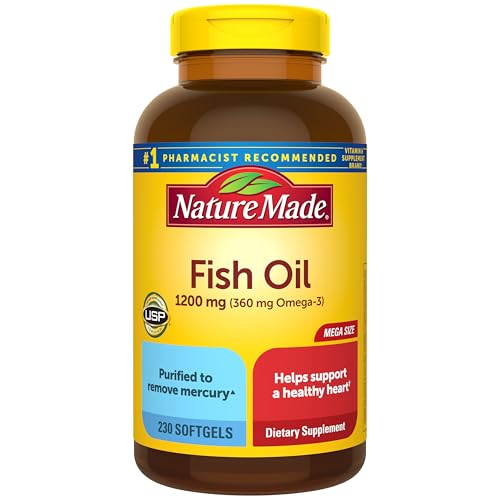 Nature Made Fish Oil Omega 3 Supplements
- Heart health support supplement: contains one 230 count…
- This Nature Made Omega 3 Fish Oil supplement…
- One serving of two fish oil softgels provides…
 Nature Made Fish Oil Omega 3 Supplements
- Heart Health Support Supplement: One 250 count bottle…
- Omega 3 Fish Oil Supplements: Nature Made Omega…
- Healthy Heart Support: One serving of two fish…
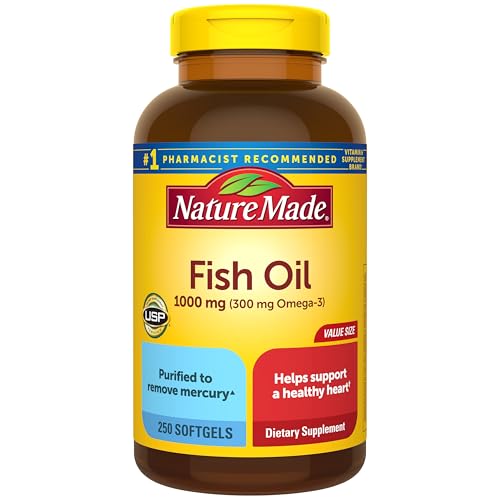 Nature Made Fish Oil Omega 3 Supplements
- Heart health support supplement: contains one 250 count…
- Nature Made Omega 3 Fish Oil 1000 mg…
- One serving of two fish oil softgels provides…
| Product | Key specs | |
|---|---|---|
| Nature Made Fish Oil Omega 3 Supplements | Heart health support supplement: contains one 230 count… This Nature Made Omega 3 Fish Oil supplement… One serving of two fish oil softgels provides… | Check price |
| Nature Made Fish Oil Omega 3 Supplements | Heart Health Support Supplement: One 250 count bottle… Omega 3 Fish Oil Supplements: Nature Made Omega… Healthy Heart Support: One serving of two fish… | Check price |
| Nature Made Fish Oil Omega 3 Supplements | Heart health support supplement: contains one 250 count… Nature Made Omega 3 Fish Oil 1000 mg… One serving of two fish oil softgels provides… | Check price |
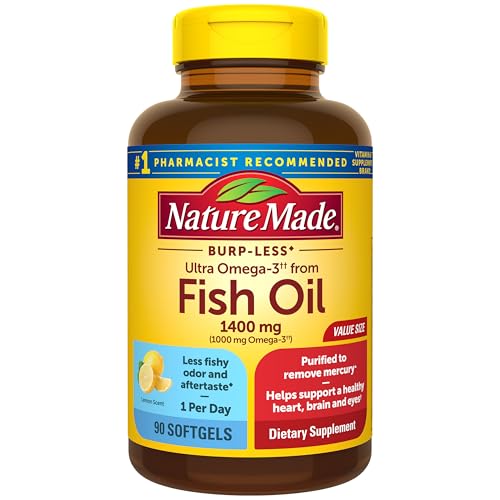 Nature Made Burp Less Ultra Omega 3 Nature Made Burp Less Ultra Omega 3 | Brain, Eye and Heart supplement: contains one 90… This Nature Made Omega 3 (1) Fish Oil… One daily Fish Oil Nature Made Omega 3… | Check price |
 Nature Made Fish Oil Omega 3 Nature Made Fish Oil Omega 3 | Brain, Eye and Heart supplement: contains one 100… This Nature Made Omega 3 (1) Fish Oil… One daily Fish Oil Nature Made Omega 3… | Check price |
 Nature Made Fish Oil Omega 3 Supplements Nature Made Fish Oil Omega 3 Supplements | Heart health support supplement: contains one 90 count… Nature Made Omega 3 Fish Oil 1000 mg… One serving of two fish oil softgels provides… | Check price |
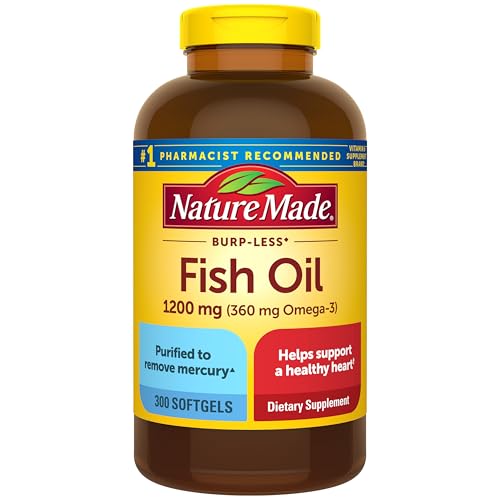 Nature Made Burp Less Fish Oil Omega Nature Made Burp Less Fish Oil Omega | Heart health support supplement: contains one 300 count… This Burp-less (3) Omega 3 Fish Oil 1200… One serving of two Fish Oil softgels provides… | Check price |
 Nature Made Burp Less Fish Oil Omega Nature Made Burp Less Fish Oil Omega | Heart health support supplement: contains one 320 count… This Burp-less (3) Nature Made Omega 3 Fish… Two fish oil softgels provide 600 mg Omega-3… | Check price |
As an Amazon Associate we earn from qualifying purchases at no extra cost to you.
Quick Picks
| Product | Best for | Price |
|---|---|---|
| Fish Oil 1200 mg, 230 Count | Balanced daily value | $19.98 |
| Fish Oil 2000 mg, 250 Count | Higher per-serving EPA/DHA | $27.81 |
| Fish Oil 1000 mg, 250 Count | Lowest cost at this bottle size | $18.89 |
| Burp Less Ultra 1400 mg, 90 Count | Strong burp control in a trial size | $19.00 |
| Fish Oil 1200 mg One Per Day, 100 Count | Minimalist capsule count | $15.89 |
| Fish Oil 1000 mg, 90 Count | Lowest absolute cost to start | $9.67 |
| Burp Less 1200 mg, 300 Count | Long supply with burp control | $36.98 |
| Burp Less 1000 mg, 320 Count | Most capsules in the burp-free line | $37.22 |
How We Picked
We ranked these eight by cost per softgel (price divided by count), then weighted for whether the product carries a burp-control coating, since that is the single most cited complaint driver in owner reviews across the category. Dosage per softgel mattered as a tiebreaker: higher-concentration options earn a small bump when the per-serving cost is comparable. Bottle count was treated as a convenience factor, not a quality signal.
The 8 Best Nature Made Fish Oil in 2026
1. Fish Oil Omega 3, 1200 mg Softgels, 230 Count
This is the baseline recommendation for most people who want a middle-of-the-road daily omega-3 without overthinking it. The 1200 mg softgel is the most common format in the Nature Made line, and the 230-count bottle hits a sweet spot between upfront cost and supply length.
- Pro: Low per-softgel cost, making it easy to commit to a two-month supply without a large cash outlay.
- Pro: Widely available and frequently reviewed, so owner feedback on taste and tolerance is abundant.
- Con: Standard softgel without an enteric coating, so those prone to fishy burps may find it uncomfortable.
Skip it if you already know burp control is non-negotiable; the coated versions below cost a bit more per softgel but solve that problem cleanly.
2. Fish Oil Omega 3, 2000 mg per Serving, 250 Count
The 2000 mg format targets people who want a higher omega-3 dose without doubling up on capsules. You get fewer pills per day at a higher concentration, which owner reviews consistently flag as a convenience win for anyone who struggles with swallowing.
- Pro: Fewer softgels per serving than lower-dose options, reducing the physical hassle of supplementation.
- Pro: 250-count bottle gives solid supply length relative to the price tier.
- Con: The largest softgel size in this group, so people with a sensitive gag reflex may still prefer splitting a dose across two smaller capsules.
Skip it if you have a low daily omega-3 target and do not need the extra concentration; you will pay more per softgel than the 1000 mg options for a benefit you do not require.
3. Fish Oil Omega 3, 1000 mg Softgels, 250 Count
For budget-conscious buyers who still want a respectable supply length, the 1000 mg in a 250-count bottle delivers the lowest per-softgel cost in the standard (uncoated) line. It is the pragmatic choice when your target dose can be met with a single capsule or a simple two-capsule split.
- Pro: Cheapest per softgel among products with 250+ count, making long-term supplementation very affordable.
- Pro: Smaller softgel than the 1200 mg and 2000 mg formats, easier to swallow for many users.
- Con: No burp-control coating, and the lower per-capsule concentration means you may need two softgels to hit a higher daily target.
Skip it if you need more than one gram per serving; the math pushes you toward the 1200 or 2000 mg options anyway.
4. Burp Less Ultra Omega 3, 1400 mg Softgels, 90 Count
Enteric coating is the differentiator here, and the 1400 mg “Ultra” label signals a concentration bump over the standard 1200 mg burp-free variant. The 90-count bottle makes it a natural trial purchase: you can confirm tolerance before committing to a larger supply.
- Pro: Highest concentration per softgel in the burp-free line, so you need fewer capsules to meet a high omega-3 target.
- Pro: Small bottle count keeps the risk low if you discover the coating still does not fully solve burping for your physiology.
- Con: Highest per-softgel cost in the entire group; this is a convenience and comfort purchase, not a value play.
Skip it if you are already satisfied with uncoated softgels and do not pay a comfort premium without a clear reason.
5. Fish Oil Omega 3, 1200 mg Softgels, One Per Day, 100 Count
The “One Per Day” branding is the hook: Nature Made formulates this as a single-softgel serving at 1200 mg, so you never wonder whether you took enough. It appeals to people who drop pills in their mouth and walk out the door without a second thought.
- Pro: Zero dosing ambiguity; one softgel equals one full daily serving, simplifying the habit.
- Pro: Competitive price for a 100-count supply, sitting between the small trial packs and the multi-month bottles.
- Con: 100 softgels is roughly a three-month supply at one per day, so you will reorder more often than if you chose a 230 or 250 count.
Skip it if you prefer to split your omega-3 dose between morning and evening; the single-serving format is less flexible for that routine.
6. Fish Oil Omega 3, 1000 mg Softgels, 90 Count
At under ten dollars, this is the entry point for anyone testing whether daily fish oil actually fits into their routine. The 90-count bottle covers roughly three months at one softgel per day, which is enough time to assess tolerance before buying in bulk.
- Pro: Lowest absolute dollar outlay in the lineup, ideal for first-time users who do not want a sunk-cost problem.
- Pro: Small bottle means you can store it in a travel case or gym bag without carrying a heavy supply.
- Con: Per-softgel cost is higher than the 250-count 1000 mg option, so you sacrifice unit economics for low commitment.
Skip it if you already fish oil daily and know you will reorder; the larger bottle gives strictly better value.
7. Burp Less Fish Oil Omega 3, 1200 mg Softgels, 300 Count
This is the commitment bottle for people who have confirmed that enteric coating solves their burp problem and now want a long supply at the best possible per-softgel rate within the burp-free line. Three hundred softgels cover roughly ten months at one per day.
- Pro: Among the best per-softgel costs in the burp-free category, rewarding users who have validated their need for the coating.
- Pro: Very long supply window reduces reorder frequency and the mental overhead of keeping stock.
- Con: Large upfront price tag; if your omega-3 needs change, you are stuck with a long tail of product.
Skip it if you are still deciding between coated and uncoated; buy the 90-count trial first.
8. Burp Less Fish Oil Omega 3, 1000 mg Softgels, 320 Count
The 1000 mg burp-free variant with 320 softgels targets high-volume users who need multiple capsules per day and want enteric coating across every single one. With the largest capsule count in the lineup, it offers the longest supply per purchase.
- Pro: Highest total capsule count available, making it the most efficient bulk option for multi-capsule daily doses.
- Pro: Smaller softgel size than the 1200 mg burp-free variant, so even if you take two or three per day the physical burden stays low.
- Con: Highest sticker price in the group; only justifies itself if you are actually consuming multiple softgels daily.
Skip it if you take one softgel per day; the 1200 mg version at 300 count will last you longer for nearly the same money.
Buying Guide
Softgel Size vs. Concentration Tradeoff
A 2000 mg softgel is physically larger than a 1000 mg softgel, but it also delivers twice the omega-3 per capsule. If your target dose is two grams, you can take one large pill or two small ones. Owner reviews are split: some people find swallowing one big softgel easier than managing two small ones, while others report the reverse. Decide based on your own comfort with pill size, not on the assumption that fewer pills automatically equals fewer problems.
Enteric Coating: When It Is Worth the Premium
Burp-free coatings are designed to resist stomach acid and dissolve lower in the digestive tract, which prevents the fishy reflux that drives many people to quit supplementation. The tradeoff is a per-softgel cost that runs noticeably higher than standard options. If you have never experienced fishy burps, skip the coating and save money. If you have tried standard softgels and disliked the aftertaste, the coating is the single most impactful upgrade available in this product family.
Bottle Count and Supply-Length Planning
Nature Made fish oil is shelf-stable, so larger bottles do not carry a freshness penalty. The practical question is cash flow: a $9.67 starter pack lets you confirm you will actually take the supplement daily, while a $37.22 bulk buy rewards you only if the habit is already locked in. Compare per-softgel cost across sizes before deciding; in this lineup, the 230, 250, 300, and 320-count options all cluster in a narrower per-unit range than the 90 and 100-count packs, which pay a small convenience premium for their lower upfront price.
Our Verdict
Top pick: The Fish Oil 1200 mg, 230 Count ($19.98) offers the best overall balance of per-softgel cost, supply length, and broad owner satisfaction for anyone without a specific burp-control need. It is the product most people should default to.
Budget pick: The Fish Oil 1000 mg, 250 Count ($18.89) gives you the most capsules for the least money among standard softgels, provided a lower per-capsule dose meets your target.
Conditional winner: If fishy burps are your dealbreaker, the Burp Less 1200 mg, 300 Count ($36.98) is the smartest long-term buy in the coated line, but only after you have confirmed the coating works for you with the 90-count trial.
FAQ
Is a higher milligram number always better?
No. The number on the bottle indicates softgel weight, not necessarily omega-3 content in every case. Match the serving size to your daily EPA and DHA target rather than chasing the largest milligram figure, and consider that you may need fewer capsules if the concentration per softgel is higher.
Do burp-free coatings affect absorption?
Enteric coatings delay release until the softgel passes through the stomach, which is the whole point. This does not meaningfully reduce total absorption of omega-3s; it shifts where the capsule dissolves. Owner reviews generally report equivalent results once the habit is established.
How long does a 250-count bottle last?
At one softgel per day, 250 capsules cover just over eight months. If your regimen requires two softgels per serving, expect roughly four months from the same bottle. Check the serving size on the label of whichever nature made fish oil product you choose, as it varies by dose.
Is there a meaningful difference between the 1200 mg and 1400 mg Ultra?
The Ultra label denotes a higher concentration of EPA and DHA per softgel, not just more oil weight. In practical terms you get a stronger omega-3 punch in a similar capsule size, which can reduce the number of softgels needed per day. The price per softgel reflects that premium.