Key takeaways
- Adjustable lumbar: Inflatable or height-adjustable lumbar support, like the CIOMAN’s inflatable system, lets you dial in the exact lower-back pressure your frame needs.
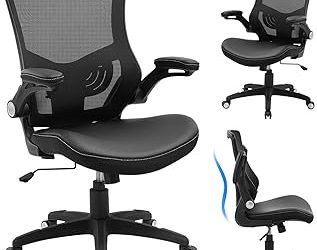
- Flip-up or 4D armrests: The Heavy Duty 400lbs chair’s flip-up arms tuck away so you can sit closer to the desk without the arms limiting seat access.
- Thick armrest padding: Wider padded armrests spread weight when you push up to stand, reducing strain on wrists and shoulders.
- Rocking or recline function: A tension-adjustable recline lets you shift posture through the day, which is important during long sitting sessions.
Most office chairs are engineered around an average build, and their 250-pound weight ratings and narrow seats leave heavier users perched uncomfortably on chairs that squeak, tilt, and fail within a year. Choosing a chair rated for real capacity is not a luxury, it is the difference between all-day comfort and a warranty claim. In 2026 the big-and-tall category has matured, with genuine 400 to 750 pound ratings, reinforced steel bases, and wider cushions that finally fit.
This buying guide walks through exactly what to look for when your body needs more chair than the standard model offers, from base construction to seat dimensions to the difference between a real rating and marketing optimism. Use it to invest once in a chair that supports you comfortably for years instead of cycling through cheap replacements.
Our top picks

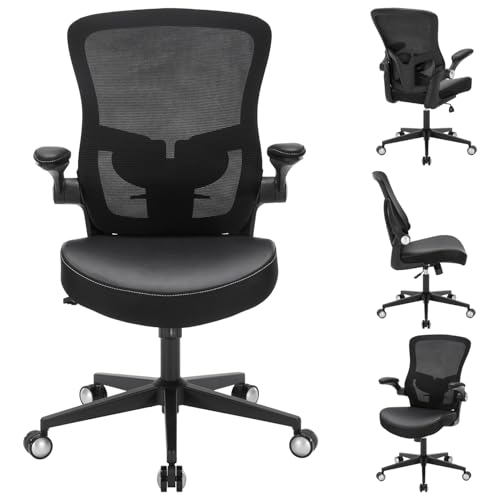

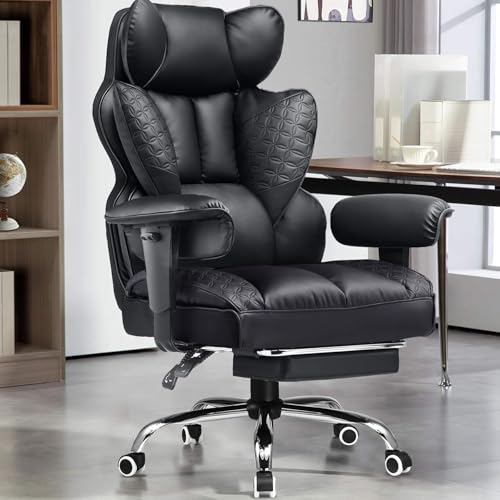


As an Amazon Associate we earn from qualifying purchases at no extra cost to you. Ratings are shown as listed on Amazon.
⚡ Save on Your Next PC — Amazon Prime
Prime members get fast free shipping on the systems above, plus early access to Prime Day & Black Friday PC deals. New members get a 30-day free trial.
Watch: Buying Guide: The Best Office Chairs for Heavy Individuals — Video Review
Weight Rating Is Only the Starting Point
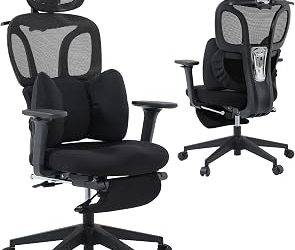
A stated capacity like 400 or 500 pounds tells you what the frame can survive, not what it can support comfortably day after day. As a rule, choose a chair rated at least 50 to 100 pounds above your weight so components run well within their limits. Chairs like the 500lbs Big and Tall Office Chair and the CIOMAN 500lbs Executive Chair build in that margin, which is why they stay stable years after a borderline-rated chair would start to creak.
Base, Casters, and Cylinder Matter Most
The parts that fail first on overloaded chairs are the gas cylinder and the star base. Look for a heavy-duty metal base rather than nylon, and Class 4 gas lifts that are built for higher loads. Rubber or upgraded wheels, like those on the CIOMAN model, roll smoothly under load and protect floors. If a listing does not mention the base material, treat that silence as a warning.
Seat Width, Depth, and Cushion Density
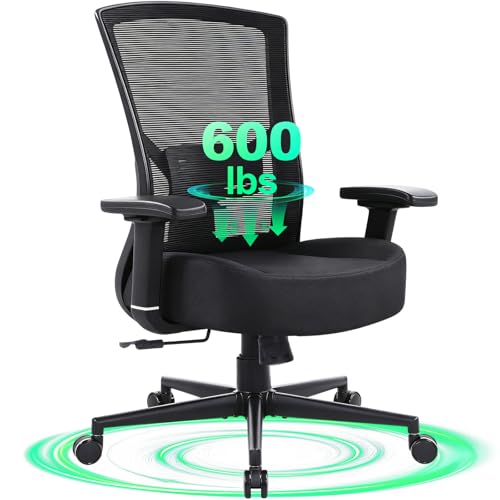
Comfort for heavier users comes down to a wide, deep seat and dense foam that will not bottom out. Extra-wide seats such as those on the 750lbs and 600lbs models give your hips room rather than squeezing them between armrests. High-density foam holds its shape, while cheap foam compresses flat within months and puts you right back on the hard seat pan.
Support Features Worth Paying For
- Adjustable lumbar: Inflatable or height-adjustable lumbar support, like the CIOMAN’s inflatable system, lets you dial in the exact lower-back pressure your frame needs.
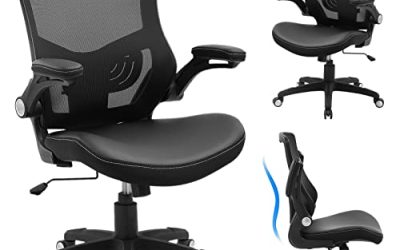
- Flip-up or 4D armrests: The Heavy Duty 400lbs chair’s flip-up arms tuck away so you can sit closer to the desk without the arms limiting seat access.
- Thick armrest padding: Wider padded armrests spread weight when you push up to stand, reducing strain on wrists and shoulders.
- Rocking or recline function: A tension-adjustable recline lets you shift posture through the day, which is important during long sitting sessions.
Tips
- Measure before you buy: Check your hip width and compare it to the seat width, aiming for at least two inches of clearance on each side.
- Assemble on a hard floor: Tighten every bolt fully and re-check them after the first week, since load settles hardware.
- Prioritize the cylinder rating: A Class 4 gas lift is worth seeking out even if the listing buries the detail.
- Read reviews from users your size: Filter for reviewers who mention their weight to gauge real-world durability rather than average feedback.
Frequently Asked Questions
Are the advertised weight capacities trustworthy?
Reputable big-and-tall brands test to their rating, but you should still build in a buffer. If you weigh 350 pounds, a 500-pound chair will feel far more solid over time than a 400-pound model running near its limit.
Is a gaming chair a good option for heavy users?
Some are excellent. The GTPLAYER Big and Tall gaming chair is rated 400 pounds with a footrest and pocket-spring cushion, offering strong support if you like the racing-style bucket seat. Just confirm the rating, since many slim gaming chairs are not built for larger frames.
What causes big-and-tall chairs to fail early?
Almost always the gas cylinder or a plastic base. Choosing a metal base and a Class 4 lift eliminates the two most common failure points.
Do I need a special mat for the casters?
On carpet, a hard chair mat helps the reinforced casters roll and reduces strain on the base. On hard floors, upgraded rubber wheels usually roll fine on their own.
Conclusion
The right chair for a heavier build is the one that treats your weight as normal rather than an edge case: a genuine 500-pound-plus rating, a steel base, a Class 4 cylinder, and a wide, dense cushion. Models like the CIOMAN 500lbs Executive Chair and the extra-wide 600 and 750 pound options deliver exactly that. Buy with a comfortable margin above your weight, tighten everything on assembly, and you will get years of stable, genuinely comfortable support instead of another disappointing replacement.