Nothing undermines a carefully chosen desk faster than a tangle of power bricks, charging cables, and dangling cords swaying beneath it. Beyond looking messy, loose wires collect dust, trip up rolling chairs, and turn into a hazard around kids and pets. The fix is inexpensive and takes an afternoon: a combination of trays, sleeves, and clips that lift everything off the floor and hide it under the desktop.
We rounded up the best under-desk cable management solutions for 2026, from no-drill mesh trays to flexible spines built for standing desks. Each pick here focuses on holding real weight, installing without wrecking your desk, and keeping cables accessible for when you inevitably need to swap a device.
Our top picks


 Under Desk Cable Management Tray No Drill
- 【No Drill Mounted】Cable management tray can be assembled…
- 【Rubber Pad Protects Desk】Wire organizer under desk built-in…
- 【Sturdy and Beautiful】Cord management under desk is made…


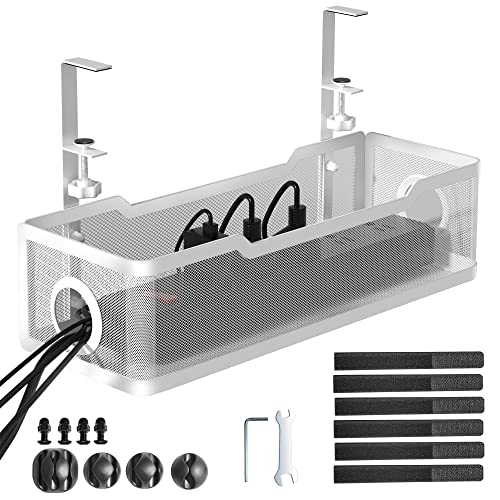

 Univivi No Drill Under Desk Cable Management
- Large Capacity and Durable
- Two Ways Installations
- Make Cable Management Much Easier
As an Amazon Associate we earn from qualifying purchases at no extra cost to you.
⚡ Save on Your Next PC — Amazon Prime
Prime members get fast free shipping on the systems above, plus early access to Prime Day & Black Friday PC deals. New members get a 30-day free trial.
Watch: Best Under Desk Cable Management Solutions for a Tidy Workspace — Video Review
How to Choose
- Mounting method: No-drill clamp trays are renters’ best friend, while screw-mounted trays hold more weight for permanent setups. Match this to whether you can put holes in your desk.
- Capacity: Count your power strip, chargers, and hub. A single 17 inch tray suits a basic setup, but a full workstation often needs 25 to 36 inches of tray length.
- Standing desk compatibility: If your desk moves, choose a flexible cable spine that expands and contracts instead of a rigid tray that can snag on travel.
- Material: Metal mesh trays dissipate heat from power bricks better than closed plastic boxes and resist sagging under load.
- Safety focus: Homes with children or pets benefit from enclosed sleeves and cord organizers that fully cover exposed wires rather than open trays.
The Best Picks Reviewed
Under Desk Cable Management Tray No Drill (Metal Mesh with Clamp Mount)
Our top overall pick. The steel mesh handles a heavy power strip and multiple bricks without bowing, and the two-hole design lets cables drop cleanly to devices. The clamp mount grips desks up to about 1.6 inches thick, so nothing gets drilled.
Univivi No Drill Under Desk Cable Management Tray, 36 inch
The choice for large or dual-monitor workstations that generate a lot of cable volume. At 36 inches it swallows a full-size surge protector plus laptop and monitor power supplies with room to spare, and it still installs with clamps rather than screws.
Ultimate Setup Under Desk Cable Management Vertebrae (133 cm)
Built specifically for sit-stand desks, this flexible spine channels the bundle of cables that travel with a moving desktop. The adjustable length means you trim it to your exact drop, and it prevents the wire snag that plagues rigid trays on height-adjustable frames.
Scanfield Under Desk Cable Management Tray, 17-Inch, 2-Pack
A smart value for people with two separate desks or a wide setup that benefits from split trays. The no-screw install is quick, and running two shorter trays instead of one long one can route cables more logically toward each device cluster.
Delamu 2 Pack Cable Management Under Desk (Child and Pet Safe)
For families, these enclosed sleeves fully wrap exposed cords so curious hands and paws cannot reach live wires. Use them alongside a tray to cover the final visible run from desk to wall outlet for a genuinely safe, finished look.
Frequently Asked Questions
Do no-drill trays hold as much as screw-mounted ones?
Quality clamp trays hold a full power strip and several bricks with ease. If you plan to store unusually heavy equipment like a laptop dock plus a UPS, a screw-mounted metal tray offers more headroom.
Will a cable tray fit a standing desk?
A rigid tray works if the tray moves with the desktop, but the cables running to the wall still need slack. A flexible cable spine is the cleaner solution because it manages that moving bundle directly.
How do I keep power bricks from overheating in a tray?
Choose an open metal mesh tray rather than a sealed plastic box. The ventilation lets heat escape, which matters when several adapters sit close together.
Can I combine multiple products?
Absolutely, and the best setups do. A tray holds the bulky hardware, sleeves hide the vertical runs, and small clips guide individual cables along the desk edge for a completely tidy result.
Final Thoughts
A tidy workspace starts under the desk, where a single metal mesh tray does most of the heavy lifting. Pair the no-drill mesh tray with a set of enclosed sleeves if you have pets or kids, or step up to the flexible vertebrae spine if your desk stands. For a small investment you eliminate dust traps, tripping hazards, and visual clutter, leaving a workspace that finally looks as good as the gear sitting on top of it.