Key takeaways
- Test the mattress flat and elevated; a comfortable flat position does not guarantee good support at zero gravity or a raised head angle.
- Measure doorways, stairwells, and the bedroom before ordering a fully assembled adjustable base.
- Use the base’s preset positions sparingly at first, then make small changes to head and foot elevation rather than using extreme angles.
- Rotate the mattress only if the manufacturer permits it; never flip a one-sided comfort system unless specifically instructed.
What's inside
Choosing a mattress for an adjustable bed is not the same as choosing one for a fixed platform. The mattress must bend repeatedly at the head and foot hinges, stay aligned with the base, and continue supporting your body when you sleep in several positions. A bed that feels comfortable when flat can become unstable, overly rigid, or prone to sliding once it is elevated.
This guide approaches the decision from an ergonomics-and-durability perspective. You will learn which mattress materials flex most reliably, how to match firmness to your sleeping position, what to check in a bundled adjustable-bed set, and which practical details affect long-term comfort. The products below include complete sets and mattress-only options, so compare specifications carefully rather than assuming every “adjustable” package performs identically.
As an Amazon Associate we earn from qualifying purchases.


Start with the adjustable-base requirements
Before comparing foam or coils, confirm that the mattress is approved for use on an adjustable base. Look for flexible construction, a compatible warranty, and a recommended weight limit that includes sleepers, bedding, and any pets. The mattress should move with the base without buckling, bunching, or creating a gap at the hinge points.
Measure the base and mattress independently. Split king and split queen systems use two separate mattresses, allowing each sleeper to control a side, while a standard king uses one larger mattress and usually one synchronized adjustment system. Split designs can improve personal control, but the center seam may be noticeable. A mattress that is too thick, too heavy, or too rigid may also restrict the base’s range of motion.
Choose a construction that bends without losing support
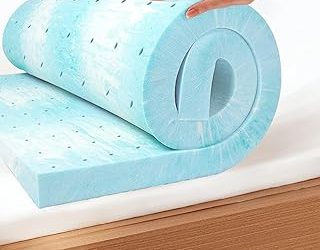
All-foam mattresses usually articulate smoothly because their layers can compress progressively. Memory foam can relieve pressure at the shoulders and hips, although dense foam may retain more heat and feel slow to respond. Look for ventilated layers, breathable covers, or cooling infusions if you sleep warm. These features can moderate heat, but they do not turn foam into an actively chilled surface.
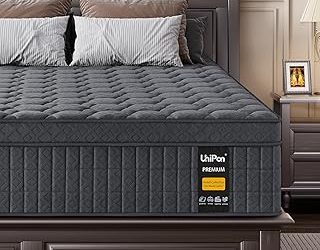
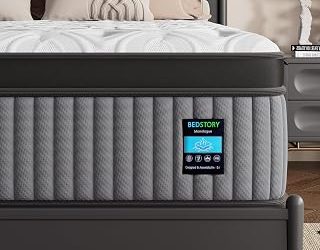
Hybrid mattresses combine foam with individually wrapped coils. They can offer stronger edge support, easier movement, and more airflow than many all-foam models. The trade-off is that coil systems vary considerably: individually pocketed coils generally adapt better than interconnected springs, while very stiff perimeter reinforcement may reduce flexibility. The 11-inch Liberty Hybrid Cool Sleep Graphite mattress is an example of a hybrid-style option worth examining for its balance of foam cushioning and coil support.
Thickness is not a quality score. A 10- to 14-inch mattress can work well, but added layers increase weight and may make the bed harder for the motor to move. Check the base manufacturer’s thickness and weight guidance before buying a particularly tall model.
Match firmness and posture to your body
Firmness should keep your spine reasonably level while allowing pressure-sensitive areas to sink slightly. Side sleepers often prefer medium or medium-soft cushioning around the shoulder and hip. Back sleepers commonly benefit from medium to medium-firm support that limits the pelvis from sinking too deeply. Stomach sleepers typically need firmer, more stable support to reduce excessive lower-back extension.
Body weight changes how a mattress feels. A heavier sleeper may experience a medium mattress as softer and may need stronger support, while a lighter sleeper may not compress a firm mattress enough to receive useful pressure relief. If two people share the bed, a split configuration can make different firmness preferences and adjustment angles easier to accommodate.
Evaluate bundled sets with a critical eye
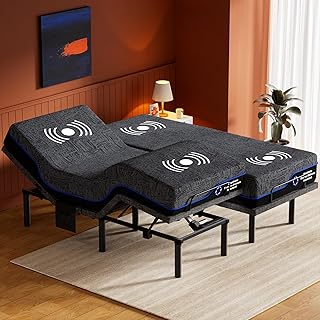
A mattress-and-base package can simplify compatibility, but inspect what is actually included. Confirm whether the set contains one mattress or two, whether the base is split, how many motors it uses, and whether the remote controls head and foot elevation independently. Useful extras include USB charging ports, under-bed lighting, massage settings, and programmable positions, but they should not outweigh motor reliability or mattress fit.
The Amada Split King set combines a 14-inch cooling gel memory foam mattress with head-and-foot adjustment, massage, USB ports, and an LED night light. The EGOHOME Split King set similarly emphasizes zero-gravity positioning, wireless control, and an anti-snore setting. Marsail’s NS1 set adds a dual-motor base, massage functions, and a 14-inch cooling gel memory foam mattress with CertiPUR-US-certified foam. These features may be convenient, but verify current specifications, included components, and warranty terms before purchase.
For shoppers who want a recognizable mattress brand with a base, the Serta Perfect Sleeper Hybrid 12-inch medium queen mattress and adjustable-base package is another format to consider. If you already own a compatible base, a mattress-only choice such as the Mielmoon 10-inch Split Queen hybrid or Liberty Hybrid may avoid paying for duplicate hardware.
Check durability, movement, and maintenance details
Ask how the mattress is supported when elevated. A secure, grippy base surface and properly fitted retaining bar help prevent sliding. Keep the mattress centered and avoid placing heavy objects near the foot while the base is moving. Repeated sharp bends, overloading, or operating the mechanism with an incompatible mattress can shorten the life of both products.
Review the trial period, return transport policy, warranty exclusions, and required foundation. Some warranties require a specific adjustable base or prohibit damage caused by an unsuitable frame. Also check whether the cover is removable and washable, whether the mattress arrives compressed, and how long the manufacturer recommends allowing it to expand before use.
Tips
- Test the mattress flat and elevated; a comfortable flat position does not guarantee good support at zero gravity or a raised head angle.
- Measure doorways, stairwells, and the bedroom before ordering a fully assembled adjustable base.
- Use the base’s preset positions sparingly at first, then make small changes to head and foot elevation rather than using extreme angles.
- Rotate the mattress only if the manufacturer permits it; never flip a one-sided comfort system unless specifically instructed.
Frequently Asked Questions
Can any memory foam mattress go on an adjustable bed?
No. Many flexible foam mattresses are compatible, but the manufacturer should explicitly approve the combination. Very firm, unusually heavy, or reinforced mattresses may not bend correctly and could affect the base warranty.
Is a hybrid mattress better than memory foam for an adjustable base?
Neither is automatically better. Memory foam usually conforms smoothly and isolates motion well, while a suitable pocket-coil hybrid can provide easier movement, stronger edges, and more airflow. Construction quality and stated adjustability matter more than the label alone.
Do split king mattresses leave a gap?
A small center separation is normal because each side moves independently. Mattress retainers, fitted sheets designed for split systems, and correctly aligned bases can minimize shifting. A connected king setup may feel more unified, but it provides less independent adjustment.
What firmness is safest for back pain?
There is no universal firmness prescription. Many people with back discomfort prefer medium to medium-firm support, but posture, body weight, and pressure relief are equally important. The best choice keeps your spine supported without creating pressure at the hips or shoulders.
Conclusion
The best mattress for an adjustable bed is one that flexes reliably, supports your sleeping posture, and remains manageable for the base motor over years of movement. Prioritize documented compatibility, appropriate weight and thickness, durable materials, and a useful return policy. Treat massage, lighting, USB ports, and zero-gravity presets as bonuses—not substitutes for a mattress that keeps your body aligned in every position.