Key takeaways
- Measure your bedroom clearance on all sides before ordering; most full-size bases need at least 2 inches of wall clearance when fully inclined to avoid scuffing paint.
- Place the base on a firm, level surface—a sagging box spring or carpet with deep pile introduces lateral rocking that accelerates motor wear.
- Test the anti-snore and zero-gravity presets during the day so you understand the angles before relying on them at night.
- Periodically tighten frame bolts every six months; motor vibration gradually loosens connections even on well-built bases.
What's inside
Adjustable beds have quietly moved from hospital rooms into mainstream bedrooms, and for good reason: the ability to elevate your head, knees, or both simultaneously changes how your spine, lungs, and circulation behave during sleep. The 2026 market is crowded with frames that look similar on spec sheets but differ dramatically in motor durability, frame rigidity, and real-world comfort once you’ve spent eight hours on them. This guide walks you through the mechanical, ergonomic, and material factors that actually determine whether an adjustable base will hold up and feel right for years.
You’ll learn how to evaluate motor noise and lifespan, match base dimensions to your room and mattress, identify the ergonomic positions that relieve pressure without creating new problems, and pick smart features—USB ports, under-bed lighting, zero-gravity presets—based on whether they serve your routine or just inflate the price. Every recommendation below has been weighed against long-term durability, not just day-one impressions.
As an Amazon Associate we earn from qualifying purchases.




Motor Quality and Weight Capacity
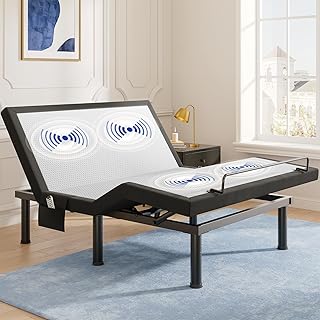
The motor is the single component you cannot upgrade later, so start here. Look for dual-motor designs: one dedicated to the head section and one to the foot section. Dual motors distribute mechanical stress, run cooler, and operate independently so you can fine-tune one zone without moving the other. The Sven & Son Classic Adjustable Bed Base, for example, pairs independent head-and-foot lift motors with a massage actuator, keeping each mechanism within its load range rather than forcing one motor to do double duty.
Weight capacity matters even if you don’t approach the limit daily. A frame rated at 750 pounds will experience less motor strain at your body weight than one rated at 400, translating to slower wear on gears and limit switches. The Mixcous Full Size Adjustable Bed markets a heavy-duty frame specifically for this reason—overbuilt capacity extends component life well beyond the warranty period.
Ergonomic Positioning and Health Benefits
Zero-gravity positioning—where the head and legs rise to roughly a 120-degree hip angle—distributes body weight across a larger contact area, reducing peak pressure on the lumbar spine and tailbone. Both the Tami Tami T600 and the T450 include dedicated zero-gravity presets that snap to this angle with a single remote press, which matters because manually dialing in the correct ratio of head-to-leg elevation is surprisingly tricky.
For acid reflux or sleep apnea, an head elevation of 30 to 45 degrees is the clinical sweet spot. A 12-degree head tilt may look dramatic but barely changes esophageal pressure. Confirm the frame reaches at least 55 degrees of head incline before purchasing; some budget bases max out around 40 degrees, which underperforms for these conditions. Anti-snore presets, found on the Mixcous and similar models, typically default to a head elevation near 35 degrees—a useful shortcut if you share a bed.
Frame Construction and Longevity
Steel gauge, weld quality, and cross-bracing determine whether your base wobbles in year two. Gauge 12 or 13 steel for the main rails strikes the best balance between rigidity and weight; heavier gauges add mass without proportional strength gains, while lighter gauges flex under load. Look for welded cross-members rather than bolt-only connections—bolts loosen over time with repeated motor vibration.
The Best Choice Products Ergonomic Full Size Adjustable Bed Frame uses a steel-slat support system that distributes mattress weight more evenly than perimeter-only rails, reducing the likelihood of mattress sagging along the center zone. The Tami Tami T450 takes a different approach with three height-adjustable legs, letting you fine-tune clearance beneath the frame and level the base on uneven floors—a small detail that prevents chronic lateral stress on the motor housing.
Smart Features Worth Having
USB ports have become nearly standard, but placement determines usefulness. Side-mounted ports near headboard level (as on the Tami Tami T600) keep cables within arm’s reach without routing them under the mattress. Under-bed lighting, included on the Sven & Son Classic and the T450, serves a genuine ergonomic purpose: low-level illumination preserves night vision while guiding you to the bathroom, reducing trip-and-fall risk in dark rooms.
Wireless remotes beat wired ones for durability—cables fray where they pass through frame hinges. Confirm the remote includes backlighting and clearly labeled presets. The Twin XL Adjustable Bed Frame pairs its wireless remote with straightforward head-and-foot controls, prioritizing simplicity over a feature-dense interface that may confuse you at 3 a.m.
Mattress Compatibility and Assembly
Memory foam, latex, and hybrid mattresses all flex safely on adjustable bases; traditional innerspring mattresses with a rigid border wire generally do not. The Sven & Son bundle ships with a 14-inch hybrid spring mattress specifically engineered for articulation, eliminating guesswork. If you already own a mattress, measure its minimum bend radius and compare it against the base’s flex profile. Gel-infused foams, like the 12-inch gel memory foam included with the Twin XL bundle, add cooling benefits that pair well with the airflow gap an elevated base creates beneath the mattress.
Assembly time ranges from five minutes (Tami Tami T600’s tool-free design) to roughly thirty minutes for frames with separate bolt-together legs. Simpler assembly often signals fewer potential failure points—fewer joints mean fewer places where vibration can loosen connections over months of nightly adjustment cycles.
Tips
- Measure your bedroom clearance on all sides before ordering; most full-size bases need at least 2 inches of wall clearance when fully inclined to avoid scuffing paint.
- Place the base on a firm, level surface—a sagging box spring or carpet with deep pile introduces lateral rocking that accelerates motor wear.
- Test the anti-snore and zero-gravity presets during the day so you understand the angles before relying on them at night.
- Periodically tighten frame bolts every six months; motor vibration gradually loosens connections even on well-built bases.
Frequently Asked Questions
Can I use my existing mattress on an adjustable base?
Most foam, latex, and hybrid mattresses work without issue. Avoid placing a traditional innerspring mattress with a rigid border rod on an adjustable base, as forcing it to bend can damage internal coils and void the mattress warranty. Check the manufacturer’s listed minimum bend radius before purchasing.
How loud are the motors during adjustment?
Quality dual-motor systems operate between 30 and 45 decibels—comparable to a quiet library. The Tami Tami T600 and T450 both emphasize quiet motors, which is especially relevant if one partner adjusts their position while the other sleeps lightly.
Do adjustable beds require a special bed frame or headboard?
Most adjustable bases are self-contained and sit directly on the floor or inside an existing bed frame with removable slats. You may need to ensure your headboard isn’t bolted to a fixed rail system that blocks the head section from rising. Many manufacturers sell compatible headboard brackets separately.
What does zero-gravity actually mean for sleep?
The zero-gravity position elevates both the head and legs to approximate the posture astronauts assume during liftoff, distributing body weight evenly and reducing spinal compression. It is not a medical prescription, but clinical studies do show measurable reductions in lower-back pain and improved circulation when this angle is maintained for extended periods.
Conclusion
Choosing the right adjustable bed in 2026 comes down to three non-negotiables: a robust dual-motor system with generous weight headroom, a welded steel frame that won’t loosen over time, and ergonomic presets that match your actual health needs rather than marketing language. Match those fundamentals against your room dimensions and mattress compatibility, and the rest—USB ports, lights, massage—is genuinely useful icing on a well-engineered cake.