Key takeaways
- Handle geometry over raw weight: A 6-pound mop with a poorly angled grip strains your wrist more than a 9-pound unit with a neutral-wrist handle and a low center of mass. Look for a grip you can hold with a relaxed forearm, not a cocked one, and a shaft long enough that you aren’t stooping — measure to your navel as a rough guide.
- Swivel resistance, not just swivel presence: Nearly every model claims a swivel head. What matters is how much torque it takes to initiate the turn. Stiff swivels transfer that load straight into your shoulder over a 30-minute session.
- Boiler and pump construction: The pump is almost always the first electromechanical part to die. Metal boiler plates and serviceable, replaceable seals outlast plastic housings with bonded joints. Canister designs typically use heavier-duty pumps because they aren’t weight-constrained.
- Pad attachment method: Hook-and-loop degrades with heat and laundering. Slip-on pockets and mechanical clips hold up far longer. Also check pad availability as a standalone purchase — a mop with no replacement pads on the market is a two-year appliance.
- Cord length and strain relief: Twenty-five feet is workable; thirty is comfortable. Inspect where the cord enters the housing — a molded strain-relief collar prevents the internal fatigue cracking that kills otherwise healthy units.
What's inside
Steam mops fail in two predictable ways, and neither shows up in the spec sheet. The first is your body giving out before the floor is clean — a handle angle that forces your wrist into ulnar deviation, a head that won’t pivot without a shoulder shove, a water tank mounted so high the whole unit wants to tip. The second is the machine itself quietly degrading: a pump that starts stuttering around month eight, a gasket that weeps at the boiler seam, a pad clip that loses its grip after forty wash cycles. Most buyers only discover which failure they bought after the return window closes.
I evaluate floor care equipment the way I’d evaluate a work chair or a hand tool: load paths, contact points, duty cycle, and what happens to the materials under repeated thermal and mechanical stress. Below are six steam mops assessed on handle geometry and grip diameter, effective push force on real flooring, tank placement relative to the center of mass, pad-attachment mechanics, and the components most likely to be the first thing to break. Prices and availability shift, so the cards handle that part.
As an Amazon Associate we earn from qualifying purchases.


How to Choose a/an Steam Mop Best (2026)
- Handle geometry over raw weight: A 6-pound mop with a poorly angled grip strains your wrist more than a 9-pound unit with a neutral-wrist handle and a low center of mass. Look for a grip you can hold with a relaxed forearm, not a cocked one, and a shaft long enough that you aren’t stooping — measure to your navel as a rough guide.
- Swivel resistance, not just swivel presence: Nearly every model claims a swivel head. What matters is how much torque it takes to initiate the turn. Stiff swivels transfer that load straight into your shoulder over a 30-minute session.
- Boiler and pump construction: The pump is almost always the first electromechanical part to die. Metal boiler plates and serviceable, replaceable seals outlast plastic housings with bonded joints. Canister designs typically use heavier-duty pumps because they aren’t weight-constrained.
- Pad attachment method: Hook-and-loop degrades with heat and laundering. Slip-on pockets and mechanical clips hold up far longer. Also check pad availability as a standalone purchase — a mop with no replacement pads on the market is a two-year appliance.
- Cord length and strain relief: Twenty-five feet is workable; thirty is comfortable. Inspect where the cord enters the housing — a molded strain-relief collar prevents the internal fatigue cracking that kills otherwise healthy units.
The Best Steam Mop Best (2026)s Reviewed
Shark Steam & Scrub S8201
The self-cleaning rotating pad does the scrubbing your forearm would otherwise supply, which makes this the most ergonomically forgiving pick for anyone managing grip strength limitations or shoulder issues. The trade-off is more moving parts under the hood, so treat the drive mechanism as the wear item and descale on schedule.
Shark Steam Pocket Mop S3501
The slimmest load path of anything here: light head, low mass, and a swivel that breaks free with minimal input, so it’s genuinely usable one-handed on stairs and tight bathroom runs. The pocket-style double-sided pads are its durability strength, since there’s no adhesive layer to cook and no clip to fatigue.
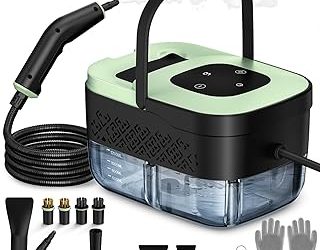
McCulloch MC1385 Canister Steam Cleaner
Moving the boiler and tank into a wheeled canister takes the entire mass off your arms and leaves you holding a wand, which is the correct answer for long sessions and detail work on grout. Build quality is the most industrial in this group, and the 23-accessory kit means the machine outlives its original use case.
BISSELL PowerFresh 1940A
Variable steam is an ergonomic feature disguised as a cleaning one — dialing steam up lets you cut passes rather than lean harder, which is where lower-back fatigue accumulates. The flip-down scrubber saves you from kneeling, and BISSELL’s replacement pad and filter supply chain remains one of the most reliable for long-term ownership.
10-in-1 Detachable Steam Mop
The detachable handheld converts this from a floor tool into a full-house steamer, and the 10-second heat-up means short, low-commitment sessions instead of one exhausting marathon. The 350ml tank keeps carried weight low, though it also means more refill trips on large floor plans.
Frequently Asked Questions
Will a steam mop damage sealed hardwood?
Sealed hardwood tolerates steam when you keep the head moving and use the lowest effective setting. Damage comes from dwelling in one spot, which forces moisture past the finish and into the seams. Unsealed, waxed, or laminate floors with unsealed edges are the real risk cases.
How long should a steam mop actually last?
Three to five years is a fair expectation for a stick model in weekly use, and longer for a canister. Descaling with distilled water is the single highest-leverage habit — mineral scale is what kills pumps and clogs nozzles.
Stick mop or canister for grout?
Canister, without much debate. Grout needs concentrated steam, a stiff detail brush, and sustained pressure, and holding a lightweight wand while the machine sits on the floor spares your wrist and lower back.
Do I still need to sweep first?
Yes. Debris turns into abrasive slurry under the pad, which shortens pad life and can scratch finishes. A quick dry pass also cuts the number of pad changes per session.
Final Thoughts
For most homes, the BISSELL PowerFresh 1940A hits the best balance of neutral handle geometry, variable steam, and parts availability. If your priority is minimizing physical effort, the Shark Steam & Scrub S8201 does the scrubbing work for you, while the McCulloch MC1385 is the pick for anyone tackling grout, upholstery, and long sessions where taking the weight off your arms matters more than a compact footprint.