Our Top Picks
 HOOBRO Small Computer Desk35.4"L x 15.7"W x 30.3"H15.7 x 35.4 x 30.3 Inches17.4 poundsCheck on Amazon
The best computer desk for a living room is usually a 40 to 48 inch wide, 20 to 24 inch deep desk with a finished back and hidden cable routing, placed where it does not block the main walkway or sit in the TV’s glare path; in very small rooms, a wall-mounted fold-down desk or a desk behind the sofa uses space that is otherwise wasted. The choice comes down to where in the room it goes, how it looks from the sofa, and how you hide the cables.
Where a Desk Fits in a Living Room
Living rooms are built around seating and traffic paths, so a desk has to fit around those, not the other way round. These are the most common placements and what each needs:

VASAGLE Folding Desk, Small Computer Desk, Foldable Table 31.5 Inch
Chosen because it specifies Small Computer Desk and Foldable Table 31.5 Inch.
View on AmazonHOOBRO Small Computer Desk, 35.4 Inch Home Office Desk with Power Outlet, Writing Desk with 2 Shelves, Modern Small Desk for Home Office, Study, Easy to Assemble, Rustic Brown and Black BF43UDN01
Chosen because it specifies 35.4 Inch Home Office Desk with Power Outlet and Writing Desk with 2 Shelves.
View on Amazon
DUMOS 32 Inch Small Computer Desk, Gaming Desks for Home Office Bedroom
Chosen because it specifies Gaming Desks for Home Office Bedroom.
View on Amazon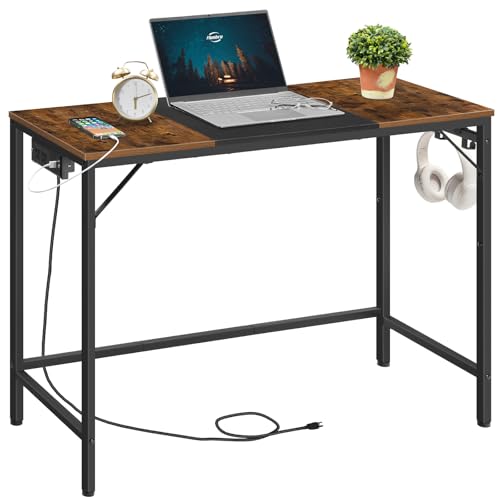
HOOBRO Computer Desk, 39.3 Inch Small Desk with Power Outlet, Writing Table with USB Charging Ports and 3 Hooks for Home Office, Study Room, Bedroom, Easy to Assemble, Rustic Brown and Black BF41UDN01
Chosen because it specifies 39.3 Inch Small Desk with Power Outlet and Study Room.
View on Amazon| Placement | Desk size that works | Space needed | Main advantage | Main drawback |
|---|---|---|---|---|
| Against a side wall | 40–55 x 20–24 in | Desk depth + 36 in chair zone | Simplest, outlets nearby | Takes a full stretch of wall |
| Behind the sofa (floating) | 48–60 x 20–24 in | Desk + 36 in chair zone + walkway | Uses space behind seating, faces the room | Cables must cross the floor |
| In a corner | Corner or small L, 40 x 40 in | About 5 x 5 ft total | Uses dead space | Back to the room during calls |
| Under a window | 40–48 x 20 in | Clear of vents and drapes | Natural light | Backlit on video calls, screen glare |
| Wall-mounted fold-down | 30–40 x 15–20 in open | Under 8 in deep closed | Disappears when not in use | Laptop only, limited storage |
| Inside a media wall or bookcase niche | Built to niche, often 36–48 in | Niche at least 22 in deep | Looks built in | Hard to ventilate a desktop PC |
The 36 inch chair zone is the space a rolling chair needs to pull back. Add another 24 to 30 inches if a walkway passes behind the chair.
Sizing for Real Work
- Laptop only: 36 to 40 inches wide and 18 to 20 inches deep is enough.
- Laptop plus one external monitor: 44 to 48 inches wide, at least 22 inches deep so the screen sits 20 to 30 inches from your eyes.
- Two monitors or a large ultrawide: 55 inches wide or more and 24 inches deep, which usually pushes it out of small living rooms.
- Height: standard desks are 29 to 30 inches tall. A sit-stand frame adds flexibility and typically ranges from about 25 to 50 inches.
For a 12 by 14 foot living room with a 84-inch sofa, a TV wall and one accent chair, a 44 to 48 inch desk on the remaining side wall is usually the largest that fits without crowding.
Desk Styles That Look at Home in a Living Room
Writing desk
Slim legs, one shallow drawer, often 40 to 48 inches wide and 20 to 22 inches deep. It reads as furniture rather than office equipment, which matters when guests see it. Best for laptop work.
Secretary or drop-front desk
A cabinet whose front folds down into a writing surface. When closed it looks like a cabinet, hiding the laptop and paperwork. The work surface is usually small, around 28 to 36 inches wide and 15 to 18 inches deep.
Console-style desk
A console table deep enough to use as a desk, usually 16 to 20 inches. Works behind a sofa, but check that the height is 29 to 30 inches; many consoles are taller.
Floating or wall-mounted desk
Keeps the floor clear and makes small rooms feel larger. Needs anchoring into studs and is not ideal for renters.
Small sit-stand desk
Useful if you work long hours, but motorized frames have visible legs and a control box. Choose a wood-look top and a white or black frame that matches other metal in the room.
Materials: How They Look and Last in Shared Spaces
| Material | Usual price for 40–48 in desk | Looks like furniture? | Durability notes |
|---|---|---|---|
| Solid wood (oak, walnut, mango, acacia) | $300–$1,000+ | Yes | Scratches can be refinished, heavy at 50–90 lb |
| Wood veneer over plywood or MDF | $200–$600 | Yes | Edges chip if hit, stable and flat |
| Laminate particleboard | $80–$250 | Depends on finish | Top may sag over 47 in without support, weak when moved |
| Metal frame + wood top | $120–$450 | Industrial or modern look | Sturdy, easy to move |
| Glass top | $100–$350 | Modern look | Shows fingerprints, cold under wrists, scratches from mice |
Cable Management: What Makes or Breaks It
In an office nobody cares if the back of the desk is a nest of cords. In a living room, it is the first thing guests notice, especially when the desk floats behind a sofa. Plan for:
- A finished back panel or modesty panel if the back of the desk faces the room.
- A cable tray or grommet so the power strip sits under the desk top, not on the floor.
- A flat floor cord cover or a route along the sofa base if the desk is away from a wall. Never run cords under a rug where people walk often.
- Wireless keyboard and mouse to cut visible cables to just power and monitor.
Decision Matrix
| Your situation | Best desk type | Size |
|---|---|---|
| Studio or small living room under 150 sq ft | Wall-mounted fold-down or secretary | 30–36 in wide |
| Laptop work, wants furniture look | Writing desk with drawer | 40–44 in |
| Full-time remote work with monitor | Small sit-stand or deep writing desk | 44–48 x 24 in |
| Open-plan room, sofa floats | Desk behind sofa with finished back | 48–60 in, same length or shorter than sofa |
| Kids doing homework in the living room | Desk with closed storage for supplies | 40–48 in |
| Renter | Freestanding desk, metal frame | Any, avoid wall mounting |
Video Calls and Lighting
Living room desks often face a wall with a window behind or a TV opposite. For calls, the best light is in front of you or to the side; a window directly behind leaves your face in shadow. Avoid placing the monitor directly facing a window or opposite a bright TV, since reflections are hard to fix. A desk lamp with a warm 2700 to 3000K bulb blends with living room lighting better than a cool office lamp.
Assembly and Moving
Most flat-pack living room desks ship in a box of 30 to 60 pounds and take 30 to 90 minutes to assemble. Solid wood desks often arrive assembled and may weigh 50 to 90 pounds, so measure doorways and turns. Felt pads under the legs are essential on hardwood floors, since desks get pushed more than other living room furniture.