Key takeaways
- Start low: Begin around 110–120°F for 10–15 minutes, then increase gradually as your body adapts rather than chasing the highest available setting.
- Match temperature to duration: A longer session usually calls for a lower setting. Shorter sessions can feel more manageable at a moderately higher temperature, but comfort and steady breathing should remain the benchmarks.
- Check adjustability: Multiple heat levels, a reliable timer, and an accessible controller make it easier to fine-tune sessions for different users and days.
- Account for the format: A compact tent or sauna box can feel intense around the torso, while a wooden cabin warms more evenly. Ventilation, chair position, and entry height also influence perceived heat.
- Protect the routine: Drink water, avoid alcohol before use, stop if you feel dizzy or unwell, and follow the manufacturer’s limits. Anyone with relevant medical concerns should ask a clinician before using a sauna.
What's inside
Choosing the right infrared sauna temperature is less straightforward than the control panel suggests. A higher setting is not automatically better: room size, heater design, session length, humidity, ventilation, and your own heat tolerance all affect comfort and recovery. Portable sauna boxes and tents also behave differently from insulated wooden cabins, so copying a temperature from someone else’s routine can lead to an unpleasant—or unnecessarily stressful—session.
This guide focuses on practical temperature selection for home use, with an ergonomics-and-durability lens. I’m considering adjustability, warm-up behavior, seating comfort, control access, footprint, materials, and how easily each format fits into a repeatable routine. As a general starting point, many users find 110–120°F comfortable for acclimation, while experienced users may prefer roughly 120–140°F, provided sessions remain moderate and well tolerated.
As an Amazon Associate we earn from qualifying purchases.


🛒 Best Price Today on Amazon
Prime members get fast, free shipping on everything above, plus member-only deals. New members get a 30-day free trial — cancel anytime.
How to Choose a Temp For Infrared Sauna (2026)
- Start low: Begin around 110–120°F for 10–15 minutes, then increase gradually as your body adapts rather than chasing the highest available setting.
- Match temperature to duration: A longer session usually calls for a lower setting. Shorter sessions can feel more manageable at a moderately higher temperature, but comfort and steady breathing should remain the benchmarks.
- Check adjustability: Multiple heat levels, a reliable timer, and an accessible controller make it easier to fine-tune sessions for different users and days.
- Account for the format: A compact tent or sauna box can feel intense around the torso, while a wooden cabin warms more evenly. Ventilation, chair position, and entry height also influence perceived heat.
- Protect the routine: Drink water, avoid alcohol before use, stop if you feel dizzy or unwell, and follow the manufacturer’s limits. Anyone with relevant medical concerns should ask a clinician before using a sauna.
The Best Temp For Infrared Sauna (2026)s Reviewed
Portable Dry Infrared Sauna Box with Red Light
This compact sauna box is appealing for users who want fine control without committing to a wooden cabin, thanks to nine temperature levels and a portable form factor. Its bed- or living-room setup can be convenient, but buyers should pay close attention to posture, entry space, and whether the included structure keeps controls within easy reach during a session.
1–2 Person Infrared Sauna with Red Light Therapy
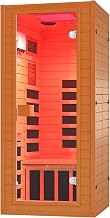
A 1–2 person cabin offers a more conventional sauna experience, with dry heat, Bluetooth, a radio, and seven-color lighting adding comfort-oriented features. Its 40-by-36-by-73-inch footprint is substantial, so measure doorways and flooring first; the useful advantage is a more stable seating position and more consistent temperature control than many soft-sided designs.
Homsido One-Person Hemlock Infrared Sauna
Homsido’s one-person hemล็ock cabin emphasizes low-EMF heating panels, an LCD control panel, preset timing, and a claimed 10-minute preheat period. The upright format is ergonomically sensible for solo use, while the 1,200-watt specification makes outlet compatibility and room ventilation worth confirming before installation.
2–3 Person Ceramic Infrared Corner Sauna
This larger corner sauna is designed for households that want generous interior space, ceramic infrared heating, Bluetooth speakers, and chromotherapy lighting. The corner layout can use a difficult room area efficiently, though its size and permanent-style construction demand careful planning for assembly, floor loading, access, and long-term placement.
Infrared Sauna Tent with 3L Steamer
This tent combines infrared heat with a 3-liter steamer, nine heat levels, a 99-minute timer, and a folding chair. It is a flexible choice for renters or occasional users, but the chair height, fabric ventilation, moisture management, and drying routine matter more here than they do with a hard-sided cabin; allow the tent to dry fully between sessions.
Frequently Asked Questions
What is the best temperature for an infrared sauna?
For many home users, approximately 110–130°F is a practical working range, with beginners often starting near the lower end. The best setting is the one that produces steady, tolerable warmth without dizziness, nausea, headache, or difficulty breathing.
Is a hotter infrared sauna more effective?
Not necessarily. Infrared saunas commonly operate at lower temperatures than traditional steam rooms, and comfort, consistency, and sensible session length are more useful goals than selecting the maximum setting.
How long should I stay in an infrared sauna?
New users can try 10–15 minutes and increase gradually toward roughly 20–30 minutes if they remain comfortable. Use the manufacturer’s timer and recommendations, and leave immediately if you feel unwell rather than trying to complete the planned duration.
Should I use steam with an infrared sauna?
Steam changes the experience by increasing humidity and perceived heat. If using a sauna tent with a steamer, begin with conservative heat and shorter sessions, keep electronics protected, and dry the interior thoroughly afterward to reduce odor, mildew, and fabric wear.
Final Thoughts
For the most adjustable compact setup, the Portable Dry Infrared Sauna Box is a practical starting point; the Homsido One-Person Hemlock Sauna is better suited to a dedicated, upright installation, while the 1–2 Person Infrared Sauna offers a balanced cabin experience. Whichever format you choose, prioritize controllable heat, stable seating, easy cleaning, and a temperature you can use consistently—not simply the highest number on the dial.