Key takeaways
- Noise: Look for a clearly stated decibel figure, but treat it as a comparison point rather than a guarantee. A level around 38–40 dB is generally more suitable for sleeping areas than an unspecified rating. A solid, level floor also prevents vibration from amplifying sound.
- Storage layout: Measure the interior, not just the advertised cubic feet. Removable glass shelves, door bins, and a separate freezer determine whether the refrigerator accommodates meal containers, tall bottles, or mainly cans.
- Temperature control: Adjustable thermostats are useful for mixed food storage, while digital controls make beverage coolers easier to manage. A cooler intended for drinks may not provide the cold, stable conditions required for perishable food.
- Ergonomics: Check handle placement, door swing, shelf height, and access to the controls. A fridge that requires repeated bending or awkward reaching becomes irritating in daily use, particularly under a desk or beside a bed.
- Durability and upkeep: Favor wipe-clean interiors, sturdy shelves, reversible or well-supported doors, and accessible ventilation areas. Leave clearance around the cabinet so the compressor can shed heat without working unnecessarily hard.
What's inside
A mini fridge can be “quiet” on a product page yet still become distracting at night. Compressor cycling, cabinet vibration, fan noise, and the occasional click from the thermostat are especially noticeable beside a bed or desk. Capacity claims can also be misleading: a freezer compartment may reduce usable refrigerator space, while beverage coolers are often designed for cans rather than everyday food storage.
This guide evaluates quiet mini fridges through an ergonomics-and-durability lens. We focus on sleep-friendly operation, temperature control, shelf practicality, maintenance, door access, and the type of use each design can realistically handle—from a dorm room or home office to a countertop beverage station.
As an Amazon Associate we earn from qualifying purchases.


How to Choose a Quiet Mini Fridge (2026)
- Noise: Look for a clearly stated decibel figure, but treat it as a comparison point rather than a guarantee. A level around 38–40 dB is generally more suitable for sleeping areas than an unspecified rating. A solid, level floor also prevents vibration from amplifying sound.
- Storage layout: Measure the interior, not just the advertised cubic feet. Removable glass shelves, door bins, and a separate freezer determine whether the refrigerator accommodates meal containers, tall bottles, or mainly cans.
- Temperature control: Adjustable thermostats are useful for mixed food storage, while digital controls make beverage coolers easier to manage. A cooler intended for drinks may not provide the cold, stable conditions required for perishable food.
- Ergonomics: Check handle placement, door swing, shelf height, and access to the controls. A fridge that requires repeated bending or awkward reaching becomes irritating in daily use, particularly under a desk or beside a bed.
- Durability and upkeep: Favor wipe-clean interiors, sturdy shelves, reversible or well-supported doors, and accessible ventilation areas. Leave clearance around the cabinet so the compressor can shed heat without working unnecessarily hard.
The Best Quiet Mini Fridges (2026) Reviewed
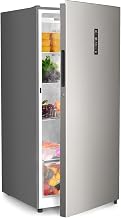
4.5 Cu.Ft. Two-Door Mini Fridge with Freezer
This satin-black two-door model is the most versatile choice for users who need genuine food storage alongside frozen items. Its adjustable thermostat and removable glass shelves make the interior easier to configure around meal containers, while the separate freezer avoids the cramped, ice-prone compartment found in many compact single-door designs. It is a strong bedroom, office, or dorm option, provided it is leveled carefully to minimize vibration.
EUHOMY 18L Beverage Refrigerator Cooler
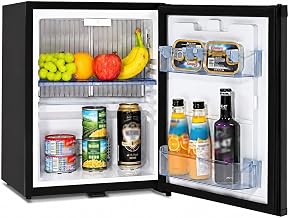
The EUHOMY is built for cans rather than family leftovers, and that specialization is its advantage. Its quiet compressor, digital 40–61°F temperature range, and interior LED light suit a home bar, office counter, or media room where quick, organized access matters. It is best treated as a beverage appliance—not a replacement for a food-safe refrigerator with a freezer.
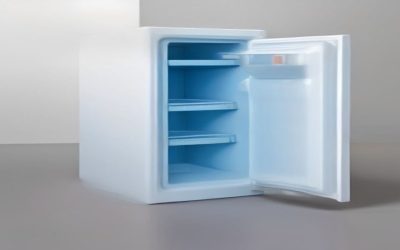
Midea 1.6 Cu. Ft. Mini Fridge
Midea’s compact 1.6-cubic-foot format is easy to place beneath a desk or in a small bedroom, and its Energy Star certification supports efficient everyday use. The straightforward layout favors users who want chilled snacks, drinks, or medication without sacrificing much floor space. Its smaller capacity is a limitation for meal prep, but also keeps the cabinet easier to reach and clean.
Antarctic Star 18L Beverage Refrigerator Cooler
This 18-liter Antarctic Star model offers a similar beverage-first layout with electronic temperature control, a quiet compressor, and an LED-lit interior. It makes sense for cans and bottled drinks in a bar or office, particularly where presentation and predictable settings matter. Because compact beverage coolers often have less flexible storage than food refrigerators, confirm that your containers fit before buying.
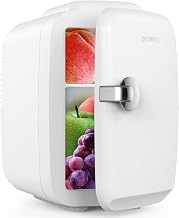
Cooluli Mini Fridge for Bedroom
The Cooluli is the most portable option here, using a 4-liter format that can hold roughly six cans and connect through AC, DC, or its USB option. Its small footprint works well on a desk, in a dorm, or for skincare and personal refreshments, while cooling-and-warming capability adds flexibility. Capacity is intentionally limited, and thermoelectric portable coolers generally suit short-term personal use better than storing a full day’s perishables.
Frequently Asked Questions
What is a good noise level for a bedroom mini fridge?
A published rating near 38–40 dB is a useful starting point for a sleep-oriented room, though the character of the sound matters as much as the number. Place the appliance on a firm, level surface and keep it away from walls or furniture that can resonate.
Are beverage coolers suitable for food?
Usually, they are best for drinks. Their temperature range, shelf spacing, and airflow are optimized for cans and bottles, so choose a conventional refrigerator when you need dependable food storage, a freezer, or room for meal containers.
How much clearance does a mini fridge need?
Follow the manufacturer’s ventilation instructions, but do not wedge the cabinet tightly against a wall or inside an unventilated compartment. Clearance around the rear and sides helps release heat, reduces compressor strain, and can support quieter, more efficient operation.
Why does a quiet mini fridge make occasional clicking or humming sounds?
Compressor starts, thermostat changes, refrigerant movement, and cabinet expansion can all create intermittent sounds. Occasional cycling is normal; persistent rattling, scraping, or unusually loud vibration suggests that the appliance is unlevel, obstructed, or in need of service.
Final Thoughts
For the broadest everyday usefulness, the 4.5 Cu.Ft. Two-Door Mini Fridge with Freezer is the strongest all-rounder. Choose the Midea 1.6 Cu. Ft. Mini Fridge when floor space and efficient bedroom storage matter most, or the EUHOMY 18L Beverage Refrigerator Cooler for a dedicated, organized drink station.