Key takeaways
- Clearance before diameter: Measure floor-to-ceiling height first. Blades should sit at least seven feet up, with roughly ten inches of space above them for the fan to breathe. Under nine-foot ceilings, a flush or low-profile mount protects headroom; over that, a downrod puts air where people actually sit.
- Airflow you can feel at rest: Comfort comes from a broad, low-velocity column of air, not a narrow blast. Larger sweeps moving slowly beat small fans spinning hard, and a six-speed DC motor gives you a genuinely usable bottom setting for sleeping instead of a coarse low-medium-high jump.
- Motor type and noise floor: DC motors draw less current, run cooler, and stay quieter across the speed range than older AC units. Cooler running is the durability story here, since heat is what degrades windings and bearing grease over years of use.
- Light quality over raw brightness: Look for selectable color temperature (3CCT) plus dimming so the same fixture can do warm 3000K in a bedroom and neutral 4000K over a desk. A diffused lens reduces glare when you are lying down and looking straight up at it.
- Rating for the location: Covered porches, sunrooms, and bathrooms need damp-rated hardware and sealed finishes. Standard indoor fans corrode at the canopy and blade irons in humid air, which loosens the assembly and causes wobble long before the motor fails.
What's inside
Ceiling fans get judged on looks and price, then live in a room for a decade doing mechanical work every single night. That gap is where most buyer regret comes from. A fan that photographs beautifully can still hum at low speed, throw a hard-edged shadow across a reading chair, wobble because the blade set was never balanced, or force you to stand on the bed to reach a pull chain. None of that shows up in a product photo, and none of it improves with time.
This guide looks at value-priced ceiling fans through two lenses I use professionally: ergonomics, meaning how the airflow, light quality, and controls actually feel to a body in the room, and durability, meaning what happens to the motor, bearings, and finish after several thousand hours of runtime. Every fan below runs a reversible DC motor, which matters for both. I have grouped them by room type and mounting situation so you can match a fan to a ceiling rather than guess.
As an Amazon Associate we earn from qualifying purchases.



How to Choose a Price Ceiling Fan (2026)
- Clearance before diameter: Measure floor-to-ceiling height first. Blades should sit at least seven feet up, with roughly ten inches of space above them for the fan to breathe. Under nine-foot ceilings, a flush or low-profile mount protects headroom; over that, a downrod puts air where people actually sit.
- Airflow you can feel at rest: Comfort comes from a broad, low-velocity column of air, not a narrow blast. Larger sweeps moving slowly beat small fans spinning hard, and a six-speed DC motor gives you a genuinely usable bottom setting for sleeping instead of a coarse low-medium-high jump.
- Motor type and noise floor: DC motors draw less current, run cooler, and stay quieter across the speed range than older AC units. Cooler running is the durability story here, since heat is what degrades windings and bearing grease over years of use.
- Light quality over raw brightness: Look for selectable color temperature (3CCT) plus dimming so the same fixture can do warm 3000K in a bedroom and neutral 4000K over a desk. A diffused lens reduces glare when you are lying down and looking straight up at it.
- Rating for the location: Covered porches, sunrooms, and bathrooms need damp-rated hardware and sealed finishes. Standard indoor fans corrode at the canopy and blade irons in humid air, which loosens the assembly and causes wobble long before the motor fails.
The Best Price Ceiling Fan (2026)s Reviewed
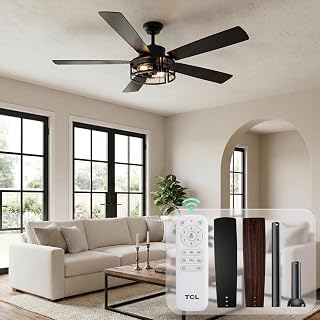
52″ Modern Ceiling Fan with Lights and Remote
A sensible default for most bedrooms and apartments: 52 inches of sweep, a quiet DC motor, and 3CCT dimmable light in one package. The remote handles speed, direction, and color temperature, which keeps you off a step stool and makes the winter reverse setting something you will actually use.
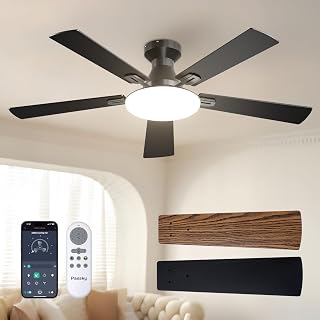
Passky 52″ Black Low Profile Ceiling Fan
Built for eight-foot ceilings where a downrod fan would crowd the room and put blades near eye level. The flush mount preserves headroom, and app control plus setting memory means it returns to your preferred speed and light tone without re-fiddling every evening.
VONLUCE 52″ Wood Ceiling Fan, Nickel
Three solid wood blades give this one better rigidity and less flex than thin pressed panels, which is a quiet contributor to long-term balance. The full-spectrum light and six DC speeds make it a strong fit for living rooms and home offices where you sit under it for hours.
60″ Walnut Wood Ceiling Fan with Remote
The pick for large or open-plan spaces. That 60-inch sweep moves the same volume of air at a lower speed than a smaller fan, so you get comfortable circulation over a sofa or dining table with noticeably less noise and less draft on paperwork.
52″ Smart Outdoor Ceiling Fan, Dark Walnut
Purpose-built for covered patios, with Alexa, Google, and app control so you can adjust it without walking outside. Voice or scheduled control is a genuine ergonomic win for outdoor fans, where wall switches are often awkwardly placed or absent entirely.
Frequently Asked Questions
What size fan does my room need?
Rooms up to about 150 square feet suit a 42 to 48 inch fan; 150 to 300 square feet works well with 52 inches; larger or open spaces benefit from 60 inches or two smaller fans spaced apart.
Why do some fans wobble?
Almost always loose mounting hardware, an unbalanced blade set, or a canopy that was not seated fully. Tighten the bracket to the joist first, then use a balancing kit before assuming the motor is at fault.
Should the fan reverse in winter?
Yes. Run it clockwise on low to pull warm air off the ceiling and circulate it without creating a wind-chill effect at seated height.
Can indoor fans go on a porch?
No. Choose a damp-rated model. Humidity corrodes unsealed hardware and warps non-treated blades, which leads to wobble and premature failure.
Final Thoughts
For most homes, the 52″ Modern Ceiling Fan with remote is the balanced choice, while the Passky 52″ Low Profile solves the low-ceiling problem better than anything else at this price. If you have a larger room to condition, step up to the 60″ Walnut model and enjoy the quieter airflow that extra sweep buys you.