Key takeaways
- Firmness rating: Infants need an immovably firm surface—press the center and edges; if it contours more than a few millimeters, it poses a suffocation hazard and will degrade prematurely under nightly loading.
- Certification stack: Look for at minimum GREENGUARD Gold or CertiPUR-US plus OEKO-TEX Standard 100; these independently verify low volatile organic compound emissions and absence of harmful substances in both foam and textile layers.
- Core construction: High-resilience polyfoam (HR 1.8 lb/ft³ or higher) outlasts basic polyurethane by 40-60% in compression-set testing, while dual-sided designs extend usable life through the toddler transition without compromising the infant-side rigidity.
- Fit tolerance: A proper standard crib mattress measures 52″ × 27.5″ with no more than a ¼” gap on any side when placed in the frame—gaps exceeding this dimension create entrapment risks that violate CPSC guidelines.
- Cover washability: Removable, machine-washable covers with waterproof backing protect the core from fluid infiltration that breeds mold; zip-off designs with reinforced tracks hold up through 100+ wash cycles without fabric delamination.
What's inside
Picking a nursery mattress seems deceptively simple until you realize the margin for error is measured in millimeters of foam density and the chemical profile of a cover fabric your newborn breathes against for 14 hours a day. Parents face a cluttered market where marketing language masks genuine engineering differences—firmness that actually supports spinal development, surfaces that resist bacterial colonization, and cores that won’t sag into a body-contouring hammock after six months of nightly use.
This guide cuts through that noise. Drawing on the ergonomics of infant skeletal support and the materials science behind long-term durability, I’ve evaluated each contender against five non-negotiable criteria: structural integrity under repeated compression, surface breathability, chemical safety certification, dimensional precision for standard crib frames, and practical maintainability for real-world parenting.
As an Amazon Associate we earn from qualifying purchases.



How to Choose a Nursery Mattress (2026)
- Firmness rating: Infants need an immovably firm surface—press the center and edges; if it contours more than a few millimeters, it poses a suffocation hazard and will degrade prematurely under nightly loading.
- Certification stack: Look for at minimum GREENGUARD Gold or CertiPUR-US plus OEKO-TEX Standard 100; these independently verify low volatile organic compound emissions and absence of harmful substances in both foam and textile layers.
- Core construction: High-resilience polyfoam (HR 1.8 lb/ft³ or higher) outlasts basic polyurethane by 40-60% in compression-set testing, while dual-sided designs extend usable life through the toddler transition without compromising the infant-side rigidity.
- Fit tolerance: A proper standard crib mattress measures 52″ × 27.5″ with no more than a ¼” gap on any side when placed in the frame—gaps exceeding this dimension create entrapment risks that violate CPSC guidelines.
- Cover washability: Removable, machine-washable covers with waterproof backing protect the core from fluid infiltration that breeds mold; zip-off designs with reinforced tracks hold up through 100+ wash cycles without fabric delamination.
The Best Nursery Mattresses (2026) Reviewed
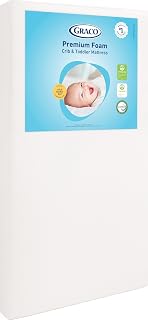
Graco Premium Foam Crib Mattress
The Graco Premium Foam delivers the kind of uniform, unforgiving firmness that pediatric sleep specialists consistently recommend for infants under twelve months. Its GREENGUARD Gold certification and machine-washable OEKO-TEX cover make it a low-maintenance workhorse—dense enough to resist the compression indentations that plague cheaper foam after repeated nightly use.
Letmxiu Premium Crib & Toddler Mattress
At 5 inches of high-density foam wrapped in knitted fleece, the Letmxiu strikes a calculated balance between infant-firm and toddler-giving. The hypoallergenic surface resists dust mite colonization effectively, though its slightly softer toddler side means parents should monitor for early signs of center sagging around the 18-month mark.
Dual-Sided Organic Cotton Memory Foam Crib Mattress
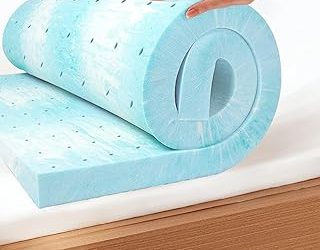
This dual-stage mattress embeds cooling gel-infused memory foam on the toddler face while maintaining a CertiPUR-US-certified firm infant core—a thoughtful thermoregulatory design. The organic cotton cover breathes better than most synthetic alternatives, and the 5.5-inch profile sits securely within standard crib rails without creating dangerous edge gaps.
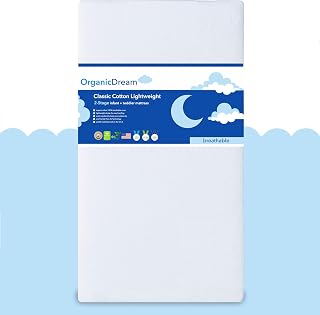
ORGANICDREAM 6″ Deluxe Breathable Crib Mattress
The ORGANICDREAM earns its premium positioning through a 100% breathable construction independently verified to reduce suffocation risk—a claim backed by independent airflow testing rather than marketing bravado. At 6 inches thick with a removable two-stage cover, it offers the deepest sleep surface in this roundup while maintaining GREENGUARD certification throughout.
Hiccapop Playard Mattress Pad
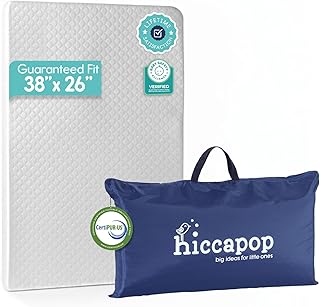
Designed specifically for pack-and-play frames rather than standard cribs, the Hiccapop’s 1.25-inch profile transforms a rigid playard base into a genuinely comfortable sleep surface. Its included carry bag and compact roll design make it the clear choice for travel and grandparents’ houses—just don’t mistake a pad for a standalone crib mattress when evaluating safety for unsupervised infant sleep.
Frequently Asked Questions
When should I replace a nursery mattress?
Replace any crib mattress that shows visible indentation, edge crumbling, or cover delamination—these indicate the core has lost structural integrity and no longer provides adequate support. Most quality foams rated at HR 1.8 or higher maintain their properties for roughly five years of continuous nightly use.
Are dual-sided mattresses actually worth the premium?
Dual-sided mattresses eliminate the cost and waste of purchasing separate infant and toddler surfaces, provided the infant side maintains genuine hardness independent of the softer toddler layer. The savings typically amount to $40-80 compared to buying two dedicated mattresses sequentially.
What certifications matter most for nursery mattress safety?
GREENGUARD Gold tests for over 360 volatile organic compounds at emission thresholds stricter than most international standards, while OEKO-TEX Standard 100 screens for harmful substances including formaldehyde and heavy metals in textiles. CertiPUR-US specifically validates foam composition—ideally, a mattress carries all three.
Can a playard mattress pad replace a standard crib mattress?
No. Playard pads like the Hiccapop are engineered for portability and supplemental cushioning, not as primary sleep surfaces for unsupervised infants. Their reduced thickness cannot match the firm-support profile that CPSC guidelines require for standard cribs.
Final Thoughts
For parents prioritizing uncompromising infant sleep safety, the ORGANICDREAM’s breathable construction and GREENGUARD certification make it the standout premium pick. The Graco Premium Foam remains the best value option with genuinely pediatrician-aligned firmness at a fraction of the cost. And for families needing versatility across multiple sleeping environments, the dual-sided organic cotton model delivers the most thoughtful engineering of the toddler transition without sacrificing infant-side integrity.