Key takeaways
- Verified temperature band: Unopened insulin generally wants 36–46°F (2–8°C), and freezing ruins it permanently. Favor units that hold a narrow band rather than “cold-ish” coolers, and confirm the display reads actual interior air temperature, not the setpoint. Always cross-check against your pharmacist and the manufacturer insert for your specific product.
- Gasket and latch quality: The seal is the first thing to fail. Look for a silicone gasket with visible compression and a latch that closes with a positive click rather than friction alone — friction-fit lids loosen as the plastic relaxes.
- One-handed operation: If you manage injections while holding a pen, a bag, or a child, you need a lid that opens without two hands and buttons large enough to hit without looking. Textured grip zones matter more than they sound.
- Power resilience: Dual rechargeable batteries, USB-C with reinforced port housing, and a car adapter give you overlapping fallbacks. A recessed, strain-relieved port survives travel far better than a flush micro-USB jack.
- Shell durability and serviceability: Thick ABS with rounded corners tolerates drops; user-replaceable batteries and gaskets extend usable life from two years to five. Alarms for out-of-range temperature turn a silent failure into a fixable one.
What's inside
Insulin is a protein drug, and proteins are fussy about their environment. Most buyers arrive at this category after a scare: a pen left in a hot car, a hotel minibar that froze a vial solid, or a checked bag that came off the plane lukewarm. The market’s response has been a flood of look-alike cooling boxes with similar specs and wildly different build quality. From an ergonomics and durability standpoint, the specs matter far less than the parts you touch every day — the latch, the hinge, the gasket, the charge port, and the buttons you press with cold or neuropathic fingers.
This guide evaluates portable insulin refrigerators the way a hardware reviewer would: how the enclosure behaves after a few hundred open-close cycles, whether the lid seals when it’s slightly misaligned, how the unit sits on a nightstand or in a cup holder, and whether the interface is legible at 3 a.m. We cover compressor-free thermoelectric units, rechargeable travel cases, and small dorm-style fridges, plus the selection criteria that predict whether a unit will still be trustworthy in year two.
As an Amazon Associate we earn from qualifying purchases.


How to Choose a Mini Fridge For Insulin (2026)
- Verified temperature band: Unopened insulin generally wants 36–46°F (2–8°C), and freezing ruins it permanently. Favor units that hold a narrow band rather than “cold-ish” coolers, and confirm the display reads actual interior air temperature, not the setpoint. Always cross-check against your pharmacist and the manufacturer insert for your specific product.
- Gasket and latch quality: The seal is the first thing to fail. Look for a silicone gasket with visible compression and a latch that closes with a positive click rather than friction alone — friction-fit lids loosen as the plastic relaxes.
- One-handed operation: If you manage injections while holding a pen, a bag, or a child, you need a lid that opens without two hands and buttons large enough to hit without looking. Textured grip zones matter more than they sound.
- Power resilience: Dual rechargeable batteries, USB-C with reinforced port housing, and a car adapter give you overlapping fallbacks. A recessed, strain-relieved port survives travel far better than a flush micro-USB jack.
- Shell durability and serviceability: Thick ABS with rounded corners tolerates drops; user-replaceable batteries and gaskets extend usable life from two years to five. Alarms for out-of-range temperature turn a silent failure into a fixable one.
The Best Mini Fridge For Insulin (2026)s Reviewed
PeptiCool Peptide Cooler
The standout for daily handling: a touch interface that stays readable in dim light, a lid geometry that opens cleanly with one hand, and a rechargeable design sized for both pens and vials. Its TSA-friendly footprint and solid shell make it the most travel-tolerant unit here, though touch controls demand a brief learning period.
ZSWCBRT Mini Medical Fridge
A straightforward Fahrenheit-display cooler holding roughly 32–47°F, which suits US buyers who don’t want to convert units mid-trip. The case body feels dense and the internal shelf keeps pens from rattling in transit, making it a sensible pick for car and desk use.
Upgraded Insulin Cooler Case (2–8°C)
The molded handle and out-of-range alarm are the differentiators — the handle spreads load across your palm instead of biting into fingers, and the alarm catches gasket or power failures before your supply is compromised. Its tight 2–8°C target is the closest match to standard cold-chain guidance.
Electric Insulin Cooler Travel Case (Dual Battery)
Available in Celsius (0–18°C) and Fahrenheit (32–64°F) versions, this case earns its place on power redundancy: two swappable batteries mean a long flight or a hotel with dead outlets isn’t a crisis. Set it conservatively, since its upper range extends well above ideal storage temperature.
Cooluli 4L Mini Fridge
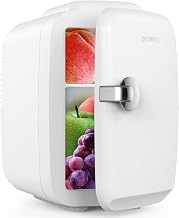
Not a dedicated medical unit, but the most practical home base for a month’s supply thanks to its 4L capacity and 12V AC/DC plus USB flexibility. The thermoelectric design runs quietly enough for a bedroom, and its cabinet holds up well to years of nightstand use.
Frequently Asked Questions
Can insulin be stored too cold?
Yes. Freezing denatures insulin irreversibly, and a unit that dips below 32°F is more dangerous than one running slightly warm. Prioritize models with a firm lower limit and an alarm.
How long do these run without power?
Battery-based cases typically hold temperature for several hours per charge, with dual-battery models extending that considerably. Expect shorter runtime in hot ambient conditions, and treat manufacturer claims as best-case figures.
Do gaskets need replacing?
Silicone seals take a compression set over time and lose sealing force after heavy use. Inspect annually for flat spots or cracking, and choose brands that sell replacements.
Is a dorm-style fridge acceptable for insulin?
It can work for home storage if it holds a stable band and never freezes, but verify with an independent thermometer. Confirm any storage approach with your pharmacist.
Final Thoughts
For everyday portability and the best hardware feel, the PeptiCool Peptide Cooler leads. The Upgraded Insulin Cooler Case is the smarter choice if a tight 2–8°C band and an audible alarm are your priorities, and the Cooluli 4L Mini Fridge remains the most durable home base for bulk supply.