Key takeaways
- Thickness and Layer Count: A single-layer topper under 2 inches offers subtle cushioning, while dual-layer designs at 4 to 5 inches redistribute weight more broadly—critical for side sleepers whose shoulders and hips bear the brunt of a firm surface. Match thickness to your dominant sleep position and body weight.
- Foam Density and ILD Rating: Higher-density memory foam (4 to 5 lb/ft³) resists body impressions far longer than budget foams. Look for an indentation load deflection (ILD) in the 12–16 range on firm mattresses; this keeps the topper supportive enough to preserve spinal alignment while still introducing meaningful pressure relief.
- Cooling Architecture: Gel infusion, bamboo-derived covers, and ventilated cell structures each address heat retention differently. Ventilated foam channels move air laterally; bamboo viscose covers wick moisture from the skin surface. For hot sleepers on firm beds—which trap less airflow than plush tops—the cover material often matters more than the foam formulation.
- Cover Removability and Washability: A topper without a removable, machine-washable cover will accumulate dust mites and skin oils that degrade foam elasticity over time. Zip-off covers extend the functional life of the underlying foam by two to three years compared to fixed covers that can’t be cleaned.
- Deep-Pocket Fit and Skirt Design: On firm mattresses that tend to have taller, denser profiles, an elastic skirt that accommodates 16 to 20 inches of mattress depth prevents the topper from migrating during the night. Straps alone rarely hold on thick mattresses—look for a full-perimeter skirt with reinforced elastic.
What's inside
A surface that’s too rigid does more than just feel uncomfortable—it creates concentrated pressure points at the hips, shoulders, and lumbar region that can compromise spinal alignment over months of nightly use. Whether you inherited a mattress that errs on the firm side or deliberately purchased one for support and now need a comfort layer, the right topper can transform a punishing sleep surface into one that cradles without sagging. The challenge lies in the density and thickness of the foam or fill: go too soft, and you lose the underlying support; go too thin, and you’ve wasted your money on a glorified sheet.
This 2026 roundup evaluates six mattress toppers specifically for use on firm beds, weighing each one through the lens of ergonomic pressure distribution, material longevity after repeated compression cycles, and thermoregulation. Every pick is assessed for how well it maintains its loft over time, whether its cover fabric resists pilling, and how effectively it bridges the gap between firmness and comfort without creating a hammock effect. We’ll also walk you through the key specs to compare so you can match a topper to your body type and sleep position.
As an Amazon Associate we earn from qualifying purchases.


How to Choose a Mattress Topper For Firm Mattresses (2026)
- Thickness and Layer Count: A single-layer topper under 2 inches offers subtle cushioning, while dual-layer designs at 4 to 5 inches redistribute weight more broadly—critical for side sleepers whose shoulders and hips bear the brunt of a firm surface. Match thickness to your dominant sleep position and body weight.
- Foam Density and ILD Rating: Higher-density memory foam (4 to 5 lb/ft³) resists body impressions far longer than budget foams. Look for an indentation load deflection (ILD) in the 12–16 range on firm mattresses; this keeps the topper supportive enough to preserve spinal alignment while still introducing meaningful pressure relief.
- Cooling Architecture: Gel infusion, bamboo-derived covers, and ventilated cell structures each address heat retention differently. Ventilated foam channels move air laterally; bamboo viscose covers wick moisture from the skin surface. For hot sleepers on firm beds—which trap less airflow than plush tops—the cover material often matters more than the foam formulation.
- Cover Removability and Washability: A topper without a removable, machine-washable cover will accumulate dust mites and skin oils that degrade foam elasticity over time. Zip-off covers extend the functional life of the underlying foam by two to three years compared to fixed covers that can’t be cleaned.
- Deep-Pocket Fit and Skirt Design: On firm mattresses that tend to have taller, denser profiles, an elastic skirt that accommodates 16 to 20 inches of mattress depth prevents the topper from migrating during the night. Straps alone rarely hold on thick mattresses—look for a full-perimeter skirt with reinforced elastic.
The Best Mattress Toppers For Firm Mattresses (2026) Reviewed
Niagara Sleep Solution Ultra Soft Cooling Topper
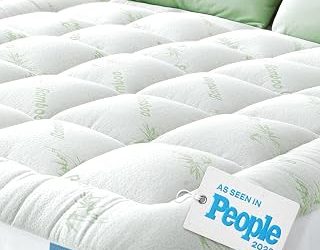
This bamboo-rayon pillow-top design excels at the one job firm-mattress owners need most: introducing a plush comfort layer without burying the underlying support. The 20-inch deep pocket accommodates virtually any mattress height, and the bamboo-derived cover manages moisture exceptionally well throughout the night. From a durability standpoint, the pillow-top fill maintains its loft better than flat-weave covers after repeated wash cycles, making it a solid long-term investment for hot sleepers dealing with pressure-point discomfort.
ViscoSoft 3 Inch High Density Ventilated Topper
ViscoSoft’s ventilated foam construction earns high marks for combining structural resilience with airflow—two qualities that rarely coexist at this price point. The high-density core resists the body impressions that plague thinner toppers after six to twelve months of nightly compression. The removable rayon cover is a practical addition that simplifies maintenance and protects the foam from oils that accelerate breakdown, extending the topper’s functional lifespan meaningfully.
5 Inch Mega Support Dual Layer Topper
The dual-layer approach—a 2.5-inch pillow-top over a 2.5-inch gel-infused foam base—creates a graduated support system that mimics the engineering found in much more expensive hybrid mattresses. The gel infusion actively moderates surface temperature, which matters on firm beds that restrict airflow beneath the sleeper. For individuals over 200 pounds, this five-inch stack provides the depth needed to prevent bottoming out against the firm surface below.
WhatsBedding 5 Inch Bamboo Viscose Topper
WhatsBedding pairs a substantial five-inch profile with a bamboo viscose air-layer cover that breathes better than most synthetic alternatives at this thickness. The memory foam base conforms to body contours quickly, while the cover’s air-layer weave creates a micro-gap between skin and foam that reduces the stuck-in-quicksand sensation common with deeper toppers. Its build quality holds up well under nightly use, with the foam maintaining consistent responsiveness through typical three-to-five-year replacement cycles.
PERLECARE 3 Inch Firm Gel & Bamboo Charcoal Topper
The gel-and-bamboo-charcoal blend sets PERLECARE apart: charcoal naturally absorbs odors and moisture while the gel manages heat, creating a genuinely low-maintenance surface. At three inches with high-density foam, this topper sits in the sweet spot for firm-mattress owners who want measurable pressure relief without dramatically changing their bed’s feel. The removable cover adds a hygienic layer of protection that reinforces the topper’s already impressive durability profile.
Frequently Asked Questions
Will a topper make my firm mattress feel too soft?
Thickness and density determine the outcome. A 2-inch topper with high ILD foam (firm memory foam or latex) will introduce surface comfort while preserving most of the underlying firmness. Thick, soft options like the 5-inch dual-layer models will noticeably change the feel. Start thinner if you’re uncertain—you can always add a second layer later.
How long do memory foam toppers last on a firm mattress?
A quality high-density memory foam topper (4 lb/ft³ or higher) typically retains its recovery and loft for four to six years, though this varies with body weight and nightly use. Firm mattresses actually help extend topper life because the rigid base prevents foam compression that would otherwise accelerate cell breakdown. Budget foams under 3 lb/ft³ may develop permanent body impressions within 12 to 18 months.
Do I need a bamboo or gel-infused cover if I’m a hot sleeper?
Both materials address heat differently, and either helps. Gel infusion works within the foam itself to absorb and disperse thermal energy, while bamboo-derived covers manage moisture at the skin surface. The most effective cooling comes from combining both—gel in the foam core and a breathable bamboo or viscose cover on top—which is exactly what several toppers in this roundup deliver.
Can I use a topper on a mattress that already has a pillow top?
You can, but you’ll be layering softness on softness, which may push your bed beyond what provides proper spinal support. A topper on a pillow-top mattress is most appropriate if the pillow top has degraded and developed uneven support zones. In that scenario, a firmer, thinner topper can restore a level surface before the pillow top eventually needs replacement.
Final Thoughts
For most firm-mattress owners seeking a balance of pressure relief, cooling, and lasting durability, the ViscoSoft 3 Inch Ventilated Topper offers the best all-around value with its high-density core and practical removable cover. Shoppers who need deeper cushioning—particularly side sleepers or those with chronic hip and shoulder pain—should look at the 5 Inch Mega Support Dual Layer Topper or the WhatsBedding 5 Inch Bamboo Viscose for their graduated support profiles. Any of these choices will meaningfully improve a firm mattress without undermining the support that drew you to it in the first place.