Key takeaways
- Thickness vs. Support Trade-off: Thicker toppers (4–5 inches) cushion more aggressively but can let your heavier midsection sink too deep, misaligning the spine. Thinner memory-foam options (3 inches) paired with high-density cores often deliver better postural support for back-pain sleepers.
- Foam Density and Longevity: Look for CertiPUR-US or Oeko-Tex certification, which signal that the foam was tested for harmful off-gassing and structural consistency. Denser foams (4 lb/ft³ and above) resist body impressions longer, meaning your support profile stays intact for years rather than months.
- Cover Breathability and Removability: A breathable, washable cover prevents heat buildup that can stiffen muscles overnight. Zip-off or removable covers also let you maintain hygiene without degrading the foam — a durability win that extends the topper’s service life.
- Attachment System Integrity: Deep pockets, elastic skirts, and 4-way straps each have trade-offs. Deep pockets suit thicker mattresses; adjustable straps lock the topper in place on thinner beds. A topper that shifts during sleep undermines every ergonomic benefit it offers.
- Pressure-Relief Profile by Sleep Position: Side sleepers need softer conformity at the hips and shoulders; back sleepers benefit from a medium-firm response that prevents the pelvis from dipping. Combination sleepers should prioritize responsive foam or hybrid constructions that adapt quickly to position changes.
What's inside
Waking up with a sore lower back because your mattress has lost its support is a problem millions of people share — and buying a whole new mattress isn’t always realistic. A well-chosen mattress topper can redistribute pressure away from sensitive joints, cradle the natural curve of your lumbar spine, and buy your mattress another few years of life without breaking the bank. The catch is that not every topper addresses spinal alignment the same way, and choosing the wrong material or thickness can actually make back pain worse.
This guide walks you through six toppers that genuinely hold up under daily use, evaluated from an ergonomics-and-durability standpoint. I considered foam density certifications, cover construction, strap integrity, and how each product distributes load across the hips and shoulders — the two zones that matter most for back-pain sufferers. You’ll also find a practical buying framework so you can match a topper to your body type, sleeping position, and the firmness of the mattress underneath.
As an Amazon Associate we earn from qualifying purchases.


How to Choose a Mattress Topper For Bad Back (2026)
- Thickness vs. Support Trade-off: Thicker toppers (4–5 inches) cushion more aggressively but can let your heavier midsection sink too deep, misaligning the spine. Thinner memory-foam options (3 inches) paired with high-density cores often deliver better postural support for back-pain sleepers.
- Foam Density and Longevity: Look for CertiPUR-US or Oeko-Tex certification, which signal that the foam was tested for harmful off-gassing and structural consistency. Denser foams (4 lb/ft³ and above) resist body impressions longer, meaning your support profile stays intact for years rather than months.
- Cover Breathability and Removability: A breathable, washable cover prevents heat buildup that can stiffen muscles overnight. Zip-off or removable covers also let you maintain hygiene without degrading the foam — a durability win that extends the topper’s service life.
- Attachment System Integrity: Deep pockets, elastic skirts, and 4-way straps each have trade-offs. Deep pockets suit thicker mattresses; adjustable straps lock the topper in place on thinner beds. A topper that shifts during sleep undermines every ergonomic benefit it offers.
- Pressure-Relief Profile by Sleep Position: Side sleepers need softer conformity at the hips and shoulders; back sleepers benefit from a medium-firm response that prevents the pelvis from dipping. Combination sleepers should prioritize responsive foam or hybrid constructions that adapt quickly to position changes.
The Best Mattress Topper For Bad Back (2026)s Reviewed
SHOUREN 5 Inch Memory Foam Topper
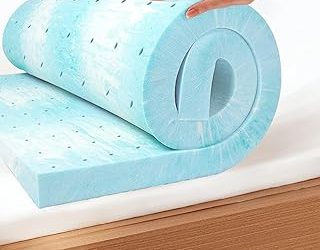
At five inches, this topper delivers deep compression support that genuinely contours to the lumbar curve without bottoming out — a rare feat at this thickness. The gel-infused layer manages heat effectively, and the 4-way elastic straps keep the unit locked to the mattress even for restless combination sleepers. If your current mattress is rock-hard and your hips bear most of your body weight, this is the topper that will redistribute that load most dramatically.
SINWEEK 3 Inch Gel Memory Foam Topper
For shoppers who want support without adding excessive height to their bed, SINWEEK’s ventilated high-density foam hits a practical sweet spot. The removable soft cover is well-constructed with reinforced stitching, and the CertiPUR-US certification adds genuine credibility to the material claims. This is an especially solid pick for back sleepers on a medium-firm mattress who need targeted pressure relief rather than plush softness.
PERLECARE 3 Inch Gel Memory Foam Topper
PERLECARE distinguishes itself with a non-slip base design that stays put without relying on deep pockets alone — a meaningful durability advantage since elastic skirts tend to lose elasticity over time. The Oeko-Tex certification and removable, machine-washable cover make long-term maintenance straightforward. Performance-wise, the foam responds quickly to weight shifts, which benefits anyone who moves between back and side sleeping throughout the night.
BEDLORE Viscose Bamboo Pillow Top
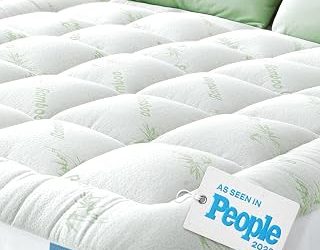
Different from the memory-foam options here, BEDLORE uses a viscose-bamboo pillow-top construction that prioritizes airflow and surface softness over deep compression relief. The stretchable pockets accommodate mattresses from 6 to 18 inches, making it the most universally compatible option on this list. It’s best suited for sleepers whose back pain stems from a mattress that’s too firm at the surface rather than from a structural support deficit.
ELEMUSE Extra Thick Pillow Top Pad
ELEMUSE takes a pillow-top approach with overfilled down-alternative fiber rather than foam, which creates a cloud-like surface layer backed by the deep-pocket elastic skirt. It won’t match memory foam for targeted spinal contouring, but it excels at softening a hard mattress surface without trapping heat. Durability-wise, the filling is prone to compression over time, so plan to re-fluff and rotate it regularly to maintain even support.
Frequently Asked Questions
How thick should a mattress topper be for lower back pain?
For most adults, a 3-inch memory-foam topper provides the best balance of pressure relief and spinal alignment. Thicker options (4–5 inches) work well if your mattress has completely failed structurally, but they can create excessive sinkage for lighter individuals. The key variable is foam density — a 3-inch, high-density topper outperforms a 5-inch, low-density one for back support.
Will a mattress topper fix a sagging mattress?
A topper can mask surface-level firmness issues but won’t correct deep structural sagging. If your mattress has visible dips greater than 1.5 inches, a topper will conform to those depressions rather than correcting them, which can worsen spinal misalignment. In that scenario, mattress replacement is the more durable investment.
How long do memory foam mattress toppers last?
A well-made memory-foam topper with proper density (4+ lb/ft³) typically maintains its support profile for three to five years. Lower-density foams may develop body impressions within 12 to 18 months. Using a breathable mattress protector and rotating the topper 180 degrees monthly can extend its effective lifespan meaningfully.
Are gel-infused toppers better for back pain?
The gel infusion primarily addresses temperature regulation rather than back-pain relief directly, though there’s an indirect benefit: cooler sleep reduces muscle stiffness, which can ease morning back discomfort. For pure spinal support, focus on foam density and thickness rather than the presence or absence of gel particles.
Final Thoughts
From an ergonomics perspective, the SHOUREN 5 Inch stands out as the strongest option for serious spinal support when your mattress has lost its structure. For a more moderate and universally compatible upgrade, the SINWEEK 3 Inch and PERLECARE 3 Inch deliver high-density foam performance in a thinner, lighter package that won’t alter your bed height dramatically. Match your choice to the actual problem — surface hardness, structural failure, or heat-related stiffness — and you’ll get far better results than any one-size-fits-all recommendation can offer.