Key takeaways
- Gauge of Coil Springs: Heavier sleepers need coils with a lower (thicker) wire gauge — ideally 12-gauge or below. Thinner gauges flex too quickly under sustained load, accelerating sag. Verify the manufacturer specifies coil gauge rather than hiding behind vague “heavy-duty” claims.
- Zoned Support Architecture: Look for five to seven distinct support zones. A proper zoning layout places firmer reinforcement under the lumbar and pelvic region while allowing gentler contouring at the shoulders. Without zoning, your spine settles into a single unsupported curve regardless of how thick the comfort layers are.
- Edge Support Construction: Reinforced perimeter coils or high-density foam rails determine whether you can sit on the edge of the bed or sleep near it without sliding off. For couples, poor edge support effectively shrinks usable mattress surface by several inches on each side.
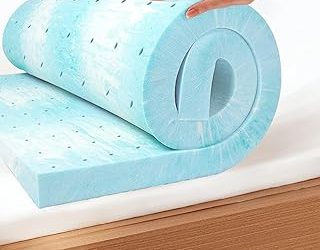
- Foam Density and Type: Gel-infused memory foam and natural latex both manage heat better than traditional polyurethane, but density matters more than type. Foams below 3.5 lb/ft³ break down faster under heavier body weight. Higher-density foams resist body impressions and maintain responsiveness over years.
- Certifications and Fiberglass Safety: CertiPUR-US certification confirms foam emissions testing and material safety. Fiberglass-free fire barriers are increasingly standard, but always verify — fiberglass contamination inside mattress covers creates a health hazard that’s expensive to remediate.
What's inside
Choosing a mattress when you carry more weight than the average sleeper isn’t just about comfort — it’s an engineering problem. Standard mattresses compress unevenly under higher loads, creating pressure points at the hips and shoulders while sagging along the center within months. The result: chronic back pain, restless nights, and a mattress replacement cycle that costs more than it should.
This 2026 roundup evaluates six heavy-duty hybrid and foam mattresses built specifically for larger sleepers. I assessed each one through the lens of structural durability, zoning accuracy, edge reinforcement, and thermal regulation — the four areas where heavyweight mattresses most often fail or succeed.
As an Amazon Associate we earn from qualifying purchases.



How to Choose a Mattress for Heavy People (2026)
- Gauge of Coil Springs: Heavier sleepers need coils with a lower (thicker) wire gauge — ideally 12-gauge or below. Thinner gauges flex too quickly under sustained load, accelerating sag. Verify the manufacturer specifies coil gauge rather than hiding behind vague “heavy-duty” claims.
- Zoned Support Architecture: Look for five to seven distinct support zones. A proper zoning layout places firmer reinforcement under the lumbar and pelvic region while allowing gentler contouring at the shoulders. Without zoning, your spine settles into a single unsupported curve regardless of how thick the comfort layers are.
- Edge Support Construction: Reinforced perimeter coils or high-density foam rails determine whether you can sit on the edge of the bed or sleep near it without sliding off. For couples, poor edge support effectively shrinks usable mattress surface by several inches on each side.
- Foam Density and Type: Gel-infused memory foam and natural latex both manage heat better than traditional polyurethane, but density matters more than type. Foams below 3.5 lb/ft³ break down faster under heavier body weight. Higher-density foams resist body impressions and maintain responsiveness over years.
- Certifications and Fiberglass Safety: CertiPUR-US certification confirms foam emissions testing and material safety. Fiberglass-free fire barriers are increasingly standard, but always verify — fiberglass contamination inside mattress covers creates a health hazard that’s expensive to remediate.
The Best Mattresses for Heavy People (2026) Reviewed
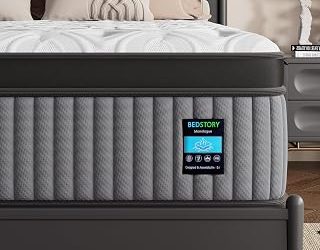
BedStory 14 Inch Hybrid King
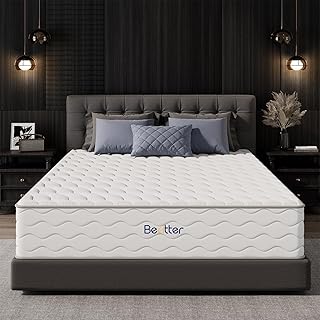
The BedStory 14 Inch stands out for its zoned lumbar pocket spring configuration, which distributes load across distinct firmness bands rather than relying on a uniform coil field. Its 14-inch profile gives heavier sleepers adequate compression buffer before they bottom out on the base layer. The 10-year warranty signals manufacturer confidence in long-term structural integrity — a critical factor when daily load stress is above average.
14 Inch Queen Cooling Hybrid with Ice Silk Cover
This mattress pairs a seven-zone ergonomic spring system with an ice silk cover and gel memory foam comfort layer, creating a thermal management stack that outperforms most competitors at this price point. The seven-zone layout is the most granular zoning in this roundup, mapping support density to body regions with impressive precision. Strong edge rails prevent the roll-off effect that plagues many hybrids under heavier loads.
Extra Firm 14 Inch Queen Hybrid
For sleepers who need maximum firmness without sacrificing motion isolation, this extra-firm hybrid delivers a thick foam perimeter and multi-layer luxury foam construction that resists body impressions. The fiberglass-free designation eliminates a contamination risk that budget mattresses still occasionally carry. Couples will appreciate the low motion transfer — critical when one partner shifts weight during sleep.
Coolvie Hybrid Latex King
The Coolvie combines natural latex’s inherent resilience with five-zone heavy-duty pocket springs, producing a surface that contours without the slow-recovery sink of pure memory foam. Euro top construction adds a plush initial feel while the underlying spring system handles the structural heavy lifting. At 76 by 80 inches, the full king dimensions maximize usable surface area, and motion isolation keeps partner disturbance to a minimum.
Sweetnight CoolNest 14 Inch King
Sweetnight’s CoolNest targets the intersection of cooling performance and ergonomic zoning with a five-zone layout beneath gel-infused memory foam. CertiPUR-US certification ensures tested material safety, and the medium feel balances pressure relief with enough support to prevent excessive spinal dip. Enhanced breathability channels in the comfort layer address the heat retention that memory foam sleepers consistently cite as their primary complaint.
Frequently Asked Questions
What mattress firmness is best for heavy people?
Most ergonomics research points toward medium-firm to extra-firm surfaces for sleepers above 230 pounds. The goal is maintaining a neutral spinal alignment — too soft and the hips sink, too firm and pressure accumulates at the shoulders. Mattresses with zoned support solve this by varying firmness across different body regions.
How thick should a mattress be for a heavy person?
A minimum of 12 inches is generally recommended, with 14 inches providing the best balance of comfort layer depth and support core height. Thicker mattresses offer more material to distribute load before compression reaches the rigid base, extending usable lifespan.
Do hybrid mattresses last longer for heavier sleepers?
Hybrids typically outlast all-foam mattresses under heavier loads because pocket coils resist permanent compression far more effectively than foam alone. The coil system bears the structural burden while foam layers handle comfort, preventing the premature sagging that plagues foam-only designs.
How often should heavy sleepers replace their mattress?
Plan for a seven-to-nine-year replacement cycle rather than the standard ten-to-fifteen, unless the manufacturer specifically warranties heavier usage. Regular rotation every three to six months slows uneven wear and extends the timeline meaningfully.
Final Thoughts
For the best combination of zoned lumbar support and proven durability, the BedStory 14 Inch Hybrid leads this roundup — its coil architecture is purpose-built for sustained heavy loads. The 14 Inch Queen Cooling Hybrid earns a strong recommendation for sleepers who prioritize temperature regulation alongside seven-zone ergonomic precision. And the Coolvie Hybrid Latex King stands out for anyone wanting the responsive bounce of latex paired with reinforced heavy-duty springs. All three address the core engineering challenge: maintaining spinal alignment under load night after night.