Key takeaways
- Support core: Prioritize pocketed coils or substantial high-density foam that can resist bottoming out. Zoned support is especially useful when the pelvis needs reinforcement without making the shoulder area uncomfortably hard.
- Pressure relief: Side sleepers need enough contouring for the shoulder and hip, but excessive softness can twist the spine. Look for comfort layers that cushion those contact points while preserving a level midsection.
- Firmness: Medium-firm is a practical starting point for many heavier side sleepers, although body shape and personal preference matter. A mattress that feels medium to a lighter person may feel noticeably softer under greater pressure.
- Durability: Dense foams, robust coils, reinforced edges, and a transparent warranty are meaningful indicators. Rotate the mattress as permitted by the manufacturer, and use a properly rated foundation to reduce premature sagging.
- Temperature and movement: Cooling covers, breathable foams, and coil ventilation can help dissipate heat. Couples should also consider motion isolation, since responsive coils and buoyant foams transmit movement differently.
What's inside
For heavier side sleepers, mattress shopping is less about choosing “soft” or “firm” and more about managing load, alignment, and long-term wear. A bed that feels comfortable for ten minutes may still allow the hips to sink too far, strain the shoulders, or develop permanent impressions within a year.
This guide evaluates mattresses through an ergonomics-and-durability lens: pressure distribution at the shoulder and hip, support through the lumbar region, airflow, edge stability, motion control, and the construction details that matter when a mattress carries higher nightly loads. The products below include hybrids, memory-foam designs, and responsive grid constructions for different comfort preferences.
As an Amazon Associate we earn from qualifying purchases.




How to Choose a/an Mattress For Obese Side Sleepers (2026)
- Support core: Prioritize pocketed coils or substantial high-density foam that can resist bottoming out. Zoned support is especially useful when the pelvis needs reinforcement without making the shoulder area uncomfortably hard.
- Pressure relief: Side sleepers need enough contouring for the shoulder and hip, but excessive softness can twist the spine. Look for comfort layers that cushion those contact points while preserving a level midsection.
- Firmness: Medium-firm is a practical starting point for many heavier side sleepers, although body shape and personal preference matter. A mattress that feels medium to a lighter person may feel noticeably softer under greater pressure.
- Durability: Dense foams, robust coils, reinforced edges, and a transparent warranty are meaningful indicators. Rotate the mattress as permitted by the manufacturer, and use a properly rated foundation to reduce premature sagging.
- Temperature and movement: Cooling covers, breathable foams, and coil ventilation can help dissipate heat. Couples should also consider motion isolation, since responsive coils and buoyant foams transmit movement differently.
The Best Mattress For Obese Side Sleepers (2026)s Reviewed
Sleepmax 14-Inch Queen Hybrid Mattress
The Sleepmax combines a substantial profile with pressure-relieving comfort aimed at both back and side sleepers. Its hybrid construction should provide more pushback than an all-foam bed, while the fiberglass-free build, CertiPUR-US certification, and 365-night trial make it a reassuring choice for buyers who want time to assess alignment and durability at home.
Sweetnight CoolNest 14-Inch King
Sweetnight’s CoolNest is a sensible option for side sleepers who prefer memory-foam contouring without an overly plush sensation. Its five-zone ergonomic support design is intended to balance cushioning and structural support, while the breathable, cooling-focused construction may suit sleepers who tend to feel trapped in conventional foam.
BedStory 14-Inch King Hybrid
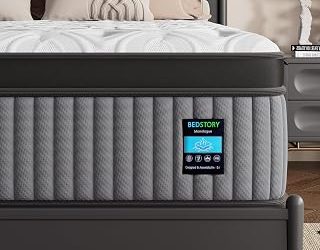
The BedStory stands out for heavier sleepers who want coil support and targeted lumbar reinforcement. Zoned pocket springs can help limit excessive pelvic sink and improve edge-to-edge stability, while the stated no-sagging focus and 10-year warranty address the central concern of long-term load bearing.
Purple Plus King Mattress
Purple’s GelFlex Grid offers a distinctly springy feel: it yields beneath pressure points but quickly recovers when you move. That responsive surface can make position changes easier for larger sleepers, and its breathable, temperature-neutral design is appealing for hot sleepers who dislike the enveloping feel of traditional memory foam.
EGOHOME 14-Inch King Memory Foam Mattress
This EGOHOME model targets medium-firm support with copper-gel-infused foam, a cooling cover, and motion isolation that may benefit couples. Its fiberglass-free construction and CertiPUR-US certification are useful practical details, while the ICA endorsement and layered foam design make it a strong candidate for sleepers seeking a stable, less bouncy surface.
Frequently Asked Questions
What mattress firmness is best for an obese side sleeper?
Medium-firm is often the most versatile starting point because it cushions the shoulder and hip without allowing the torso to collapse. However, a broader-shouldered sleeper may need more surface cushioning, while someone with a straighter build may prefer firmer support.
Are hybrid mattresses better than memory foam for heavier sleepers?
Not automatically, but hybrids often offer useful advantages: stronger ventilation, easier movement, and a coil support core that resists deep compression. High-quality all-foam mattresses can still work well when their support layers are dense and thick enough.
How thick should a mattress be?
A 12- to 14-inch mattress is a practical range for many heavier side sleepers because it allows room for both pressure-relieving comfort layers and a substantial support core. Thickness alone does not guarantee durability; materials and construction matter more than the height printed on the label.
How can I prevent premature mattress sagging?
Use a foundation with the spacing and weight capacity specified by the manufacturer, avoid placing the mattress on an unsuitable frame, and rotate it when recommended. A mattress protector can also limit moisture and abrasion that gradually degrade comfort materials.
Final Thoughts
For coil-based support, the BedStory 14-Inch King Hybrid is a compelling heavy-duty choice, while the Sleepmax 14-Inch Queen Hybrid offers a balanced pressure-relieving alternative with a generous trial period. Sleepers who prioritize responsive cushioning and temperature neutrality should also consider the Purple Plus King.