Key takeaways
- Coil Gauge & Type: Look for pocketed coils at 13-gauge or lower—thicker wire resists bottoming out. Bonnell or open-coil systems flex unevenly under heavier loads.
- Foam Density: CertiPUR-US certification is a starting point, but also check ILD ratings; a higher indentation load deflection means firmer, longer-lasting foam that resists permanent compression.
- Zoned Support: A mattress with reinforced lumbar and hip zones distributes weight more evenly across the sleep surface, preventing the “hammock effect” common in uniform-density beds.
- Edge Reinforcement: Reinforced perimeter rails or high-density foam borders prevent the sides from collapsing when you sit or sleep near the edge—critical for getting in and out of bed safely.
- Height & Layer Stacking: Thicker mattresses (12–14 inches) allow more material layers, giving manufacturers room to build durable transition zones that absorb weight before it reaches the base coil system.
What's inside
If you carry extra weight, a standard mattress will sag where you need support the most—typically the lumbar zone and hip cradle. That accelerated breakdown causes misaligned spines, restless sleep, and a mattress you replace far sooner than anyone should have to. The core issue is load distribution: most budget beds use thin foam and under-gauge coils that compress permanently under higher body mass.
This guide, written from an ergonomics and structural-durability standpoint, zeros in on six mattresses built to resist premature body impressions. We evaluate coil gauge, foam density certifications, zoned reinforcement, and edge integrity—the factors that actually determine whether a mattress will hold its shape and support under real-world conditions over years of nightly use.
As an Amazon Associate we earn from qualifying purchases.


How to Choose a Mattress For Obese People (2026)
- Coil Gauge & Type: Look for pocketed coils at 13-gauge or lower—thicker wire resists bottoming out. Bonnell or open-coil systems flex unevenly under heavier loads.
- Foam Density: CertiPUR-US certification is a starting point, but also check ILD ratings; a higher indentation load deflection means firmer, longer-lasting foam that resists permanent compression.
- Zoned Support: A mattress with reinforced lumbar and hip zones distributes weight more evenly across the sleep surface, preventing the “hammock effect” common in uniform-density beds.
- Edge Reinforcement: Reinforced perimeter rails or high-density foam borders prevent the sides from collapsing when you sit or sleep near the edge—critical for getting in and out of bed safely.
- Height & Layer Stacking: Thicker mattresses (12–14 inches) allow more material layers, giving manufacturers room to build durable transition zones that absorb weight before it reaches the base coil system.
The Best Mattress For Obese People (2026) Reviewed
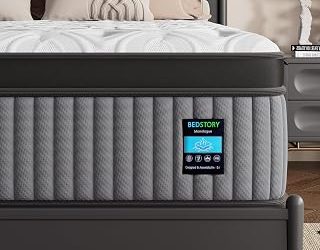
BedStory 14-Inch Hybrid King
Its zoned lumbar pocket-spring architecture pairs thicker-gauge coils in the center third with softer zones at the shoulders—an approach that genuinely reduces mid-sag under heavier body weight. The 10-year warranty is a meaningful signal that BedStory backs its durability claims, and the hybrid construction means airflow stays solid where all-foam competitors trap heat.
12-Inch Heavy Duty Full
Purpose-built for big-and-tall sleepers, this model uses reinforced pocketed coils with a lower-profile design that prioritizes structural integrity over plush layering. The high-density foam comfort layer sits close to the coil unit, minimizing the compression zone that causes premature sagging—exactly the kind of engineering discipline heavier sleepers need.
Extra Firm 14-Inch Queen Hybrid
With a thick foam edge guard and multiple luxury foam layers stacked above a reinforced coil base, this mattress targets the couples-and-heavies demographic without resorting to rock-hard firmness. The motion isolation is notable: independent coil response means one partner’s movement doesn’t transfer across the sleep surface, while the firm support profile resists body impressions over time.
EGOHOME 14-Inch King Memory Foam
What sets this apart from a durability angle is the copper-gel infusion working alongside graphene-cooled cover fabric—both materials conduct heat away from pressure points, which prevents the foam softening that accelerated warmth can cause under heavier bodies. The ICA endorsement and CertiPUR-US certification confirm material standards, and the medium-firm feel strikes the right balance between pressure relief and structural resilience.
Sleepmax 14-Inch Queen Hybrid
The Sleepmax layers cooling coils beneath high-density comfort foam in a configuration specifically tuned for back and side sleepers carrying extra weight. The 365-night trial period stands out because it gives heavy sleepers the extended evaluation window they need—body impressions in a new mattress can take weeks to reveal themselves, and this trial length lets that process play out before you commit.
Frequently Asked Questions
What mattress firmness is best for heavy sleepers?
Medium-firm to firm (6.5–8 on a 10-point scale) typically performs best. A firmer core resists compression while comfort layers still provide pressure relief at the shoulders and hips—preventing the “sleeping on a plank” feeling without sacrificing long-term durability.
How thick should a mattress be for an obese person?
Twelve to fourteen inches gives manufacturers enough vertical space to layer transition foam over a robust coil base. Anything thinner than 10 inches risks compressing through to the support layer, which eliminates the ergonomic benefit of having a comfort layer at all.
Do hybrid mattresses last longer than all-foam for heavier sleepers?
Generally yes. Pocketed steel coils maintain their structural memory far longer than polyurethane or memory foam under sustained heavy loads. Hybrids also dissipate heat more efficiently, which slows the thermal degradation that weakens foam over years of use.
How often should a heavier person rotate their mattress?
Every two to three months during the first year, then quarterly thereafter. Rotating the mattress 180 degrees distributes wear evenly across the surface, preventing body impressions from forming in a single concentrated zone and extending usable lifespan.
Final Thoughts
For shoppers who need maximum durability under higher body weight, the BedStory 14-Inch Hybrid delivers the strongest combination of zoned support and warranty backing. The Extra Firm 14-Inch Queen is the pick for couples seeking motion isolation alongside firmness, while the Sleepmax 14-Inch earns our recommendation for its generous 365-night trial—critical for heavier sleepers who need extended time to evaluate real-world performance before committing.