Key takeaways
- Minimum profile thickness: Aim for 13 inches or above. Thinner mattresses compress faster under elevated body weight, reducing the functional lifespan of the comfort layers and increasing the likelihood of spring-through at the support core.
- Zoned support architecture: Look for mattresses that differentiate firmness levels across at least three distinct body zones. A zoned lumbar and hip region resists the concentrated loading that side sleepers generate, keeping the pelvis level with the shoulders rather than letting it sink disproportionately.
- Hybrid over pure foam: Pocket-coil hybrids generally outperform all-foam designs in durability tests at higher body weights because the steel spring system distributes load mechanically rather than relying entirely on foam cell recovery. This translates to less permanent indentation over a 5-to-10-year horizon.
- Foam density and certification: CertiPUR-US certification ensures that the foams used meet baseline standards for content and emissions, but also check for higher-density comfort layers (4.0 lb/ft³ or above). Denser foam resists compression fatigue far better than lower-density alternatives.
- Edge reinforcement and warranty terms: A reinforced perimeter or firmer border coils prevent the collapse many heavier sleepers experience when sitting on or rolling toward the mattress edge. Pair that with a warranty of at least 10 years—shorter terms are a red flag about manufacturer confidence in their own product.
What's inside
Heavier side sleepers face a specific engineering problem that most mattress marketing ignores: the body regions demanding the deepest contouring—the hips and shoulders—also concentrate the most downward force, which is exactly what accelerates structural breakdown in foam and spring systems. Within months, a mattress that once felt balanced can develop a permanent trough around the pelvic zone or bottom out beneath the lumbar curve, quietly pulling the spine out of neutral alignment night after night. The result is not just poor sleep but cumulative musculoskeletal strain that compounds over time.
This guide was built from an ergonomics-and-durability lens rather than a generic comfort angle. Every mattress below was measured against load distribution across targeted support zones, material fatigue resistance under sustained heavier body weights, and the critical balance between surface conformity and deep-layer rebound. You’ll find our curated selections up front, followed by a practical framework for evaluating what actually holds up over years—not just the first week.
As an Amazon Associate we earn from qualifying purchases.


How to Choose a Mattress for Heavier Side Sleepers (2026)
- Minimum profile thickness: Aim for 13 inches or above. Thinner mattresses compress faster under elevated body weight, reducing the functional lifespan of the comfort layers and increasing the likelihood of spring-through at the support core.
- Zoned support architecture: Look for mattresses that differentiate firmness levels across at least three distinct body zones. A zoned lumbar and hip region resists the concentrated loading that side sleepers generate, keeping the pelvis level with the shoulders rather than letting it sink disproportionately.
- Hybrid over pure foam: Pocket-coil hybrids generally outperform all-foam designs in durability tests at higher body weights because the steel spring system distributes load mechanically rather than relying entirely on foam cell recovery. This translates to less permanent indentation over a 5-to-10-year horizon.
- Foam density and certification: CertiPUR-US certification ensures that the foams used meet baseline standards for content and emissions, but also check for higher-density comfort layers (4.0 lb/ft³ or above). Denser foam resists compression fatigue far better than lower-density alternatives.
- Edge reinforcement and warranty terms: A reinforced perimeter or firmer border coils prevent the collapse many heavier sleepers experience when sitting on or rolling toward the mattress edge. Pair that with a warranty of at least 10 years—shorter terms are a red flag about manufacturer confidence in their own product.
The Best Mattress for Heavier Side Sleepers (2026) Reviewed
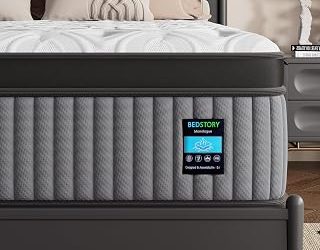
BedStory 14-Inch Hybrid King
Built specifically with heavier users in mind, the BedStory pairs zoned lumbar reinforcement with a pocket-spring system engineered to resist sagging under sustained load. The 14-inch profile provides enough material depth to separate comfort and support layers meaningfully, and the 10-year warranty signals genuine durability confidence from the manufacturer. This is the mattress to beat in this category.
Sweetnight CoolNest 14-Inch
The CoolNest’s 5-zone ergonomic support system addresses a nuance that many competitors miss: it differentiates not just between upper and lower body but across mid-torso transitions where side sleepers lose alignment most often. Its medium feel avoids the trap of being so soft that heavier sleepers bottom out, while the cooling-infused foam layers manage the heat retention that denser sleepers commonly report.
Beautyrest World Class Level Four Plush 15.25-Inch
At 15.25 inches, this is the deepest profile in the roundup, and that extra thickness matters for heavier side sleepers because it provides a genuine multi-layer separation between surface comfort and deep support. The plush comfort layer conforms around hips and shoulders without the underlying springs pushing back prematurely—a balance that thinner mattresses struggle to achieve at elevated body weights.
Sleepmax 14-Inch Hybrid Queen
The Sleepmax distinguishes itself through its reinforced deep-sleep hybrid construction, which pairs individually wrapped coils with pressure-relieving foam specifically calibrated for back and side sleeping positions. The 365-night trial period is notable here: it gives heavier side sleepers an extended window to assess whether the support layers maintain their rebound properties under nightly real-world loading, which is a far more honest evaluation than a two-week showroom test.
Luxury Hotel Cooling Hybrid 14-Inch
This mattress features individually pocketed springs arranged in distinct hip, shoulder, and lumbar zones, which directly maps to the pressure-point geometry of side sleepers carrying extra weight. The zoned construction prevents the most common failure mode in this category—the mid-section collapse—while the fiberglass-free design eliminates an irritant concern that some budget hybrids carry.
Frequently Asked Questions
What firmness level is best for heavier side sleepers?
A medium-firm feel (roughly 6 to 7 on the 10-point firmness scale) generally strikes the right balance. Softer surfaces allow excessive hip sinkage that misaligns the spine, while very firm surfaces fail to relieve pressure at the shoulder and hip joints—both outcomes that heavier side sleepers are especially prone to.
How often should a heavier side sleeper replace their mattress?
Even well-built mattresses degrade faster under heavier loads. Plan for a realistic 7-to-10-year replacement cycle rather than the 10-to-15-year figures you’ll see in standard sleep advice. If you notice visible sagging or wake with lower-back stiffness that wasn’t present before, the support core has likely lost structural integrity.
Are hybrid mattresses really more durable than all-foam for heavier sleepers?
In most cases, yes. The steel coil system in a hybrid carries a significant portion of the load mechanically, reducing the cumulative stress placed on foam comfort layers. All-foam mattresses rely entirely on cellular foam recovery, which degrades faster under the sustained compressive forces that heavier body weights generate.
Does mattress firmness matter more for side sleepers than for back sleepers?
Absolutely. Side sleepers concentrate their entire body weight across the narrow profile of the shoulder and hip, creating much higher per-square-inch pressure than back sleeping distributes across the broader torso. This makes firmness calibration and zoned support far more consequential for side sleepers—especially those carrying additional weight.
Final Thoughts
For heavier side sleepers prioritizing long-term durability and biomechanical support, the BedStory 14-Inch Hybrid leads the pack with its sag-resistant construction and purpose-built lumbar zoning. The Sweetnight CoolNest is the strongest pick for sleepers who tend to overheat, combining intelligent 5-zone pressure mapping with genuine cooling performance. And if maximum material depth is your priority, the Beautyrest World Class Level Four’s 15.25-inch profile delivers a level of layered cushioning that simply isn’t achievable in thinner builds. Any of these three should hold their shape and support characteristics well past the midpoint of their warranty coverage.