Key takeaways
- Coil gauge and pocket spring count: Heavier sleepers need lower-gauge (thicker) steel coils, ideally pocketed individually. Higher coil counts in the 1,000-plus range at king size prevent the “hammock effect” where the center sags and the edges roll inward. Look for springs rated to support at least 300 pounds per side.
- Zoned support architecture: A mattress that treats the lumbar, hip, and shoulder regions as separate load zones outperforms a uniform-density build. Zoned firmness keeps the spine neutral by allowing the shoulders to sink just enough while pushing back firmly under the hips, where most body weight concentrates.
- Foam density and compression resistance: Check the foam’s ILD rating (indentation load deflection). Denser foams above 4 PCF resist body impressions far longer. Lower-density foats may feel plush initially but develop permanent grooves within a year under heavier loads.
- Edge support system: Reinforced perimeter coils or high-density foam rails make a meaningful difference for people who sit on the bed’s edge to get in and out. Without solid edge support, usable sleeping surface shrinks and the structure ages faster.
- Profile height and layering: Mattresses in the 14-to-18-inch range give manufacturers room to stack transition layers above the support core. Thicker profiles translate to better motion isolation and pressure mapping for heavier frames, particularly in side-sleeping positions.
What's inside
Finding a mattress that actually holds up under heavier body weight isn’t just about comfort—it’s about structural integrity over time. Most beds marketed to the general population compress too quickly under added load, creating pressure points at the hips and shoulders while collapsing lumbar support. The result is a sagging surface that worsens sleep quality and, over months, contributes to back and joint pain that wasn’t there before.
This guide breaks down six mattresses that take a different approach: reinforced coil gauges, zoned foam density, and build profiles specifically engineered for bodies that demand more from a sleeping surface. Every pick here was evaluated through the lens of load distribution, edge reinforcement, and long-term durability—not just how it feels on night one.
As an Amazon Associate we earn from qualifying purchases.


How to Choose a Mattress for Heavier People (2026)
- Coil gauge and pocket spring count: Heavier sleepers need lower-gauge (thicker) steel coils, ideally pocketed individually. Higher coil counts in the 1,000-plus range at king size prevent the “hammock effect” where the center sags and the edges roll inward. Look for springs rated to support at least 300 pounds per side.
- Zoned support architecture: A mattress that treats the lumbar, hip, and shoulder regions as separate load zones outperforms a uniform-density build. Zoned firmness keeps the spine neutral by allowing the shoulders to sink just enough while pushing back firmly under the hips, where most body weight concentrates.
- Foam density and compression resistance: Check the foam’s ILD rating (indentation load deflection). Denser foams above 4 PCF resist body impressions far longer. Lower-density foats may feel plush initially but develop permanent grooves within a year under heavier loads.
- Edge support system: Reinforced perimeter coils or high-density foam rails make a meaningful difference for people who sit on the bed’s edge to get in and out. Without solid edge support, usable sleeping surface shrinks and the structure ages faster.
- Profile height and layering: Mattresses in the 14-to-18-inch range give manufacturers room to stack transition layers above the support core. Thicker profiles translate to better motion isolation and pressure mapping for heavier frames, particularly in side-sleeping positions.
The Best Mattresses for Heavier People (2026) Reviewed
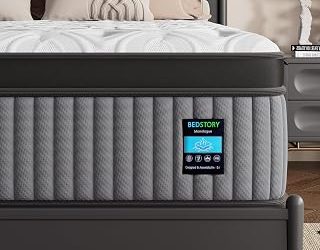
BedStory 14″ Hybrid King
Built explicitly with heavier sleepers in mind, the BedStory pairs zoned lumbar reinforcement with sag-resistant pocket springs that maintain spinal alignment even under substantial load. The 10-year warranty signals manufacturer confidence in durability, and the hybrid construction balances firm support with enough comfort layer to prevent pressure buildup at the shoulders.
inight 12″ Firm Hybrid
Despite its slimmer 12-inch profile, the inight packs heavy-duty cooling foam over reinforced coils that resist compression over time. This is a no-nonsense option for back sleepers and combination sleepers who prefer a lifted, firm surface without sinking. The cooling layer addresses a real concern—heavier bodies generate more heat—and the sag-resistant coil unit does the structural heavy lifting.
14-Inch Extra Firm Hybrid King
This mattress doubles down on lumbar and hip support with a dedicated reinforcement zone in the center third, where heavier sleepers need it most. The CertiPUR-US certification ensures the foam meets emissions and durability standards, and the 365-night trial period gives ample time to test real-world performance before committing. Fiberglass-free construction is a practical bonus for anyone sensitive to materials.
16-Inch Luxury Hybrid King
With a 7-zone support design and a generous 16-inch profile, this mattress distributes weight across distinct ergonomic regions rather than relying on a single firmness level. Designed in the USA with motion isolation built into each pocket coil layer, it’s a strong fit for couples where one or both partners carry extra weight. The medium-firm feel strikes a balance that works for both back and side sleepers.
Luxury Hotel 18″ Hybrid King
The tallest mattress on this list at 18 inches, the Luxury Hotel model layers cooling-gel memory foam over pocket springs with noticeably reinforced edge support—critical for heavier users who need the full surface area without edge collapse. The 2026 upgrade refined the coil gauge and foam density, making this one of the most structurally robust beds in a box available at this price tier.
Frequently Asked Questions
What mattress firmness is best for heavier people?
Medium-firm to firm typically performs best, but the real answer depends on sleep position. Side sleepers over 200 pounds benefit from medium-firm builds with adequate shoulder cushioning, while back and stomach sleepers generally need true firm surfaces to prevent lumbar hyperextension. Zoned construction matters more than a single firmness number.
How thick should a mattress be for a heavier person?
A minimum of 12 inches is advisable, with 14 to 18 inches offering better long-term support. Thicker profiles allow manufacturers to include denser support cores and adequate transition layers, both of which prevent the premature sagging that thinner mattresses suffer under heavier loads.
Do heavier people need hybrid mattresses specifically?
Not exclusively, but hybrids have a structural advantage. Pocket coils provide responsive pushback that all-foam beds struggle to match under significant weight. The coil unit also promotes airflow, which matters because heavier sleepers tend to sleep hotter. That said, high-density foam mattresses with proper base support can also perform well.
How long should a quality mattress last for a heavier sleeper?
Expect a well-built hybrid to hold its shape for seven to ten years under heavier use, compared to the typical eight-to-ten-year lifespan for average-weight sleepers. Look for warranties of at least ten years, and choose mattresses with coil gauges of 13 or lower and foam densities above 3.5 PCF for the best longevity.
Final Thoughts
For heavier sleepers in 2026, the BedStory 14″ Hybrid King stands out as the most purpose-built option with its explicit heavy-person engineering and zoned lumbar support. The Luxury Hotel 18″ Hybrid delivers the most robust overall construction for those who want maximum profile and edge reinforcement, while the 16-Inch Luxury Hybrid King offers the best balance of ergonomic zoning and motion isolation for couples. Any of these three addresses the core challenge: building a surface that supports, not just cushions, a heavier frame.