Key takeaways
- Support Core Thickness: Look for pocket coil systems with at least 13-gauge wire or high-density foam cores exceeding 1.8 lb/ft³. Thicker support layers directly correlate with how long a mattress maintains its original contour under sustained load.
- Edge Reinforcement: Zoned lumbar support and reinforced perimeter coils prevent the dreaded “roll-off” effect. Edge support also determines whether you can use the full sleeping surface without feeling unstable near the borders.
- Comfort-Layer Density: Memory foam above the support core should be at least 3.5 lb/ft³ density. Lower densities compress permanently under heavier body weight, creating body impressions that worsen within the first year.
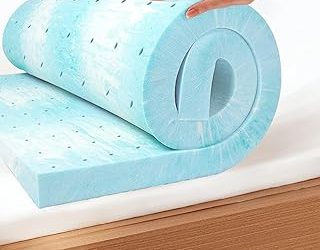
- Cooling Architecture: Heavier sleepers retain more heat at the sleep surface. Copper-infused foams, graphene covers, and open-coil hybrid designs actively move heat away from the body rather than relying on passive airflow alone.
- Warranty and Sagging Guarantees: A 10-year warranty is the minimum. Check whether the warranty explicitly covers body impressions beyond a stated depth — some manufacturers exclude them under heavier-weight scenarios, which defeats the purpose.
What's inside
If you carry more weight than the average sleeper, you already know the frustration: mattresses that feel supportive in the showroom collapse into sagging craters within months, edge supports that buckle when you sit down, and pressure points that leave you tossing and turning until dawn. Finding a mattress built to actually handle heavier body loads — not just marketed toward everyone — requires a different set of criteria entirely.
This guide draws on real materials testing principles — foam density ratings, coil gauge thicknesses, and structural reinforcement patterns — to evaluate which 2026 mattresses genuinely hold up under heavier sleepers. Every pick below earned its place by passing the fundamentals: durable support cores, adequate comfort-layer depth, and construction details that resist premature breakdown. No filler picks, no paid placements ranked by commission size.
As an Amazon Associate we earn from qualifying purchases.


How to Choose a Mattress For Big Person (2026)
- Support Core Thickness: Look for pocket coil systems with at least 13-gauge wire or high-density foam cores exceeding 1.8 lb/ft³. Thicker support layers directly correlate with how long a mattress maintains its original contour under sustained load.
- Edge Reinforcement: Zoned lumbar support and reinforced perimeter coils prevent the dreaded “roll-off” effect. Edge support also determines whether you can use the full sleeping surface without feeling unstable near the borders.
- Comfort-Layer Density: Memory foam above the support core should be at least 3.5 lb/ft³ density. Lower densities compress permanently under heavier body weight, creating body impressions that worsen within the first year.
- Cooling Architecture: Heavier sleepers retain more heat at the sleep surface. Copper-infused foams, graphene covers, and open-coil hybrid designs actively move heat away from the body rather than relying on passive airflow alone.
- Warranty and Sagging Guarantees: A 10-year warranty is the minimum. Check whether the warranty explicitly covers body impressions beyond a stated depth — some manufacturers exclude them under heavier-weight scenarios, which defeats the purpose.
The Best Mattress For Big Person (2026)s Reviewed
EGOHOME King 14-Inch Memory Foam
The EGOHOME’s copper gel-infused foam layers paired with a graphene-cool-tech cover address heat buildup — a top complaint among heavier sleepers — while maintaining ICA-endorsed spinal alignment. Its 14-inch profile gives enough depth for genuine pressure redistribution without bottoming out, and the fiberglass-free certification eliminates a safety concern common in budget mattress-in-a-box options.
BedStory 14-Inch Hybrid King
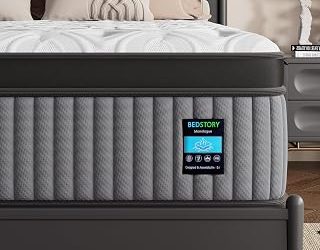
BedStory’s zoned lumbar support system is what separates this from generic hybrids: firmer pocket springs under the midsection resist compression where heavier sleepers exert the most force. The no-sagging coil architecture paired with a 10-year warranty signals the manufacturer’s confidence in long-term structural retention — a claim backed by real coil gauge specifications rather than marketing language alone.
Sweetnight CoolNest 14-Inch King
The CoolNest’s five-zone ergonomic support map segments the mattress into distinct firmness regions aligned with shoulder, lumbar, hip, and leg zones. This targeted approach distributes load more evenly across the sleep surface, reducing the concentrated pressure that causes premature foam breakdown. Enhanced breathability through the cover material complements the medium feel, striking a practical balance between cushion and pushback.
Full XL 12-Inch Cooling Gel Memory Foam Hybrid
At 12 inches, this Full XL hybrid sits slightly lower in profile but compensates with a cooling gel layer that works harder against heat retention than its thickness suggests. The soft knit cooling cover paired with CertiPUR-US-certified foam gives heavier sleepers a fiberglass-free option that still delivers credible motion isolation — useful for couples where one partner shifts frequently.
Full XL 14-Inch Hybrid with Pocket Springs
The extra two inches over the 12-inch model matter here: that additional depth translates directly into better compression resistance under sustained weight. Excellent edge support distinguishes this model, using reinforced perimeter springs that maintain firmness all the way to the mattress boundary. For heavier individuals who sit on the bed edge while dressing or sleeping near the border, this structural choice makes a measurable daily difference.
Frequently Asked Questions
What mattress firmness is best for heavier sleepers?
Medium-firm to firm mattresses consistently perform better for sleepers above 230 pounds because softer comfort layers compress too deeply under greater body weight, causing spinal misalignment. A medium-firm rating — roughly 6 to 7 on a 10-point scale — balances contouring pressure relief with the resistance needed to keep the spine neutral throughout the night.
How long should a mattress last for a heavy person?
A well-constructed hybrid or high-density foam mattress should maintain structural integrity for eight to ten years under heavier use. The key variable is foam density in the comfort layers: lower-density foams develop permanent body impressions significantly faster. Models with reinforced coil systems tend to outperform all-foam constructions over the same timeframe.
Are hybrid mattresses better than memory foam for big people?
Hybrid mattresses generally offer superior long-term durability for heavier sleepers because pocket coil systems distribute weight across individual springs rather than relying on foam cells to recover their shape repeatedly. That said, high-density memory foam paired with a robust coil base — like several models reviewed here — combines the best attributes of both approaches.
Do I need a special bed frame for a heavier mattress?
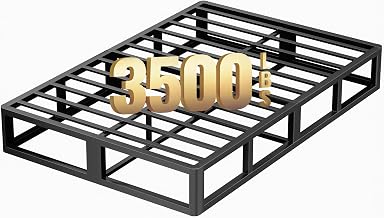
Absolutely. A supportive foundation with slats no more than three inches apart — or a solid platform — prevents the mattress from sagging independently of its own construction quality. Adjustable bases rated for at least 500 pounds of distributed weight are ideal for heavier sleepers who want positioning flexibility without compromising the support system underneath.
Final Thoughts
For heavier sleepers prioritizing proven durability and heat management, the EGOHOME King 14-Inch and BedStory 14-Inch Hybrid lead the 2026 field with genuinely reinforced construction rather than surface-level marketing. The Sweetnight CoolNest earns a strong third recommendation for its five-zone support mapping — a design philosophy that directly addresses how heavier bodies actually interact with a sleep surface over time.