Key takeaways
- Start conservatively: Most users should begin around 100–120°F, allowing several sessions to learn how their body responds before increasing heat gradually.
- Check temperature consistency: A reliable control panel, evenly distributed panels, and a well-fitted door matter more than an impressive maximum setting.
- Match heat to the design: Compact cabins, tents, and fabric enclosures can feel different at the same thermostat reading because insulation and airflow vary considerably.
- Prioritize usable ergonomics: Confirm that the bench, headroom, door swing, controls, and entry threshold work for your height, mobility, and available room.
- Plan for durability: Look for sturdy joinery, easy-clean surfaces, protected wiring, clear electrical requirements, and a warranty or after-sales contact you can actually use.
What's inside
Choosing the right infrared sauna temperature is less straightforward than the product listings suggest. Maximum heat is not automatically better: an enclosed cabin may feel intense at a lower thermostat setting, while a tent, timber interior, or poorly sealed door can change how evenly warmth reaches the body. Controls, heater placement, ventilation, seating posture, and recovery habits all affect comfort and useful performance.
This guide compares infrared sauna options from an ergonomics-and-durability perspective, with attention to usable temperature ranges, warm-up behavior, space, controls, materials, and long-term practicality. Treat the displayed temperature as a starting point rather than a target to endure, and follow the manufacturer’s instructions, especially if you have a medical condition or take medication affected by heat.
As an Amazon Associate we earn from qualifying purchases.


🛒 Best Price Today on Amazon
Prime members get fast, free shipping on everything above, plus member-only deals. New members get a 30-day free trial — cancel anytime.
How to Choose a/an Infrared Sauna Temperature (2026)
- Start conservatively: Most users should begin around 100–120°F, allowing several sessions to learn how their body responds before increasing heat gradually.
- Check temperature consistency: A reliable control panel, evenly distributed panels, and a well-fitted door matter more than an impressive maximum setting.
- Match heat to the design: Compact cabins, tents, and fabric enclosures can feel different at the same thermostat reading because insulation and airflow vary considerably.
- Prioritize usable ergonomics: Confirm that the bench, headroom, door swing, controls, and entry threshold work for your height, mobility, and available room.
- Plan for durability: Look for sturdy joinery, easy-clean surfaces, protected wiring, clear electrical requirements, and a warranty or after-sales contact you can actually use.
The Best Infrared Sauna Temperature (2026)s Reviewed
Best Balanced Cabin: 1-2 Person Infrared Sauna
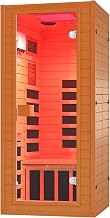
This 1-2 person cabin combines dry infrared heat with red light therapy, Bluetooth, radio, and seven-color lighting. Its 40-by-36-inch footprint is relatively manageable, but buyers should measure doorways and allow service clearance; the compact bench also deserves a test-fit if two adults are expected to use it.
Best Spacious Corner Design: 2-3 Person Ceramic Infrared Sauna
The ceramic-panel corner format offers more interior room than a typical single-person cabin and may suit couples who dislike shoulder-to-shoulder seating. Hemlock construction, chromotherapy lighting, and Bluetooth speakers add comfort, while the larger enclosure requires careful floor planning and may take longer to bring to an even temperature.
Best Single-User Efficiency: Homsido Infrared Home Sauna Room
Homsido’s one-person hemlock cabin uses low-EMF heater panels, a 1200-watt, 110-volt setup, LCD controls, preset timing, and a stated 10-minute preheat feature. Its straightforward layout is appealing for regular solo sessions, though the one-year after-sales coverage should be reviewed closely before purchase.
Best Connected Controls: 2-Person Smart Infrared Sauna
Wi-Fi, app control, Bluetooth, and an LCD heater system make this two-person model convenient for users who want to start warming the cabin remotely. The 1500-watt, 120-volt specification and flame-retardant materials are useful details, but app reliability should not replace accessible physical controls or sensible supervision.
Best Flexible Budget Format: Infrared Sauna Tent with Steamer
This folding tent takes a different approach, pairing infrared heat with a 3-liter steamer, nine heat levels, a 99-minute timer, remote control, insulated waterproof fabric, and a folding chair. It stores more easily than a wood cabin, but the chair, zipper, seams, and drying routine are critical durability points; fabric interiors also need thorough ventilation after each session.
Frequently Asked Questions
What is a sensible infrared sauna temperature for beginners?
Begin around 100–110°F for a short session and increase only if you remain comfortable. A reading near 120–140°F may suit experienced users, but tolerance differs widely, so duration and hydration matter as much as the number on the display.
Is a higher temperature more effective?
Not necessarily. Infrared saunas warm the body differently from traditional saunas, and a lower, steady setting may be more comfortable and sustainable than operating at the maximum. Consistent use, safe session length, and adequate recovery are more practical measures of success.
How long should an infrared sauna session last?
Many people start with 10–15 minutes and work toward approximately 20–30 minutes if they tolerate the heat well. Stop immediately for dizziness, nausea, unusual weakness, chest discomfort, or breathing difficulty, and consult a clinician if you are unsure whether sauna use is appropriate.
Should I preheat an infrared sauna?
Yes. Preheating helps the cabin, bench, and surrounding air reach a more predictable condition before you sit down. Allow extra time for larger cabins and tents, and confirm that the timer has not ended before entering.
Final Thoughts
For a balanced cabin experience, the 1-2 Person Infrared Sauna is a practical starting point; the Homsido is a strong choice for efficient solo use, while the 2-Person Smart Infrared Sauna suits buyers who value connected controls. Choose the temperature you can use consistently, not simply the highest setting available.