Key takeaways
- Cleaning access: Choose a wide tank opening, removable components, and simple internal geometry. Any humidifier can harbor microbial growth when water sits stagnant, so easy cleaning is a durability feature as much as a hygiene benefit.
- Mist type: Cool-mist models are generally safer around children and pets, while warm-steam units can feel soothing in colder rooms. Steam appliances require extra caution because hot water and vapor can burn.
- Noise and controls: For bedside use, look for a genuinely quiet fan or ultrasonic system, dimmable lights, and controls that are easy to operate without reaching across furniture in the dark.
- Runtime and footprint: Match tank size to the room and your routine. A larger reservoir reduces refills, but it also adds lifting weight and may occupy valuable nightstand or dresser space.
- Water quality: Ultrasonic humidifiers may leave white mineral dust when used with hard water. Filtered or distilled water can help, while warm-steam models generally leave minerals behind in the boiling chamber instead.
What's inside
Dry indoor air can make a stuffy nose, irritated throat, and overnight congestion feel worse, but choosing a humidifier is not as simple as selecting the biggest tank. Poorly designed units may be awkward to refill, difficult to clean, noisy beside the bed, or prone to spreading mineral residue when maintenance slips.
This guide evaluates humidifiers from an ergonomics-and-durability perspective: refill access, cleaning effort, operating noise, runtime, room suitability, and the practical differences between cool mist, warm steam, and targeted inhalation. Humidity can improve comfort for some people, but it does not diagnose or treat sinus disease; keep indoor humidity controlled and follow your clinician’s advice for persistent symptoms.
As an Amazon Associate we earn from qualifying purchases.


How to Choose a Humidifier For Sinus Problems (2026)
- Cleaning access: Choose a wide tank opening, removable components, and simple internal geometry. Any humidifier can harbor microbial growth when water sits stagnant, so easy cleaning is a durability feature as much as a hygiene benefit.
- Mist type: Cool-mist models are generally safer around children and pets, while warm-steam units can feel soothing in colder rooms. Steam appliances require extra caution because hot water and vapor can burn.
- Noise and controls: For bedside use, look for a genuinely quiet fan or ultrasonic system, dimmable lights, and controls that are easy to operate without reaching across furniture in the dark.
- Runtime and footprint: Match tank size to the room and your routine. A larger reservoir reduces refills, but it also adds lifting weight and may occupy valuable nightstand or dresser space.
- Water quality: Ultrasonic humidifiers may leave white mineral dust when used with hard water. Filtered or distilled water can help, while warm-steam models generally leave minerals behind in the boiling chamber instead.
The Best Humidifier For Sinus Problems (2026)s Reviewed
Vicks Sinus Inhaler
The Vicks Sinus Inhaler is a focused option for short sessions rather than whole-room humidification. Its plug-in design directs non-medicated steam toward the nose and throat, making it useful when you want targeted relief without running a large tank overnight. The compact form is easy to store, although its limited purpose and session-based operation make it less versatile than a room humidifier.
Homvana 3.6L Top-Fill Humidifier
Homvana’s 3.6-liter top-fill design is well suited to bedrooms because the lid can be accessed without turning the appliance upside down or carrying a loose tank to the sink. Its low-noise operation and approximately four-night positioning are practical for sleep, while the combination humidifier-and-diffuser format adds flexibility. Keep the diffuser function separate from medical expectations, and clean the reservoir frequently if fragrance oils are used.
Everlasting Comfort 6L Humidifier
With a six-liter reservoir and filter-free construction, the Everlasting Comfort model emphasizes fewer interruptions and straightforward ownership. The large tank is advantageous for bigger bedrooms or living spaces, but a full reservoir is correspondingly heavy, so place it before filling rather than lifting it across a room. Its broad use case—from plants to nursery spaces—makes it a strong choice for households needing extended runtime.
Vicks Warm Steam Vaporizer
The Vicks Warm Steam Vaporizer is a traditional warm-steam option for small and medium rooms, with a substantial 1.5-gallon tank and compatibility with VapoPads and VapoSteam. Warm output may feel comfortable in a chilly bedroom, and the night light is convenient, but the heated water demands a stable, out-of-reach location. Scale buildup also needs attention, particularly in hard-water areas.
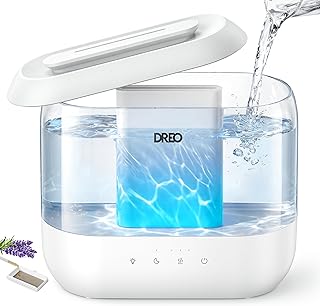
DREO 4L HM311
The DREO HM311 balances a manageable four-liter capacity with a relatively compact bedroom-friendly footprint. Its easy-refill approach, BPA-free construction, quiet operation, and night-light feature make it a practical daily driver for nurseries, bedrooms, or plant areas. The shorter runtime than a six-liter unit means more frequent refills, but that can also encourage fresher water and routine maintenance.
Frequently Asked Questions
Can a humidifier help with sinus congestion?
Adding moisture to dry air may make nasal passages and the throat feel less irritated for some people. It is comfort support, not a treatment for infection, allergies, structural problems, or chronic sinusitis; seek medical guidance if symptoms are severe, recurrent, or prolonged.
Should I use cool mist or warm steam?
Either can add moisture effectively when maintained correctly. Cool mist is usually the safer choice around children, while warm steam can be pleasant in cold weather but introduces burn and hot-water hazards.
How often should I clean a humidifier?
Empty and dry the tank regularly, and follow the manufacturer’s cleaning instructions rather than allowing water to sit for days. Descaling frequency depends on water hardness and usage, but visible residue, odor, or slimy surfaces are signs to clean immediately.
Where should a bedroom humidifier sit?
Set it on a level, water-resistant surface with clearance around the mist outlet, away from electronics, walls, bedding, and walking paths. Avoid placing it directly on upholstered furniture, where leaks or condensation can cause lasting damage.
Final Thoughts
For most bedrooms, the Homvana 3.6L offers the best blend of accessible refilling, quiet operation, and useful capacity. Choose the Everlasting Comfort 6L for longer runtime in a larger room, or the DREO HM311 when a more manageable, maintenance-friendly everyday unit is the priority.