Key takeaways
- Support: Look for closely spaced slats or a robust steel platform that keeps the mattress evenly supported and reduces premature sagging. A box spring is usually unnecessary on platform-style daybeds, but always confirm the manufacturer’s mattress requirements.
- Access: Consider how people will sit down, stand up, and change bedding. Raised side rails, deep arms, and enclosed corners can improve security but may make access less convenient for older adults or anyone with limited mobility.
- Frame durability: Solid wood and well-finished steel can both perform reliably. Check for reinforced joints, stable center support, and hardware that can be tightened after assembly rather than relying on thin decorative panels.
- Room function: A daybed with drawers, shelving, charging ports, or a trundle can make a small room more efficient. Measure the open footprint, not just the closed frame, especially when a trundle or pull-out bed is involved.
- Comfort and safety: Match the mattress thickness to the rail height so the sleeper is not trapped below an overly high frame or exposed above a shallow guard. For seating, add a properly sized back cushion rather than using the bare mattress as a sofa back.
What's inside
A daybed has to do more than look presentable: it must support a proper sleep surface, withstand repeated sitting, and fit comfortably into the traffic patterns of a room. Many frames save space but compromise on access, mattress support, storage, or long-term stability.
This guide evaluates the listed daybeds from an ergonomics-and-durability perspective. The focus is on posture, structural support, everyday usability, assembly considerations, and how each design suits guest rooms, bedrooms, offices, or multipurpose living spaces.
As an Amazon Associate we earn from qualifying purchases.



How to Choose a/an Daybed (2026)
- Support: Look for closely spaced slats or a robust steel platform that keeps the mattress evenly supported and reduces premature sagging. A box spring is usually unnecessary on platform-style daybeds, but always confirm the manufacturer’s mattress requirements.
- Access: Consider how people will sit down, stand up, and change bedding. Raised side rails, deep arms, and enclosed corners can improve security but may make access less convenient for older adults or anyone with limited mobility.
- Frame durability: Solid wood and well-finished steel can both perform reliably. Check for reinforced joints, stable center support, and hardware that can be tightened after assembly rather than relying on thin decorative panels.
- Room function: A daybed with drawers, shelving, charging ports, or a trundle can make a small room more efficient. Measure the open footprint, not just the closed frame, especially when a trundle or pull-out bed is involved.
- Comfort and safety: Match the mattress thickness to the rail height so the sleeper is not trapped below an overly high frame or exposed above a shallow guard. For seating, add a properly sized back cushion rather than using the bare mattress as a sofa back.
The Best Daybed (2026)s Reviewed
Twin Corner Bed Frame with Storage
This L-shaped twin frame is designed for users who want a daybed to function as a compact workstation, reading nook, and guest bed. Its storage headboard, side bookcase, drawers, bedside rack, LED lighting, and charging station offer unusually high utility, although the number of integrated features also means more assembly points and more components to inspect over time. It is best suited to a dedicated corner where the storage layout can remain accessible.
Martha Stewart Neely Twin Platform Daybed
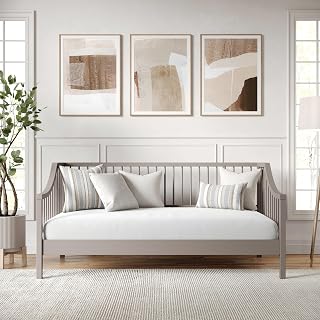
The Neely’s solid-wood construction, vertical spindles, and slatted foundation give it a more traditional furniture profile than many multifunctional frames. The restrained design is a strong choice for a guest room or living area where visual longevity matters, while the platform structure avoids the extra height and movement associated with a box spring. Its open sides also make cleaning and changing linens relatively straightforward.
YUHUASHI Twin Upholstered Daybed
With an upholstered frame and wood slat support, this model is aimed at buyers who want a softer, more lounge-friendly appearance without giving up a proper platform base. The fabric can make sitting more comfortable against the back and arms, but upholstery requires more care than a sealed wood or metal surface—particularly in homes with pets, children, or frequent food and drink use. It is a practical fit for a living room, bedroom, or guest room that needs a less clinical look.
SHA CERLIN Twin Metal Daybed
This steel daybed emphasizes function: a double-layer storage headboard, under-bed clearance, LED lighting, USB charging ports, and steel slat support. Metal can provide excellent load distribution when the joints are assembled tightly, but fasteners should be checked periodically because repeated sitting and standing can transmit vibration through the frame. The open space beneath the bed is useful for storage or cleaning access, making this a capable option for smaller rooms.
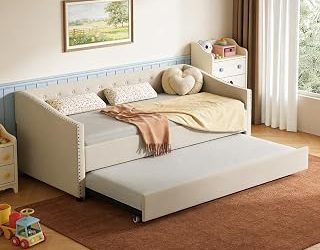
Full Upholstered Daybed with Twin Trundle
This design combines a full-size upper sleeping surface with a twin trundle, giving it a strong advantage for shared bedrooms, sleepovers, or occasional guests. The button-tufted back, piping, and waved arms create a more finished appearance, while the solid-wood construction should help the frame feel less prone to flexing than a lightweight decorative build. Plan the room around the trundle’s full extension and keep the surrounding floor clear.
Frequently Asked Questions
Can a daybed be used as a primary bed?
Yes, provided the frame has adequate slat support, the mattress is appropriate for the platform, and the sleeper is comfortable with the daybed’s side and back rails. A model designed for occasional use may not offer the same support or access as a conventional bed, so construction quality matters.
Do daybeds need box springs?
Most platform daybeds in this roundup are designed to use a mattress directly on slats or a steel support system. A box spring can raise the sleeping surface too high and may not fit within the rail design. Follow the product’s stated requirements rather than adding one automatically.
Are metal or wood daybeds more durable?
Neither material is automatically superior. A well-braced steel frame can resist twisting, while solid wood can provide quiet, furniture-like stability. Durability depends heavily on joint design, support spacing, finish quality, and whether the frame is assembled and maintained correctly.
How much space should be left around a daybed?
Leave enough clearance to walk safely along the usable sides and to remove bedding without scraping walls or furniture. For models with drawers or trundles, measure the entire extension path and allow additional room for a person to pull the storage or sleeping platform out comfortably.
Final Thoughts
For feature-rich small-space living, the Twin Corner Bed Frame offers the most integrated storage and charging utility. The Martha Stewart Neely is the strongest understated furniture choice, while the SHA CERLIN stands out for practical steel construction and accessible under-bed space. Choose the Full Upholstered Daybed with Twin Trundle when accommodating two sleepers is the priority.