Key takeaways
- Reach: Choose enough extension to reach the highest blade while keeping both feet on the floor. A longer pole is useful, but excessive length can make the tool harder to control.
- Head stability: The cleaning head should stay aligned with the blade instead of twisting under light pressure. A stable head improves coverage and reduces wrist strain.
- Material: Microfiber and chenille are effective for dry dust because their fibers capture particles rather than simply pushing them across the surface. Removable pads are easier to wash and replace.
- Handle comfort: Look for a grip that is easy to hold with one hand and an extension system that does not require excessive force to lock or adjust.
- Versatility: A curved or flexible duster can also be useful on baseboards, blinds, molding, walls, and cobwebs. Multi-surface use makes occasional storage space easier to justify.
What's inside
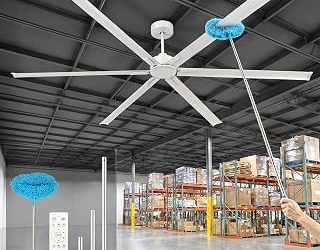
Cleaning ceiling-fan blades is one of those chores that looks simple until dust falls onto the furniture, the duster flexes out of reach, or the blade surface remains streaked after a rushed pass. A useful tool must do more than extend upward: it should hold its shape, control debris, and let you clean without repeatedly climbing a chair or ladder.
This guide evaluates ceiling-fan cleaners from an ergonomics-and-durability perspective. The focus is on handle reach, head stability, washable construction, maneuverability around furniture, and how practical each design is for routine maintenance rather than a single deep clean.
As an Amazon Associate we earn from qualifying purchases.



How to Choose a/an Ceiling Fan Cleaner (2026)
- Reach: Choose enough extension to reach the highest blade while keeping both feet on the floor. A longer pole is useful, but excessive length can make the tool harder to control.
- Head stability: The cleaning head should stay aligned with the blade instead of twisting under light pressure. A stable head improves coverage and reduces wrist strain.
- Material: Microfiber and chenille are effective for dry dust because their fibers capture particles rather than simply pushing them across the surface. Removable pads are easier to wash and replace.
- Handle comfort: Look for a grip that is easy to hold with one hand and an extension system that does not require excessive force to lock or adjust.
- Versatility: A curved or flexible duster can also be useful on baseboards, blinds, molding, walls, and cobwebs. Multi-surface use makes occasional storage space easier to justify.
The Best Ceiling Fan Cleaner (2026)s Reviewed
DRQ Ceiling Fan Cleaner Duster
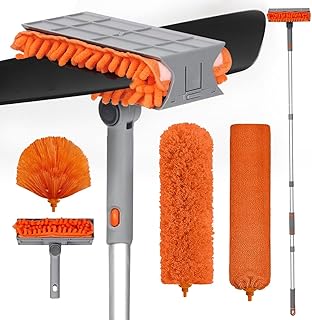
The DRQ combines a reusable microfiber head with a compact 13-to-48-inch extension range, making it a practical choice for apartments, lower ceilings, and furniture that sits close beneath a fan. Its removable duster design is especially convenient for households that want to wash the cleaning surface regularly instead of replacing disposable refills.
6-Foot Multi-Functional Fan Cleaner Kit
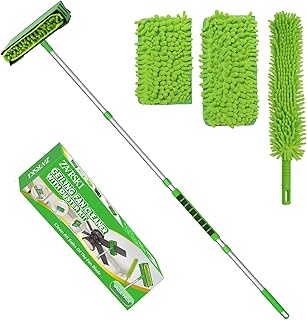
This 6-foot ceiling-fan cleaner is aimed at users who need more vertical reach and want one tool for blades, baseboards, blinds, cobwebs, and high walls. The machine-washable construction supports repeated use, while the longer pole should be handled with two hands when fully extended for better balance.
72-Inch Chenille and Microfiber Duster
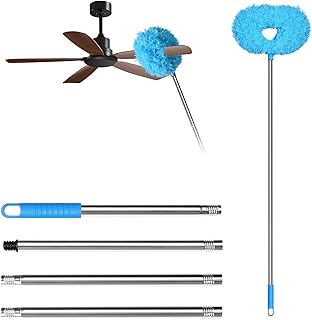
The 72-inch model pairs a long handle with chenille and microfiber cleaning surfaces, a useful combination for lifting loose dust from broad fan blades. It is a strong fit for tall rooms, although long poles naturally require slower movements to prevent the head from wobbling or brushing nearby fixtures.
6-Foot Reusable-Pad Fan Blade Cleaner
This cleaner focuses on high-ceiling access, with a 6-foot, 72-inch extension pole and reusable microfiber pads. The washable-pad format is a sensible durability feature for frequent cleaning, while its stated use on molding, blinds, baseboards, and cobwebs adds value beyond ceiling fans.
DRQ Adjustable 13-to-49.7-Inch Duster
This second DRQ option extends slightly farther than the shorter version and remains geared toward controlled, close-range cleaning of fans, walls, bookshelves, furniture, doors, and windows. Its moderate reach is easier to steer than a fully extended six-foot pole, making it appealing for users who prioritize precision and low hand fatigue.
Frequently Asked Questions
Should I clean fan blades wet or dry?
Start dry to remove loose dust without creating a paste on the blade. If residue remains, lightly dampen the microfiber pad rather than spraying the fan directly, and allow the blades to dry fully before operating the fan.
Can these tools replace a ladder?
They can reduce or eliminate ladder use for routine dusting, provided the pole reaches comfortably from floor level. Never stretch, overreach, or use a duster as a substitute for safe access when a fixture requires repair or detailed inspection.
How often should ceiling-fan blades be cleaned?
Monthly cleaning is a sensible baseline in most homes. Bedrooms, kitchens, homes with pets, and rooms near open windows may need more frequent attention because airborne hair, grease, and pollen accumulate faster.
How do I keep the duster from spreading dust?
Move slowly and keep the head flat against the blade surface. Clean the pad after each session according to its care instructions, and avoid overloading it with dust; a saturated microfiber head is less effective at capturing new particles.
Final Thoughts
For compact rooms and controlled handling, the DRQ 13-to-48-inch cleaner is a well-balanced starting point. Tall ceilings benefit from the 6-foot multi-functional kit or the 72-inch chenille-and-microfiber model, while the adjustable DRQ 13-to-49.7-inch version offers a useful middle ground for everyday household cleaning.