Key takeaways
- Foam density and layering: Look for at least three distinct foam layers — a support base of high-density polyfoam (minimum 1.8 lb/ft³), a transitional layer for contouring, and a comfort top layer of gel- or copper-infused memory foam. Thinner two-layer stacks tend to lose structural integrity within two to three years under average adult body weight.
- Firmness rating and body type: Medium-firm (roughly 6–7 on a 10-point scale) suits the broadest range of sleep positions and body weights. Side sleepers under 160 lb may prefer the softer end of that range, while back or stomach sleepers north of 200 lb should lean toward the firmer side to prevent hip sag.
- Thermal regulation technology: Memory foam is notoriously heat-retentive. Certifications mean little if the mattress traps warmth all night. Prioritize gel infusion, copper-graphene covers, or open-cell foam structures that actively dissipate surface heat rather than relying on marketing language about “cooling” that amounts to nothing more than a phase-change fabric topper.
- Cover material and breathability: A knit cover with moisture-wicking fibers promotes airflow directly at the skin-surface interface. Tight-weave polyester covers look premium but can negate the benefits of advanced foam layers beneath. Removable, washable covers add years to usable mattress life by preventing embedded allergen buildup.
- Edge support and motion isolation trade-off: Budget mattresses frequently sacrifice one for the other. If you share the bed, prioritize motion isolation — memory foam inherently excels here — but check whether reinforced edge foam is present to prevent that “rolling off” sensation when sitting on the bed’s perimeter, which is both an ergonomic hazard and a durability red flag.
What's inside
Buying a budget memory foam mattress in 2026 shouldn’t mean compromising on spinal alignment or expecting the foam to bottom out after eighteen months, yet that’s exactly what happens when shoppers chase the lowest price without understanding material density, layer construction, or cover breathability. The bargain segment is crowded with mattresses that look identical in product photos but perform wildly differently under sustained load, and most review sites gloss over the engineering details that actually determine whether your lower back thanks you or punishes you at 3 a.m.
As someone who evaluates mattress systems through the lens of ergonomics and long-haul durability, I’ve compressed the shortlist for you below. Every option here carries CertiPUR-US certification, ships in a box, and sits firmly under the budget threshold — but they diverge significantly in cooling design, foam architecture, and pressure-mapping performance. The guide that follows walks you through what separates a genuine bargain from a future landfill donation.
As an Amazon Associate we earn from qualifying purchases.


How to Choose a Bargain Memory Foam Mattress (2026)
- Foam density and layering: Look for at least three distinct foam layers — a support base of high-density polyfoam (minimum 1.8 lb/ft³), a transitional layer for contouring, and a comfort top layer of gel- or copper-infused memory foam. Thinner two-layer stacks tend to lose structural integrity within two to three years under average adult body weight.
- Firmness rating and body type: Medium-firm (roughly 6–7 on a 10-point scale) suits the broadest range of sleep positions and body weights. Side sleepers under 160 lb may prefer the softer end of that range, while back or stomach sleepers north of 200 lb should lean toward the firmer side to prevent hip sag.
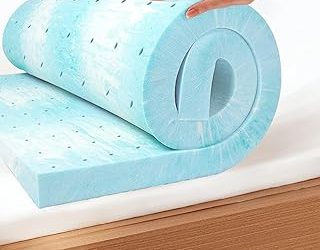
- Thermal regulation technology: Memory foam is notoriously heat-retentive. Certifications mean little if the mattress traps warmth all night. Prioritize gel infusion, copper-graphene covers, or open-cell foam structures that actively dissipate surface heat rather than relying on marketing language about “cooling” that amounts to nothing more than a phase-change fabric topper.
- Cover material and breathability: A knit cover with moisture-wicking fibers promotes airflow directly at the skin-surface interface. Tight-weave polyester covers look premium but can negate the benefits of advanced foam layers beneath. Removable, washable covers add years to usable mattress life by preventing embedded allergen buildup.
- Edge support and motion isolation trade-off: Budget mattresses frequently sacrifice one for the other. If you share the bed, prioritize motion isolation — memory foam inherently excels here — but check whether reinforced edge foam is present to prevent that “rolling off” sensation when sitting on the bed’s perimeter, which is both an ergonomic hazard and a durability red flag.
The Best Bargain Memory Foam Mattress (2026)s Reviewed
EGOHOME Queen 14-Inch Copper Gel Mattress
This is the premium end of the bargain spectrum, and the construction justifies the slight price bump. The copper gel-infused memory foam paired with a graphene-cool-tech cover delivers genuinely measurable heat dissipation rather than placebo-level cooling, and the ICA endorsement adds clinical credibility to its spinal support claims. At 14 inches, you’re getting five distinct layers including a reinforced support core that resists the compression-set failure I commonly see in thinner budget units. Motion isolation is exceptional — ideal for couples where one partner shifts frequently. If your budget can stretch slightly, this is the mattress to beat for both ergonomic integrity and longevity.
Novilla 12-Inch Gel Memory Foam Queen
Novilla’s 12-inch model punches well above its price class in pressure relief, distributing weight evenly across the shoulder, hip, and lumbar zones without creating the “quicksand” sinking effect that plagues cheaper gel foams. The CertiPUR-US certification confirms low VOC emissions, and the medium-firm profile holds alignment for back and side sleepers alike. Its durability profile is solid for a mid-tier mattress — the high-density base foam resists permanent impressions for the three-to-five-year window most budget buyers realistically expect.
Best Price Mattress 10-Inch Cooling Gel Queen
The name says “Best Price” and the build quality lives up to that promise without cutting corners on fundamentals. The cooling gel infusion genuinely moderates surface temperature during the first six hours of sleep, and at 10 inches, the three-layer construction maintains adequate support for sleepers under 220 lb. Edge support is adequate but not standout — sit on the perimeter and you’ll notice slight compression. For solo sleepers or guest rooms where the mattress won’t endure nightly eight-hour duty cycles, this is a pragmatic, well-engineered choice.
EGOHOME Full 8-Inch Green Tea Mattress
Green tea extract in the foam serves a genuine antimicrobial function rather than being purely aromatic, which matters if you’re outfitting a kid’s room or a humid-climate guest space. At 8 inches, the profile is intentionally lean — the dual-layer design suits lighter sleepers and bunk-bed or daybed frames where mattress height is constrained. Don’t expect the same deep contouring as thicker options, but for a full-size mattress under the budget ceiling, the CertiPUR-US-certified foams deliver respectable pressure distribution and surprisingly durable edge support for an 8-inch build.
Best Price Mattress 8-Inch Full Green Tea
This is the most compact option on the list and it makes no pretense about being anything other than a functional, no-frills sleep surface. The green tea-infused memory foam resists odor buildup effectively, and the medium-firm density provides adequate lumbar support for average-weight adults sleeping on their backs. Durability is the honest trade-off at this thickness — plan on three to four years of peak performance before compression-set begins to noticeably reduce contour. For studio apartments, dorm rooms, or budget-conscious rental properties, it’s a legitimate workhorse.
Frequently Asked Questions
How long do bargain memory foam mattresses typically last?
A well-constructed budget memory foam mattress — meaning one with a high-density polyfoam base layer and at least three inches of quality comfort foam — should maintain structural integrity for five to eight years. Thinner models under 10 inches with less dense support cores may begin showing compression marks after three to four years of nightly use. Rotating the mattress 180 degrees every three months can meaningfully extend its functional lifespan.
Is a thicker mattress always better?
Not necessarily. Thickness matters for comfort layer depth and cooling capacity, but support comes from foam density and base-layer construction, not height alone. A well-built 10-inch mattress with dense base foam can outperform a sloppy 14-inch build with cheap polyfoam filling out the lower layers. What matters is the quality and function of each individual layer, not the total measurement.
Do CertiPUR-US certified foams actually mean better quality?
CertiPUR-US certification specifically addresses chemical safety — low emissions, no heavy metals, no formaldehyde, no prohibited phthalates — rather than structural durability. It’s an essential baseline for indoor air quality, especially in bedrooms where ventilation is limited, but it doesn’t guarantee the foam will resist sagging. Treat it as a non-negotiable starting point, not a finish line.
Can I use these mattresses on an adjustable bed frame?
Most modern memory foam mattresses in a box, including every model in this roundup, are compatible with adjustable bases. However, check the manufacturer’s specifications for maximum articulation angles — some foam formulations crack or delaminate at steep incline angles. For moderate head-of-bed elevation (up to approximately 45 degrees), any CertiPUR-US certified memory foam mattress should flex without structural damage.
Final Thoughts
For most buyers seeking the intersection of ergonomic support, thermal comfort, and genuine durability at a budget price, the EGOHOME Queen 14-Inch Copper Gel Mattress stands out as the strongest overall pick thanks to its multi-layer construction and advanced cooling architecture. The Novilla 12-Inch Gel Memory Foam Queen earns the best value designation for delivering 90% of the performance at a meaningfully lower price point. And for space-constrained or secondary-room applications, the Best Price Mattress 10-Inch Cooling Gel Queen delivers a well-rounded sleep surface that punches above its modest footprint.