Key takeaways
- Seat Height & Counter Match: Counter-height stools (24–27 inches) pair with standard 36-inch counters. Measure the gap between your counter underside and seat top — you want 10 to 12 inches of clearance for comfortable thigh clearance and easy sliding in and out.
- Frame Material & Weight Capacity: Welded steel frames outperform bolted wood joints over time. Look for rated capacity above 300 lbs, and check whether the base includes a footrest ring — this distributes weight more evenly across the structure and reduces lateral stress on legs.
- Seat Construction & Cushion Density: High-resilience foam over a plywood seat pan holds shape far longer than foam glued directly to fabric. Bonded leather and tightly woven linen resist compression sets better than thin PU leather, which tends to crack at flex points after heavy daily use.
- Swivel Mechanism Quality: A steel ball-bearing swivel outlasts plastic race swivels by years. Test for smooth rotation without lateral play — wobble in the swivel is the first sign a stool will develop structural looseness within a year.
- Ergonomic Backrest Design: A contoured lumbar curve between 14 and 16 inches above the seat supports the lower back without forcing an upright dining posture. Flat, low-profile backs look modern but offer zero sustained support beyond 20 minutes of sitting.
What's inside
Shopping for bar stools can feel like a minefield of contradictions: stools that look sleek but collapse under real-world use, upholstered seats that flatten within months, and height specs that never quite match your counter. Whether you’re outfitting a kitchen island or a home bar, getting the ergonomics and structural integrity wrong means sore backs, wobbly legs, and buyer’s remorse that lasts far longer than the return window.
This guide cuts through the noise. I’ve evaluated six popular counter-height bar stools through the lens of seating ergonomics, material longevity, and frame durability — the three factors that actually determine whether a stool earns a permanent spot at your counter or ends up collecting dust in the garage.
As an Amazon Associate we earn from qualifying purchases.




How to Choose Bar Stools (2026)
- Seat Height & Counter Match: Counter-height stools (24–27 inches) pair with standard 36-inch counters. Measure the gap between your counter underside and seat top — you want 10 to 12 inches of clearance for comfortable thigh clearance and easy sliding in and out.
- Frame Material & Weight Capacity: Welded steel frames outperform bolted wood joints over time. Look for rated capacity above 300 lbs, and check whether the base includes a footrest ring — this distributes weight more evenly across the structure and reduces lateral stress on legs.
- Seat Construction & Cushion Density: High-resilience foam over a plywood seat pan holds shape far longer than foam glued directly to fabric. Bonded leather and tightly woven linen resist compression sets better than thin PU leather, which tends to crack at flex points after heavy daily use.
- Swivel Mechanism Quality: A steel ball-bearing swivel outlasts plastic race swivels by years. Test for smooth rotation without lateral play — wobble in the swivel is the first sign a stool will develop structural looseness within a year.
- Ergonomic Backrest Design: A contoured lumbar curve between 14 and 16 inches above the seat supports the lower back without forcing an upright dining posture. Flat, low-profile backs look modern but offer zero sustained support beyond 20 minutes of sitting.
The Best Bar Stools (2026) Reviewed
Nalupatio Adjustable Swivel Bar Stools
These stools stand out for their gas-lift adjustability, letting you dial in the exact seat height rather than committing to a fixed dimension. The faux leather is thicker than competitors in this price bracket, and the padded backrest hits a genuine lumbar sweet spot — a rare find in adjustable counter stools. Heavy-duty steel base keeps things grounded even at maximum height extension.
Homall PU Leather Adjustable Swivel Barstools
Homall’s armless design is a smart choice for tight kitchen layouts where you need stools to tuck fully under the counter. The square seat pan offers more surface area than round equivalents, and the hydraulic lift holds position under load without the slow descent that plagues cheaper mechanisms. Best suited for daily use in households that prioritize easy wipe-clean surfaces.
Counter Height 360° Swivel Stool Set
The solid wood legs on these sand-colored linen stools bring genuine warmth to a space, and the 360-degree swivel uses a quality steel bearing plate. The contoured backrest cradles the spine better than most sub-$100 options. My one reservation: the linen fabric, while comfortable, will demand periodic spot-cleaning in kitchens prone to splashes.
Raynesys Bonded Leather Counter Stools
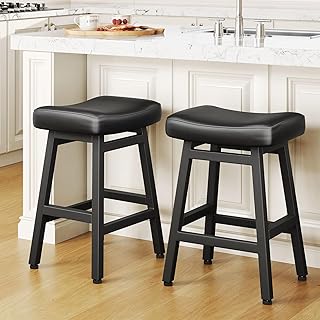
Raynesys gets the curvature right — the bonded leather seat wraps the hips rather than sitting flat, reducing pressure points during longer sits. Heavy-gauge metal legs with a welded cross-brace give this set a structural rigidity you can feel the moment you sit down. Assembly is genuinely tool-minimal, and the all-black finish holds up against scuffs better than matte alternatives.
LUE BONA Swivel Bar Stools with Lumbar Pillow
The included lumbar pillow is not a throwaway accessory — it’s genuinely supportive and adjusts position along the backrest. The black metal frame is lightweight but well-braced, making these a strong pick for renters who move frequently. Linen upholstery breathes well in warm kitchens, though the three-pack pricing makes this the obvious choice for larger islands.
Frequently Asked Questions
What is the ideal bar stool seat height for a standard kitchen counter?
For a standard 36-inch kitchen counter, aim for a seat height of 24 to 27 inches. This range provides roughly 10 to 12 inches of clearance between the seat and the underside of the counter, which accommodates most adults comfortably without cramping legroom.
How much weight should a quality bar stool support?
A well-built counter stool should comfortably support at least 300 pounds. Many of the sets reviewed here are rated for 350 to 450 pounds, which provides a meaningful safety margin for everyday use and accommodates a wider range of body types without structural stress.
Are swivel bar stools less durable than fixed-seat stools?
Not necessarily — it depends on the swivel mechanism. Steel ball-bearing swivels are extremely durable and can outlast the upholstery itself. However, cheap plastic race swivels develop wobble and friction over time. If you choose a swivel stool, inspect the bearing quality or look for brands that specify steel construction in the swivel base.
How do I maintain faux leather or bonded leather bar stools?
Wipe down faux and bonded leather surfaces weekly with a damp microfiber cloth to prevent buildup. For bonded leather specifically, apply a leather conditioner every three to six months to slow surface cracking at the flex points where your body bends the material most.
Final Thoughts
For daily-use durability and genuine ergonomic support, the Nalupatio Adjustable Swivel stools offer the best balance of comfort, adjustability, and build quality. Budget-conscious buyers who want solid wood construction and a swivel mechanism should look at the Counter Height 360° Swivel set. And if you’re furnishing a larger island and want a three-pack that actually delivers lumbar support out of the box, the LUE BONA Swivel Bar Stools earn a strong recommendation.